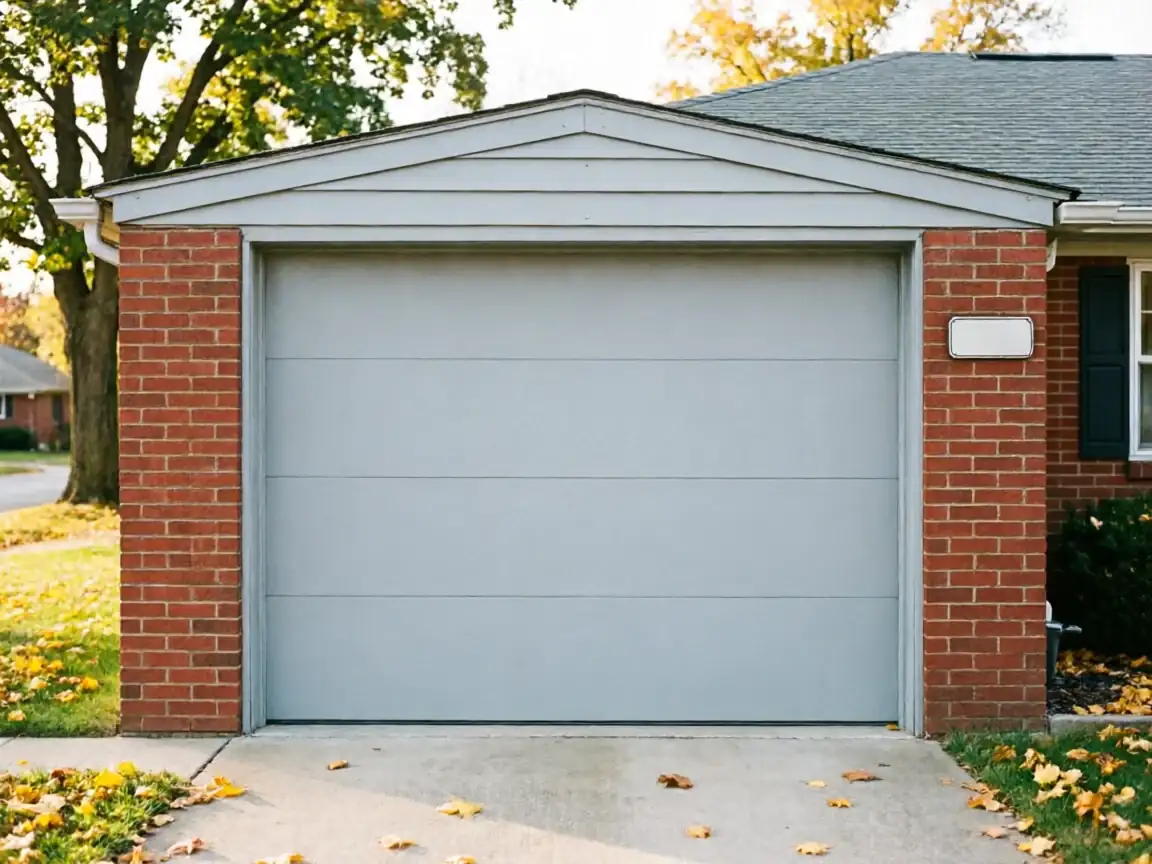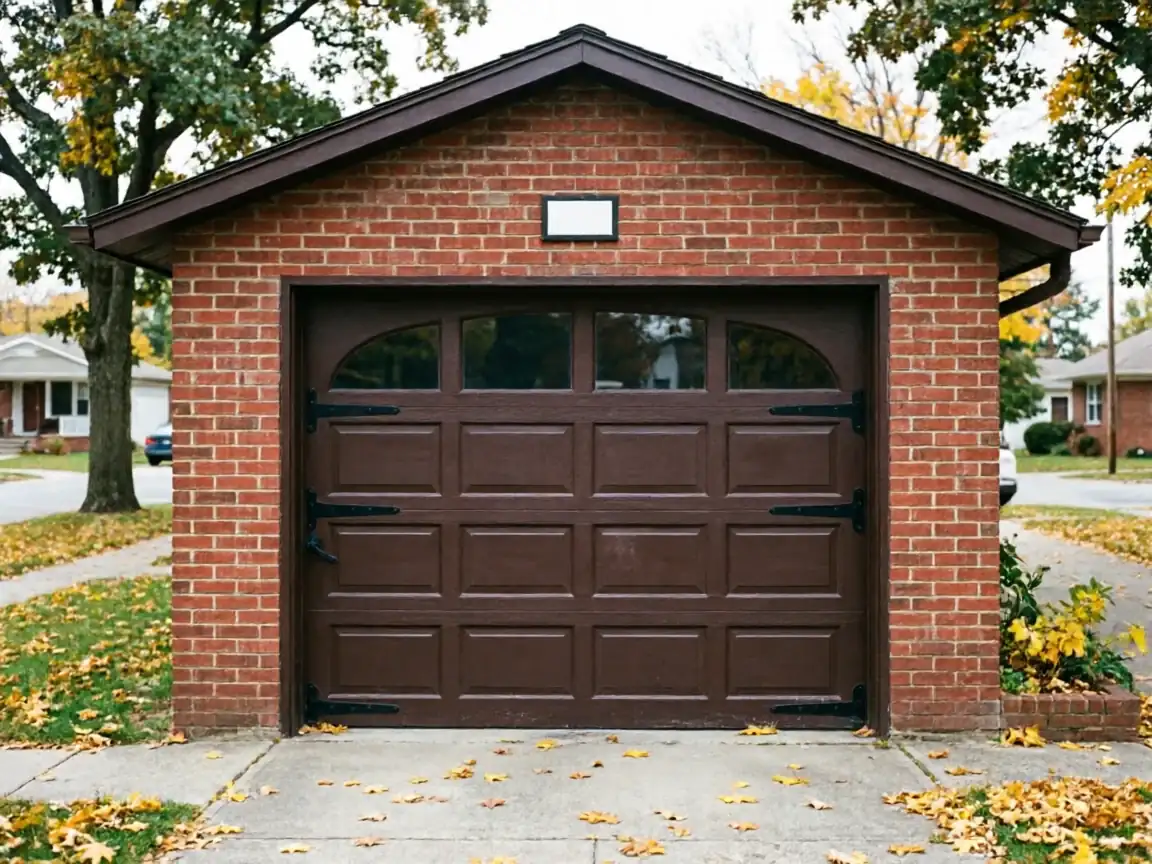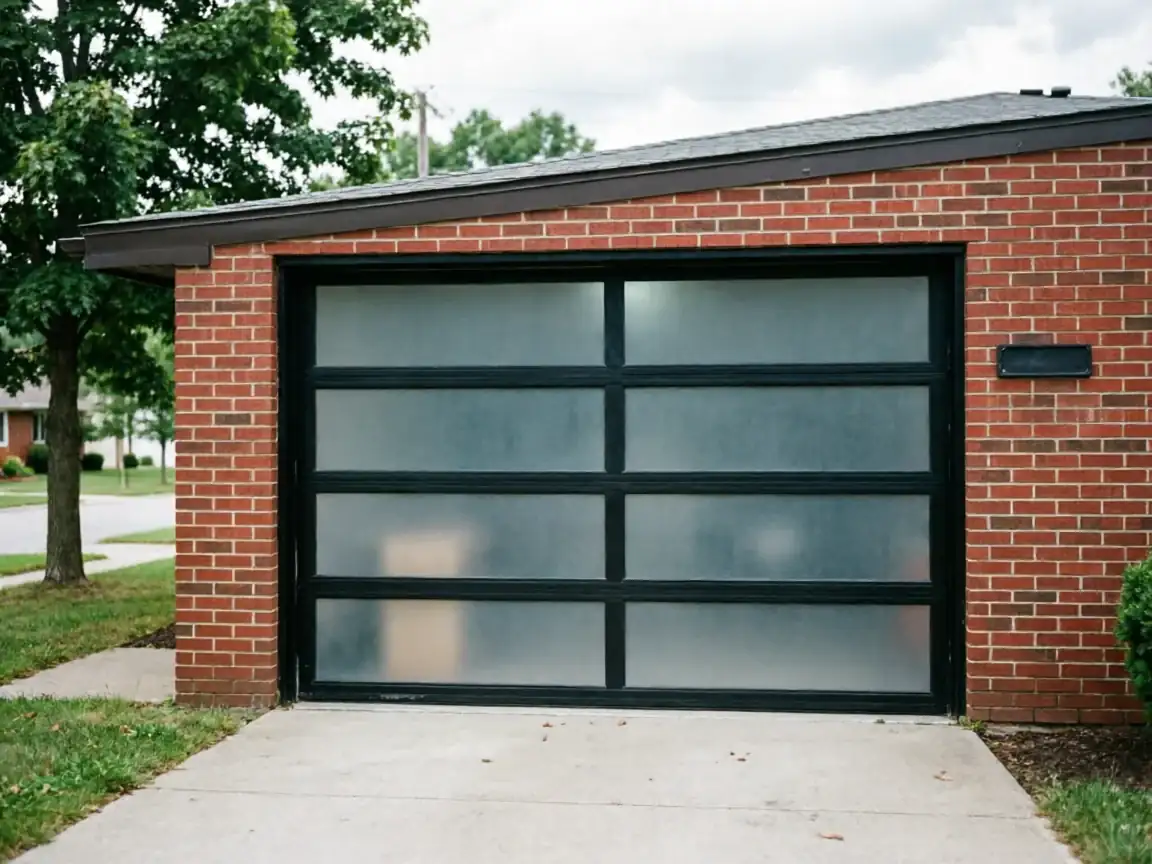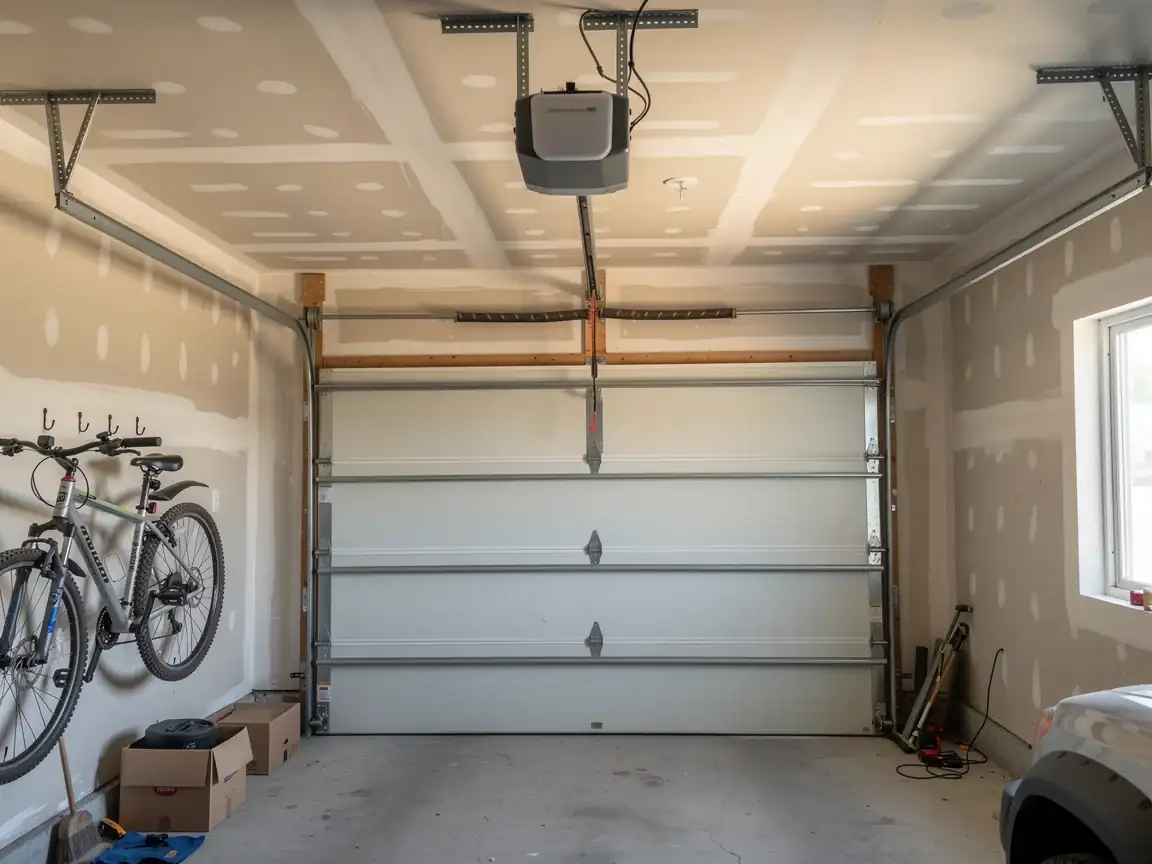
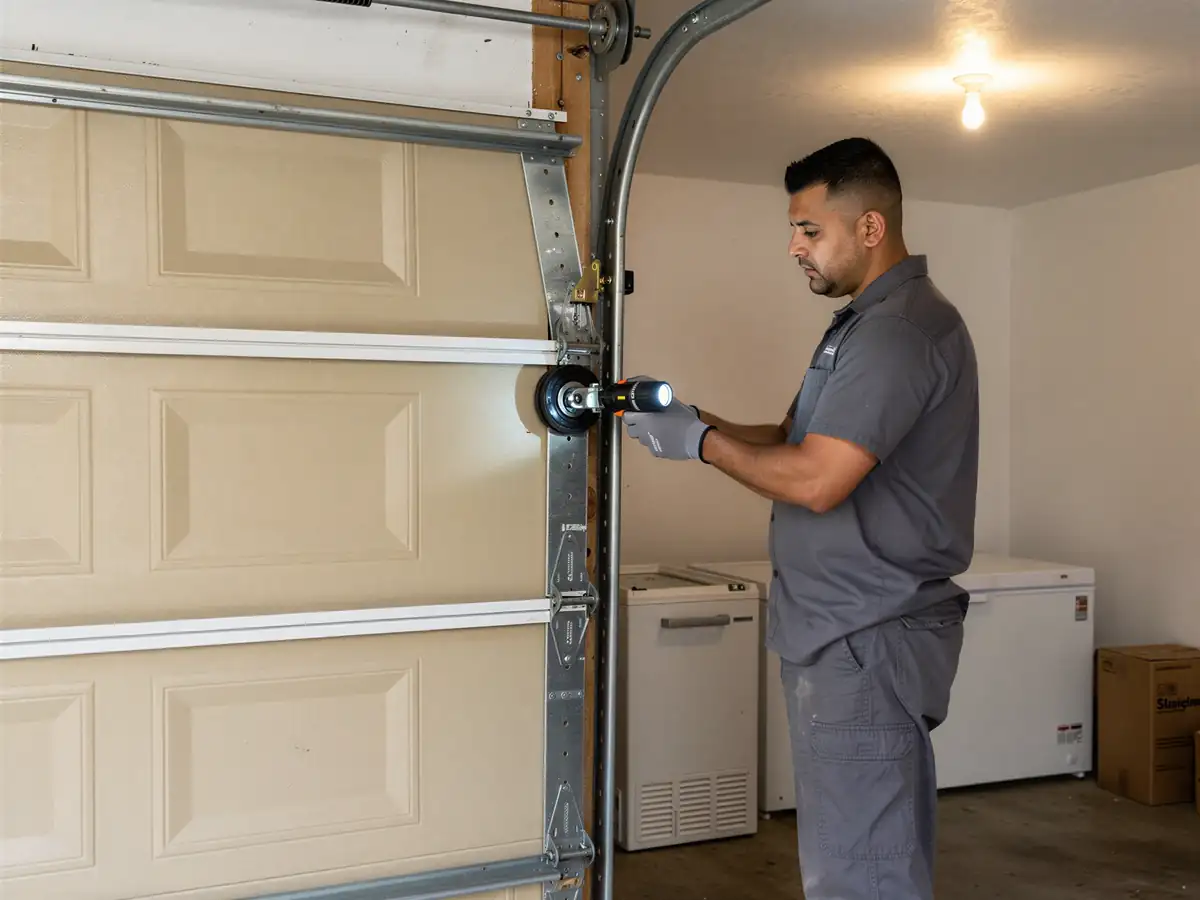
What You Are Seeing
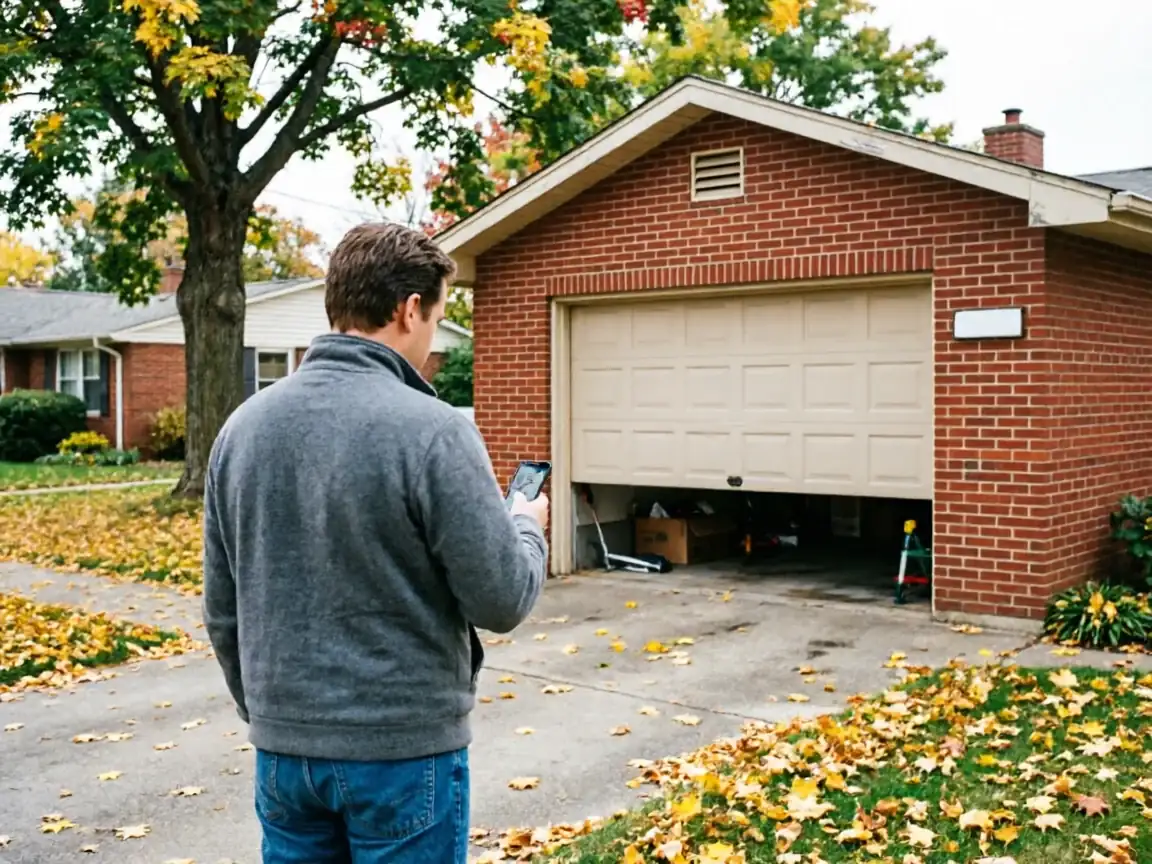
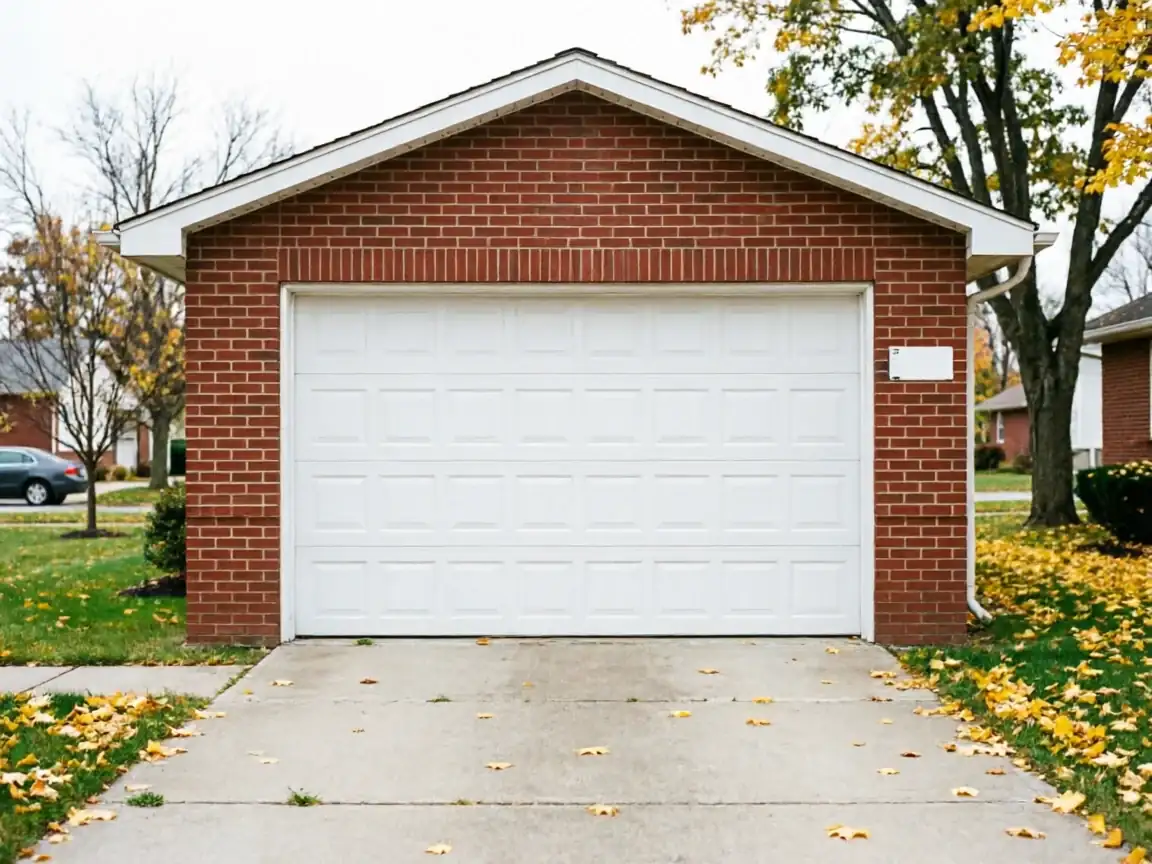
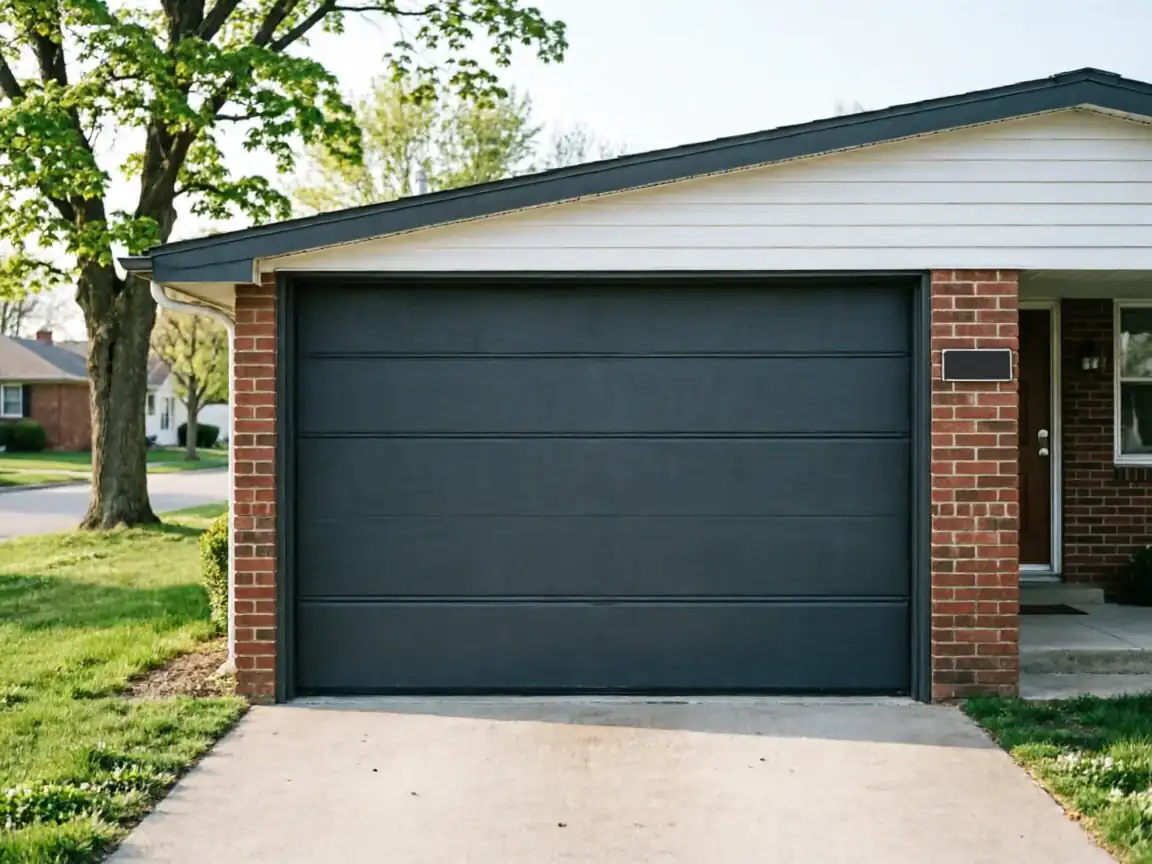
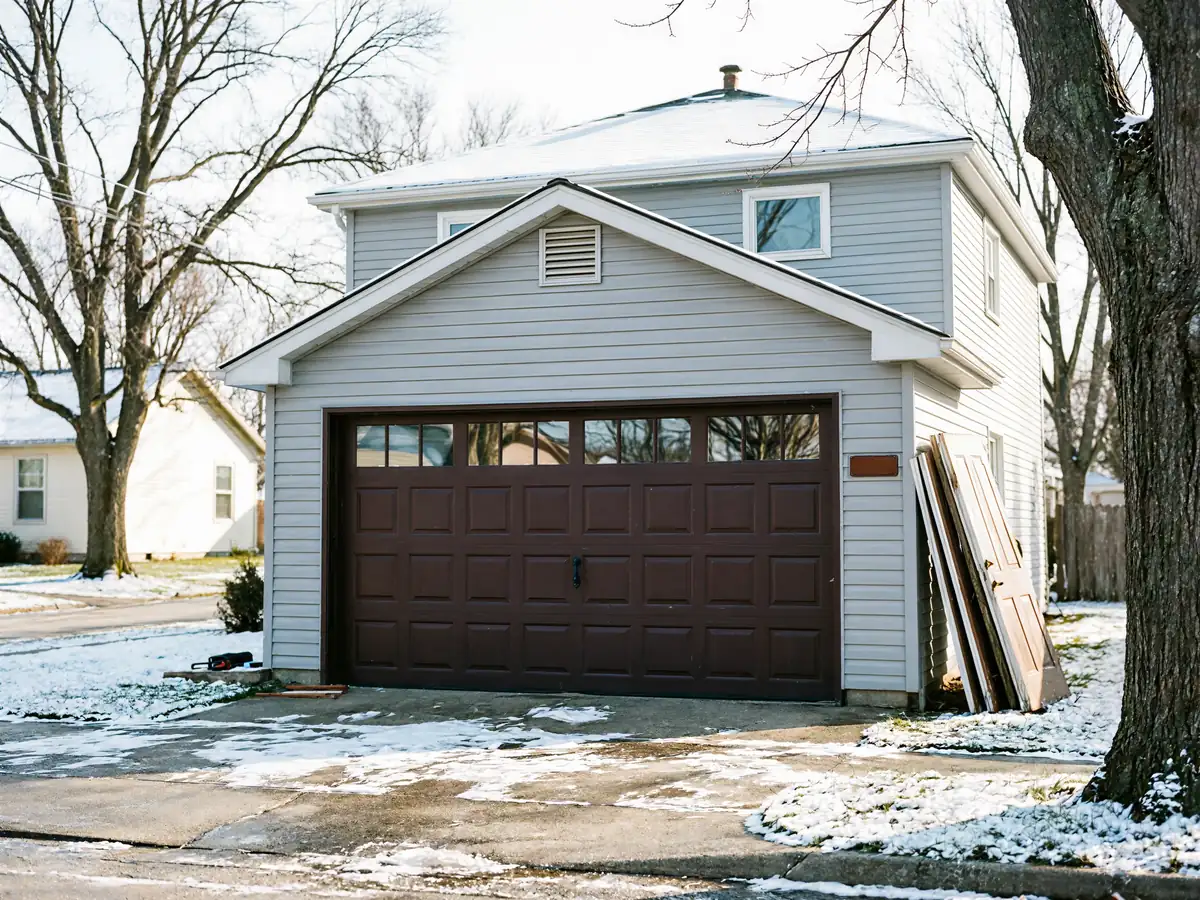
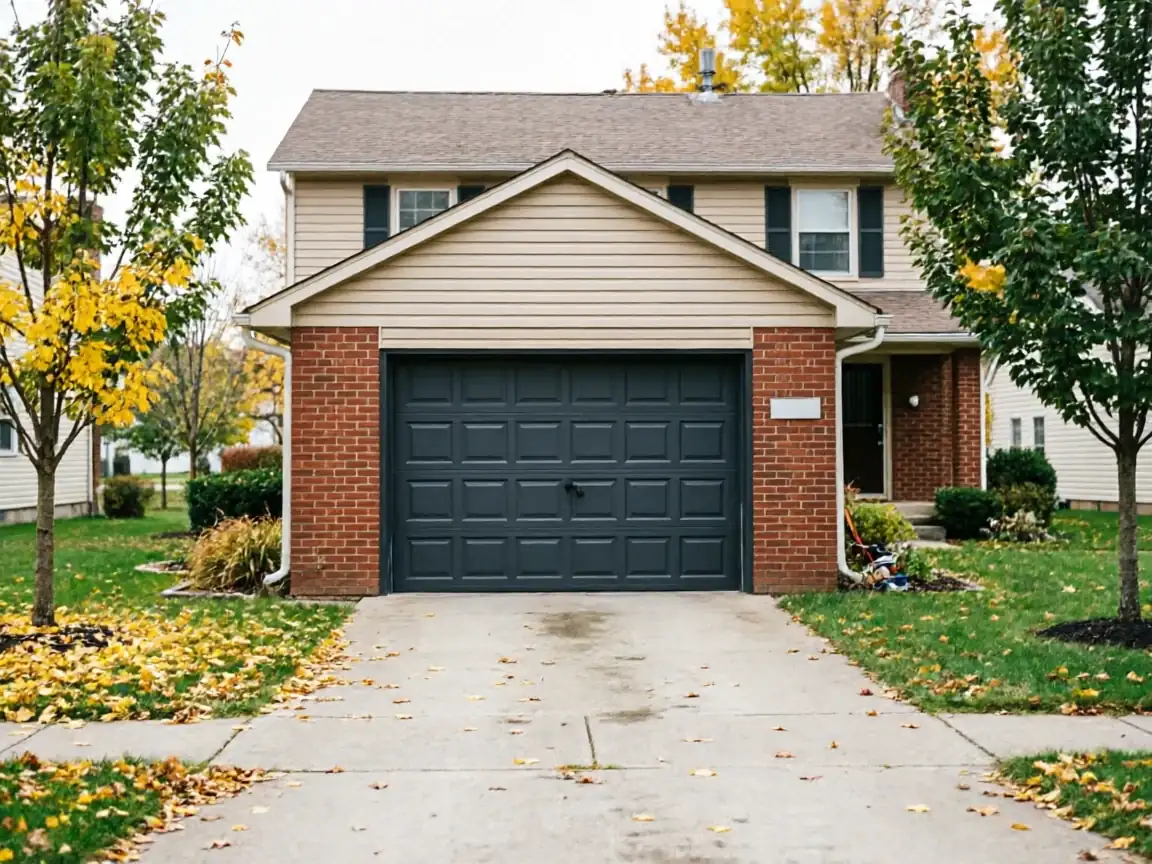
Plymouth's housing stock centers on 1948, which puts a lot of doors on track brackets and hinges that have never been swapped out. On a town this size - 224 households - a fair share of those original tracks are still hanging on the same lag bolts a framer drove in the late 1940s. When a door jumps the track here, it's rarely a fresh install coming loose. It's decades-old steel that's finally had enough: a bent track rail, a hinge that's worn oval instead of round, or a roller stub that's rusted thin. You'll see the door sitting crooked in the opening, one corner low, or it'll stop moving a few inches off the floor and refuse to go further. Sometimes a cable has slipped the drum and the whole panel racks sideways. None of that is cosmetic - a door that's left the track can come down the rest of the way under its own weight, and a panel that heavy does real damage to whatever's underneath it, including a car or a person standing too close.
The DIY Question
An off-track door is one of the few garage door problems where trying it yourself is a bad bet even for a handy homeowner. The door is under spring tension whether it looks like it or not, and a track that's bent even slightly can snap back once you start working on it. We get it - a 17-mile trip out from Macomb isn't instant, and waiting is frustrating when your car's stuck inside. But forcing a door back onto a bent track, or trying to re-set a cable off the drum without releasing tension first, is how people lose fingers. If the door is only partway off and nothing is bent, you can sometimes close it by hand slowly to take weight off the track - past that, leave it alone and call. That's the honest limit of what's safe to do on your own here.
What the Fix Involves
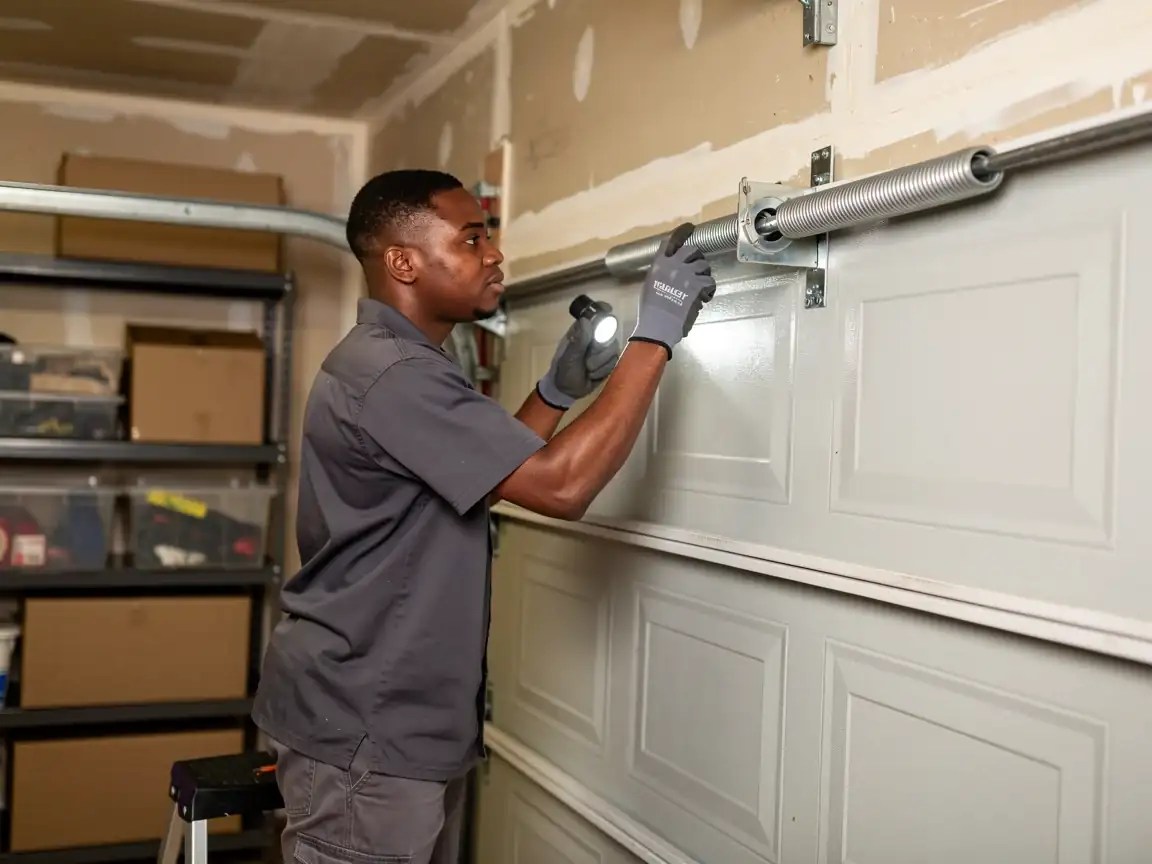
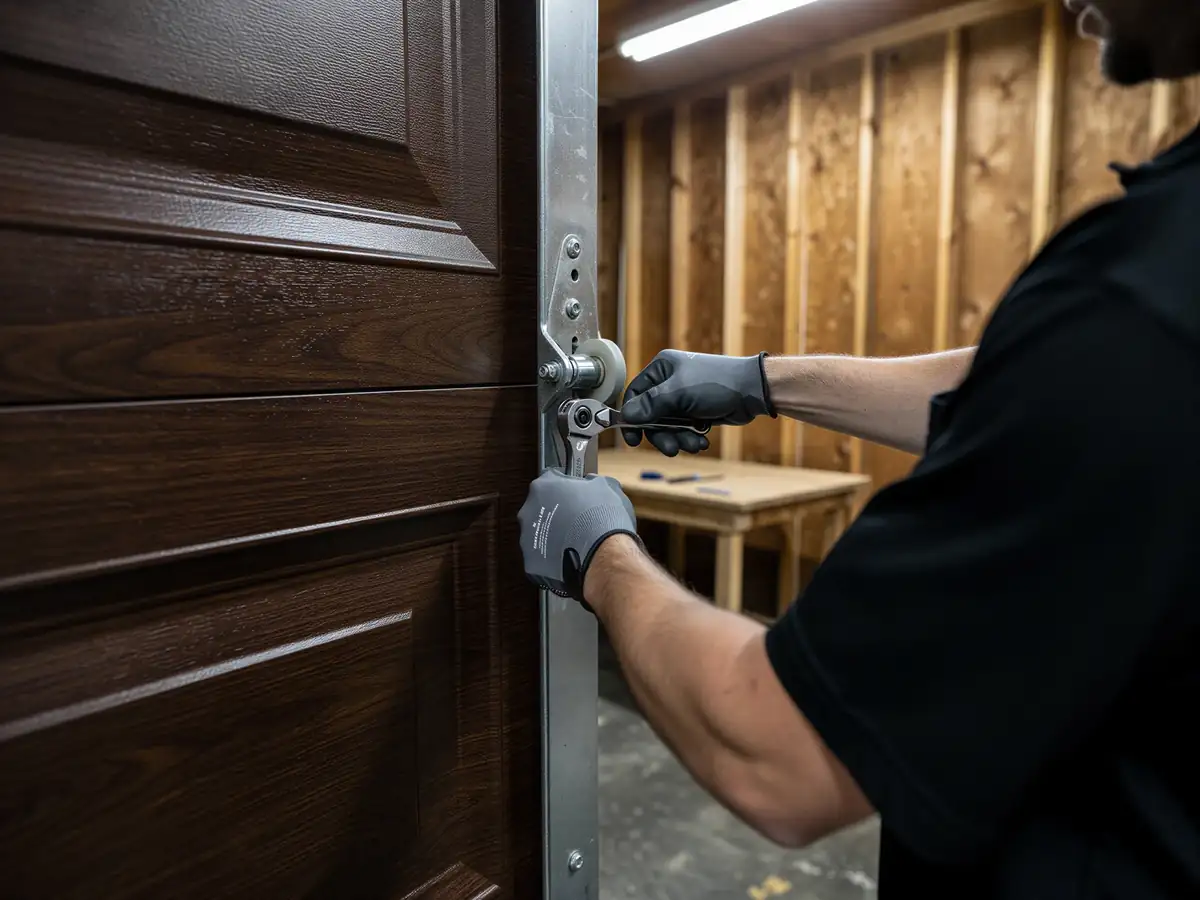
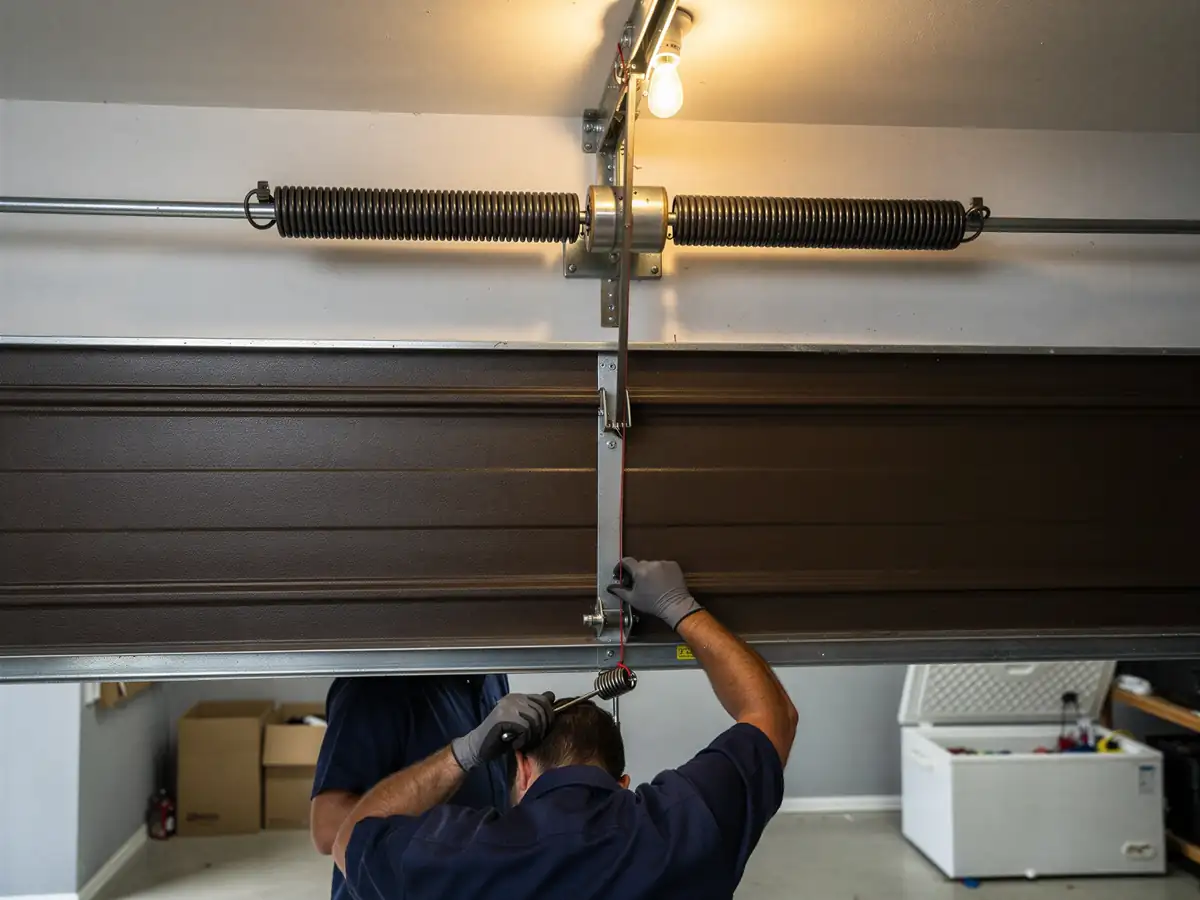
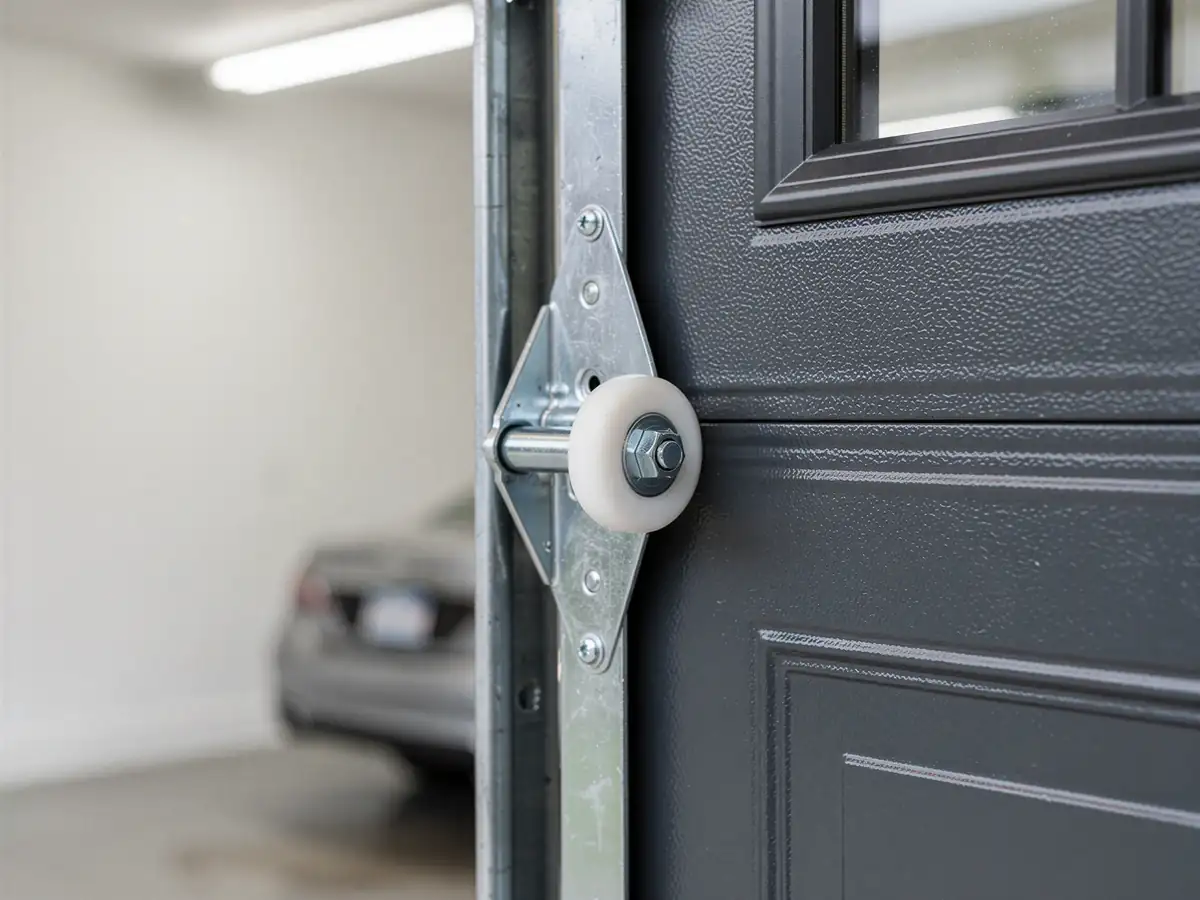
First step is always releasing spring tension safely before anything else moves - skip that and you risk the door slamming down mid-repair. From there, the door gets lifted back onto the track and the track checked for straightness along its full run, not just at the spot where it failed. On a lot of Plymouth's older setups, the bracket mounting into the jamb needs re-securing at the same time, since loose brackets are usually what let the track shift in the first place. Rollers and hinges from the original hardware get inspected while we're in there - if they're original to a 1948 build, they're almost always due for replacement anyway, since steel rollers that old have usually worn past round. We bring parts out from Macomb, so anything unusual - a non-standard track width, say - may mean a short wait for the right piece rather than a same-visit fix.
What Can Go Wrong
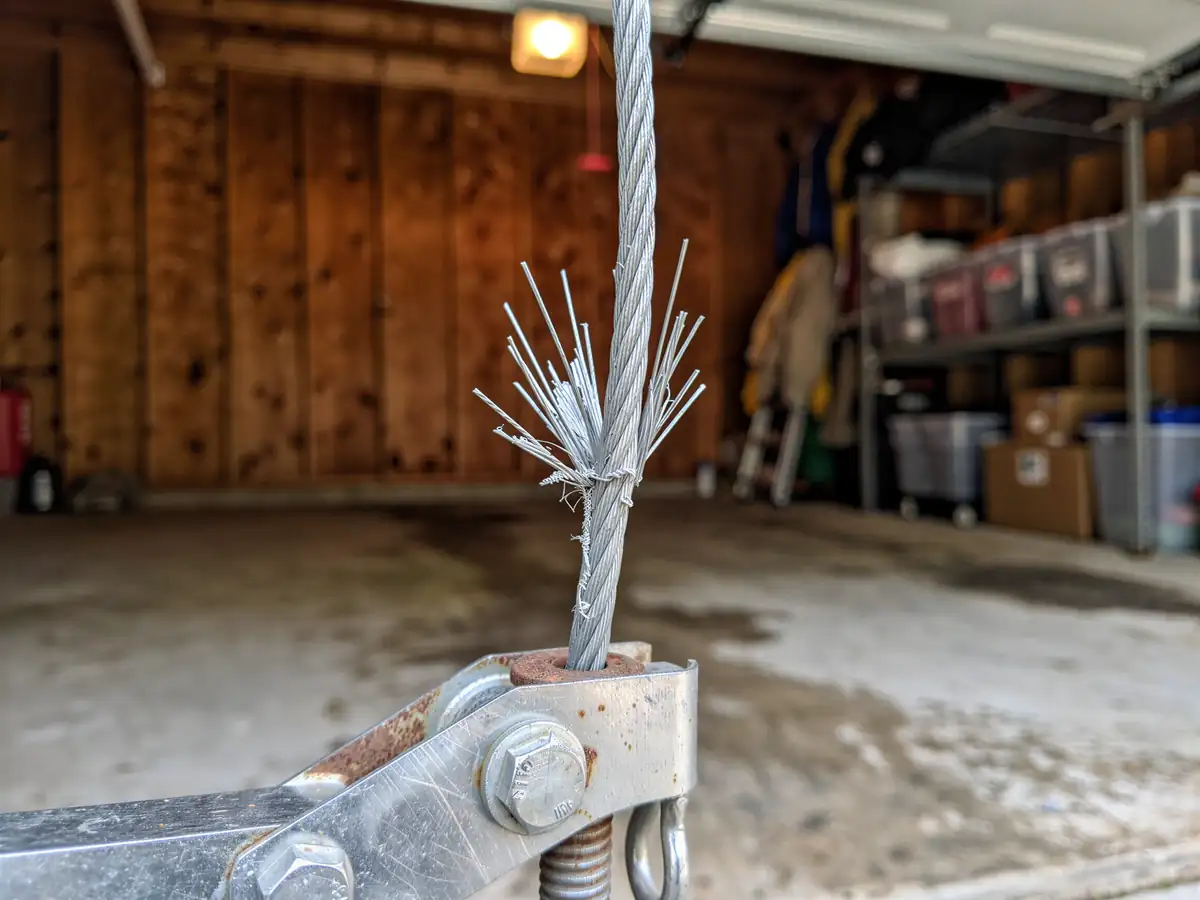
The risk with an off-track door isn't the repair itself, it's what happens if the door gets forced or moved before the fix. A bent track that's pushed back into place without being straightened will throw the door off again within weeks, sometimes the same day. If a cable has come off the drum, trying to run the opener anyway can strip the drum or snap the cable outright, which turns a track repair into a cable and drum replacement. And on a door this old, once you're into the track and rollers, it's common to find a spring that's also near the end of its life - not an emergency yet, but worth replacing at the same time rather than making a second trip. We'll tell you straight if that's the case rather than quoting a track fix and leaving a tired spring in place.