What the Fix Involves
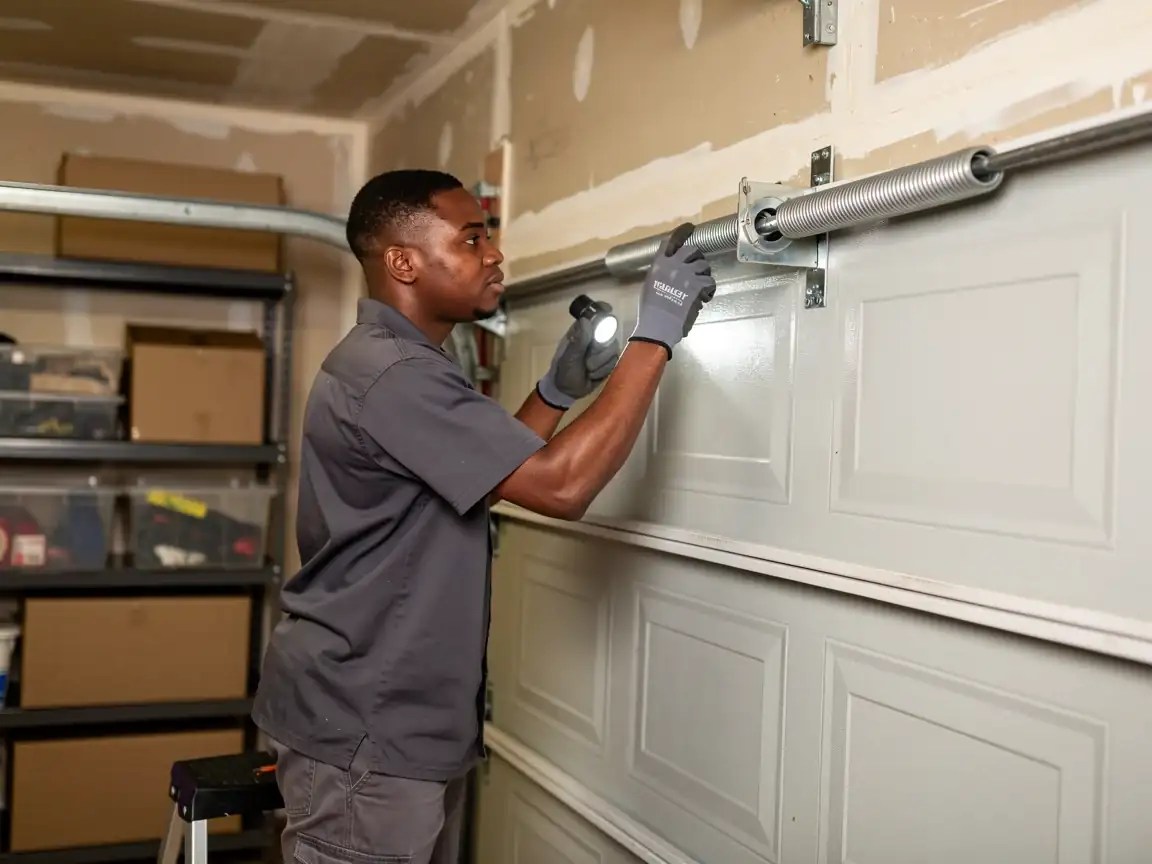
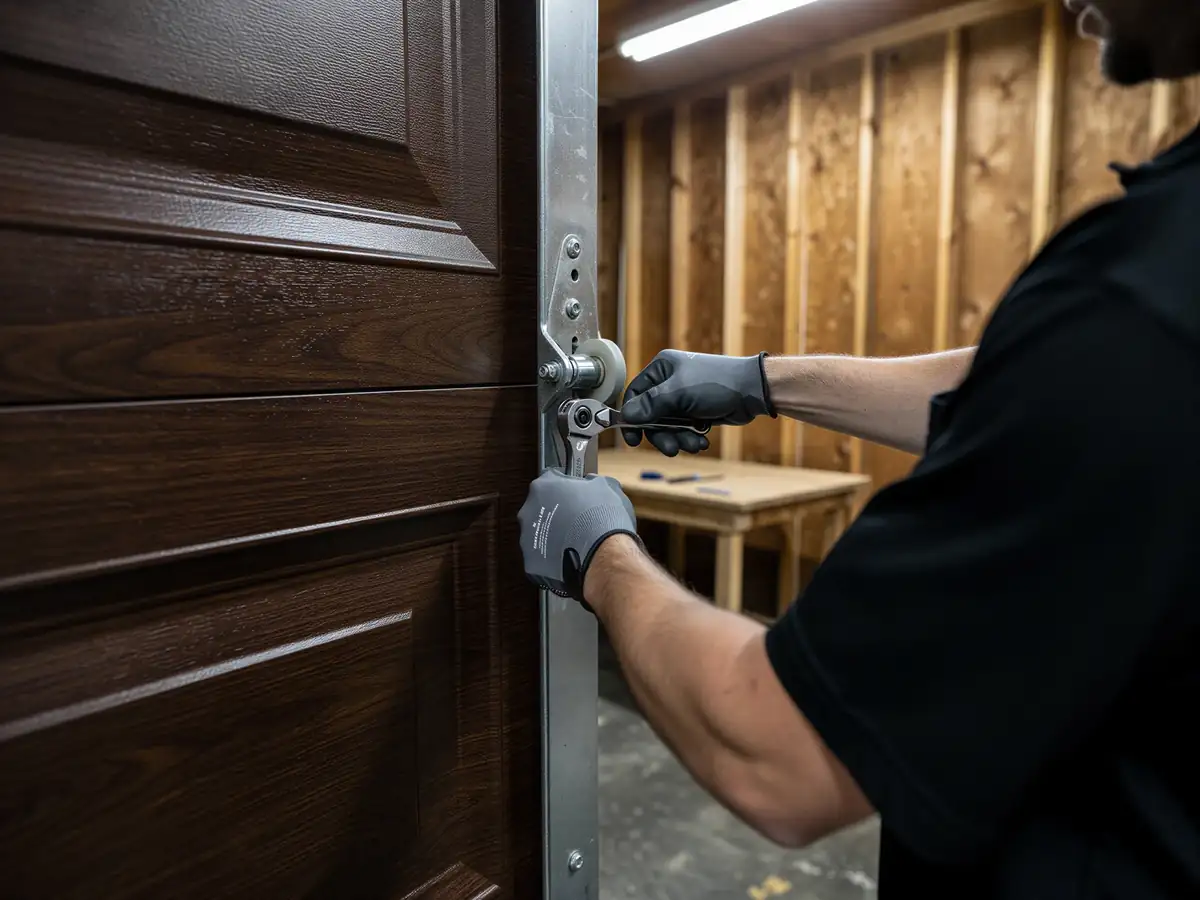
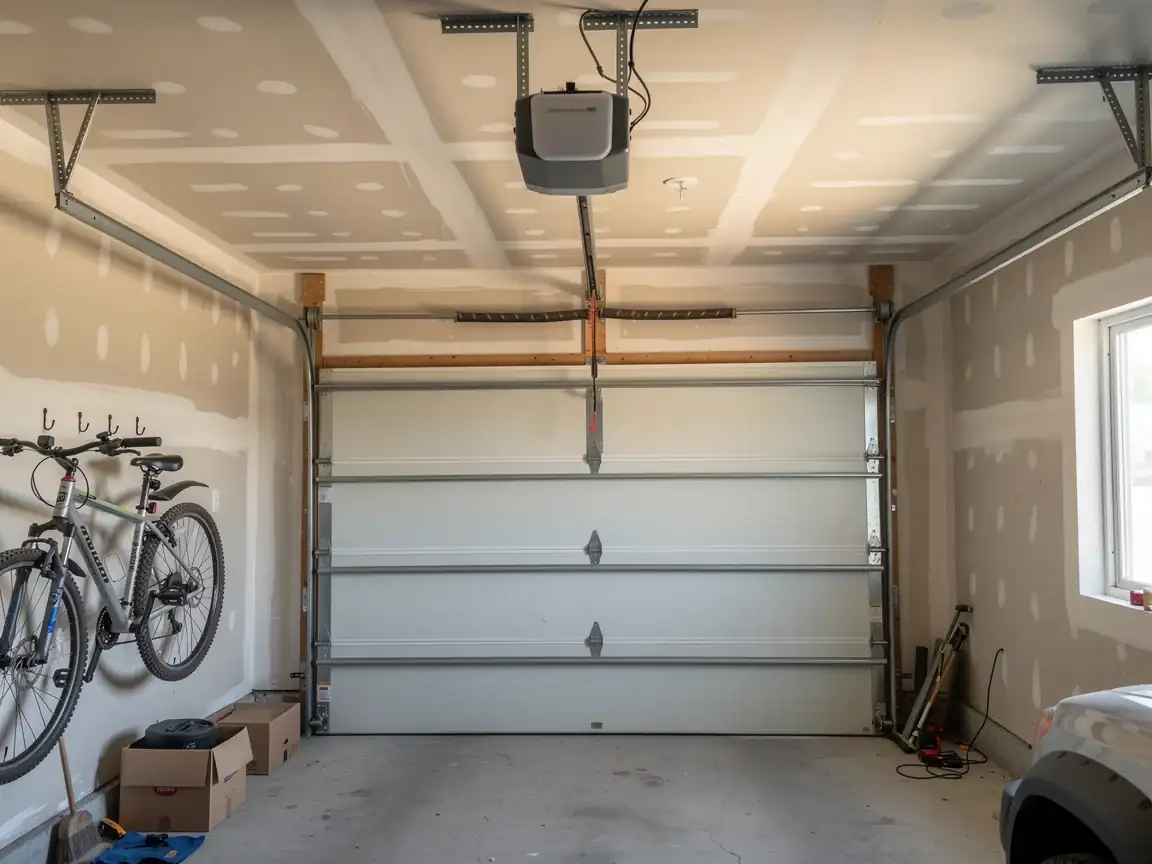
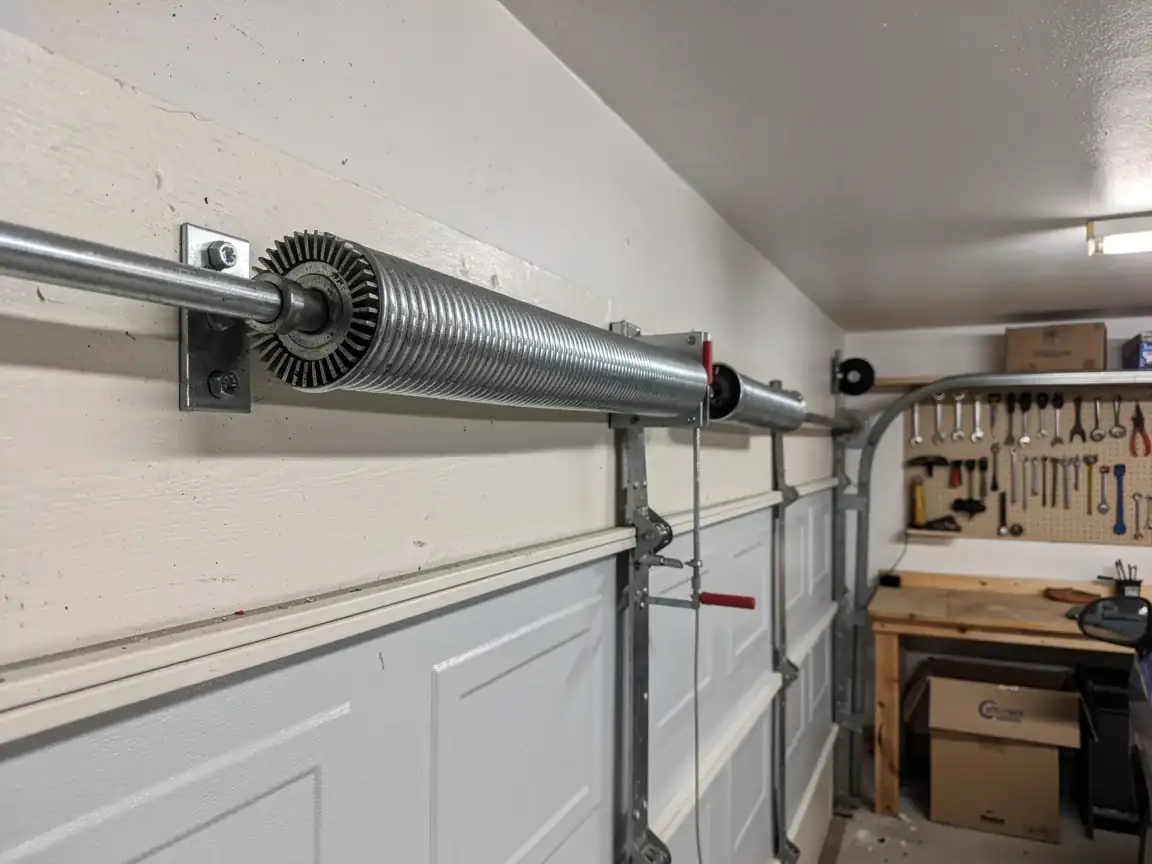
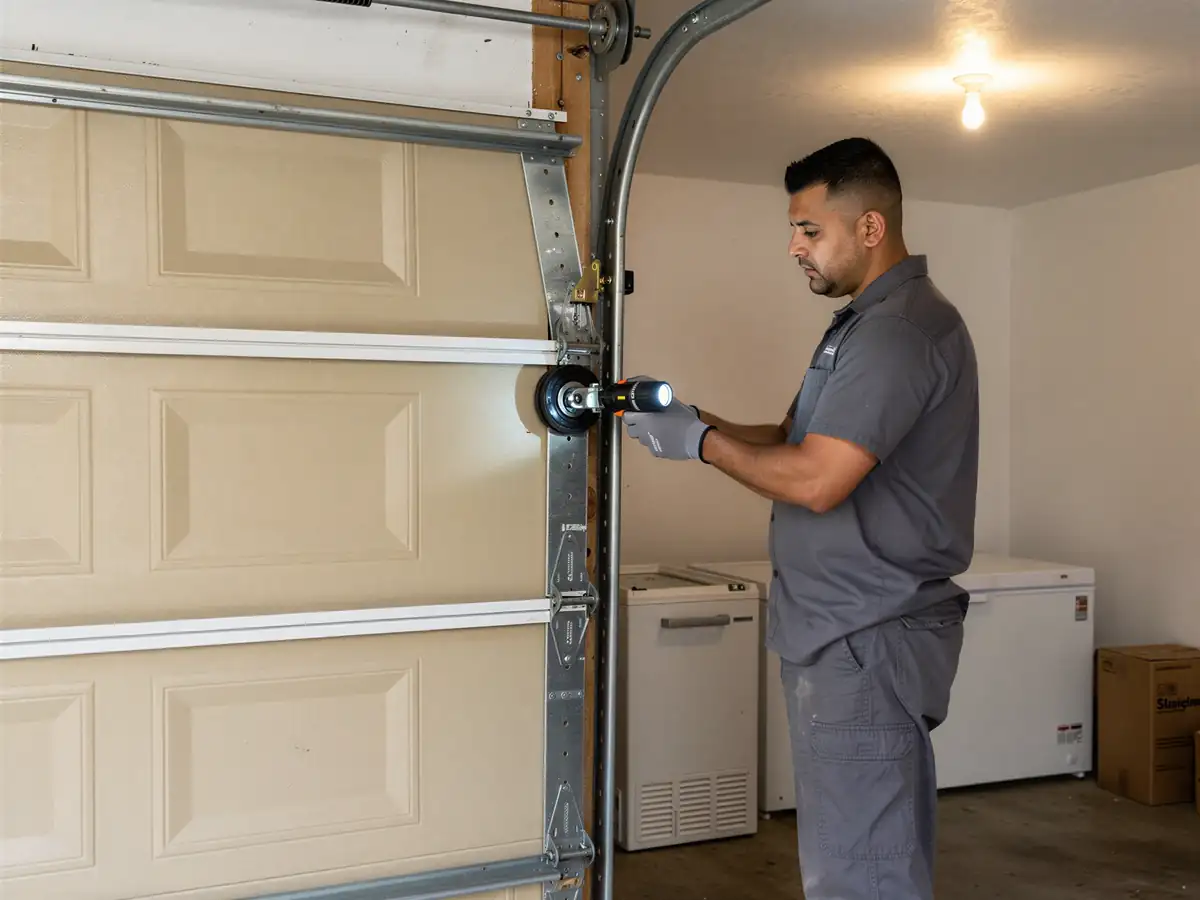
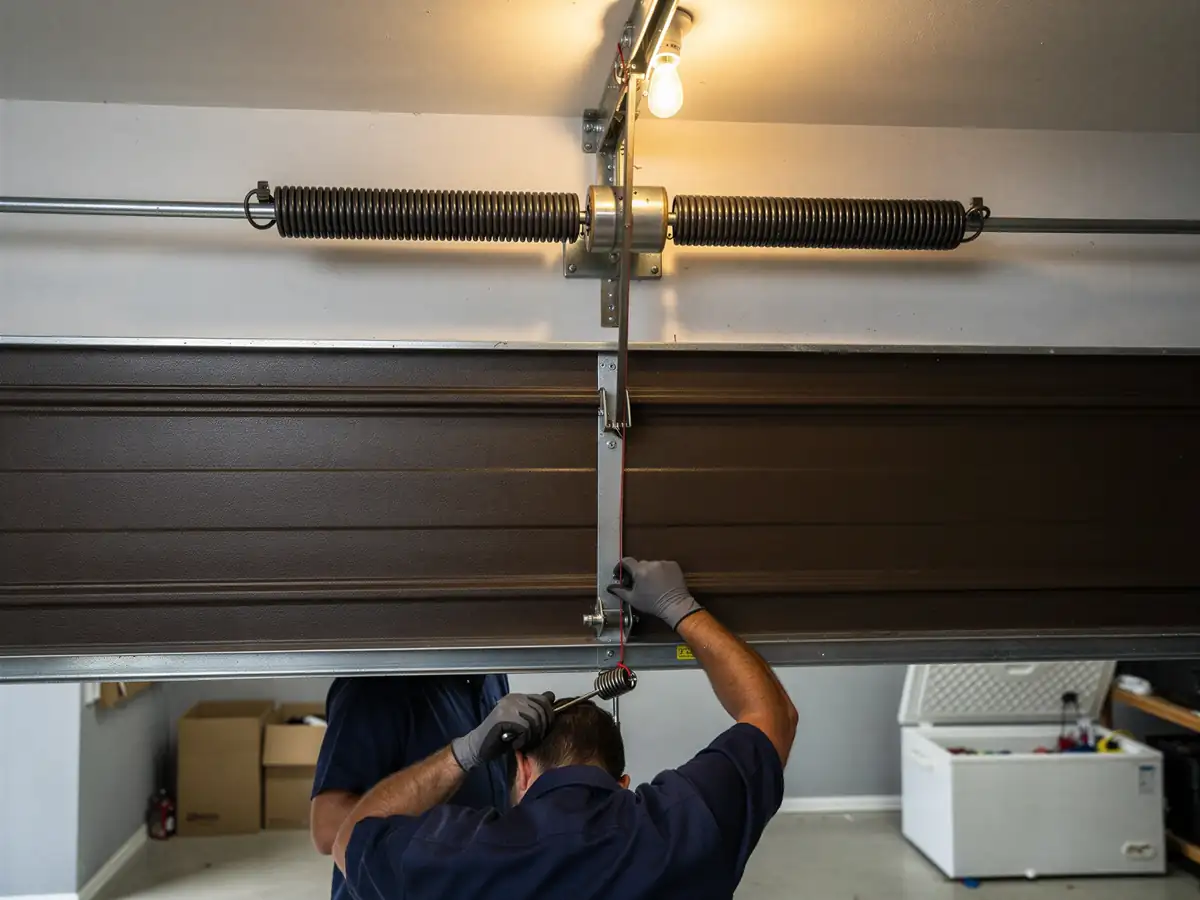
A broken spring job starts with figuring out which kind you've got. Most houses in this area still run torsion springs mounted above the door on a steel shaft, though a fair number of older single-car setups use extension springs along the horizontal tracks instead. We measure the wire gauge, coil diameter, and length off the old spring (or what's left of it), then match it to the door weight and drum size. For torsion setups we also check the shaft for wear where the cable drums have been riding loose, and we check the end bearing plates for rust-through before we wind in a new spring. For a double door, we replace both springs together even if only one broke, because the second one is usually close behind on cycle count. We also reset the winding bars and torque spec by door weight rather than guessing, since an under-wound spring will leave the door heavy on one side and an over-wound one will slam. We don't paint over a cracked shaft or a bent end bearing plate with a spring swap alone; if the hardware around the spring is shot, we say so before we quote the job, not after.
Parts We Carry
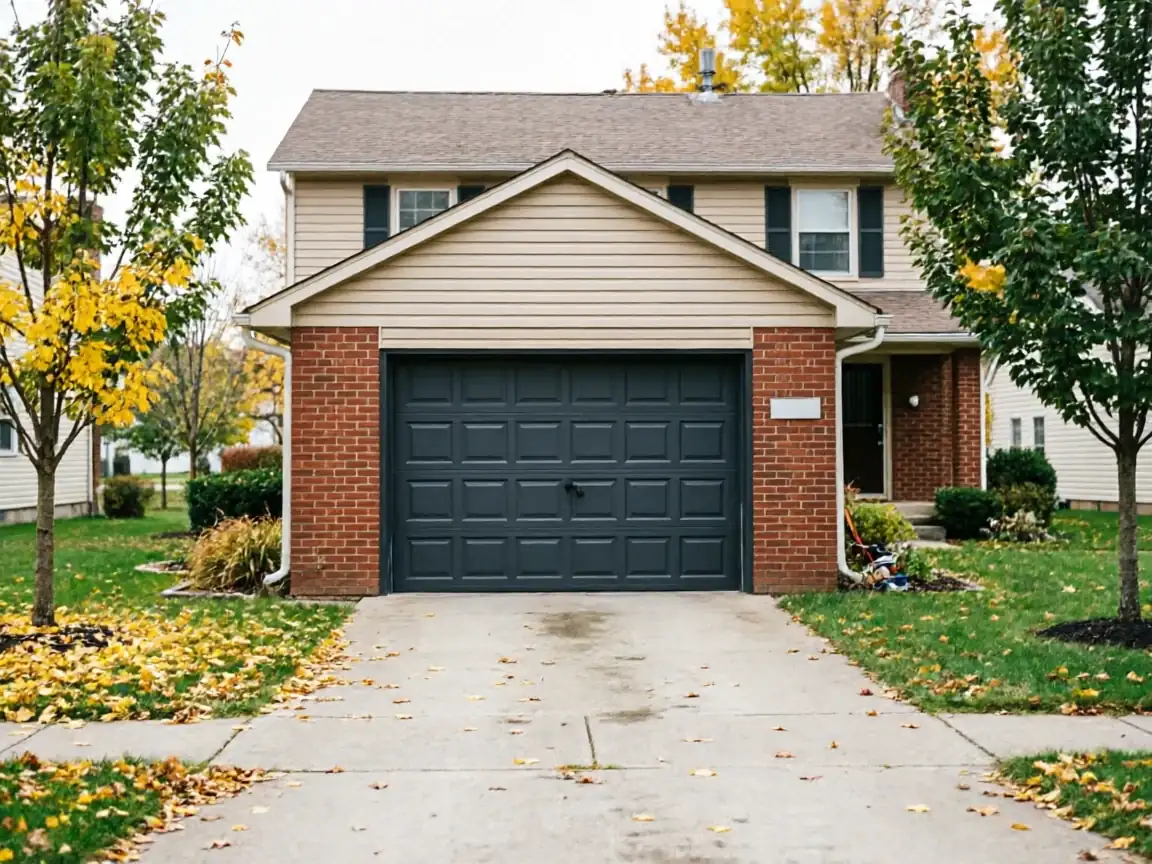
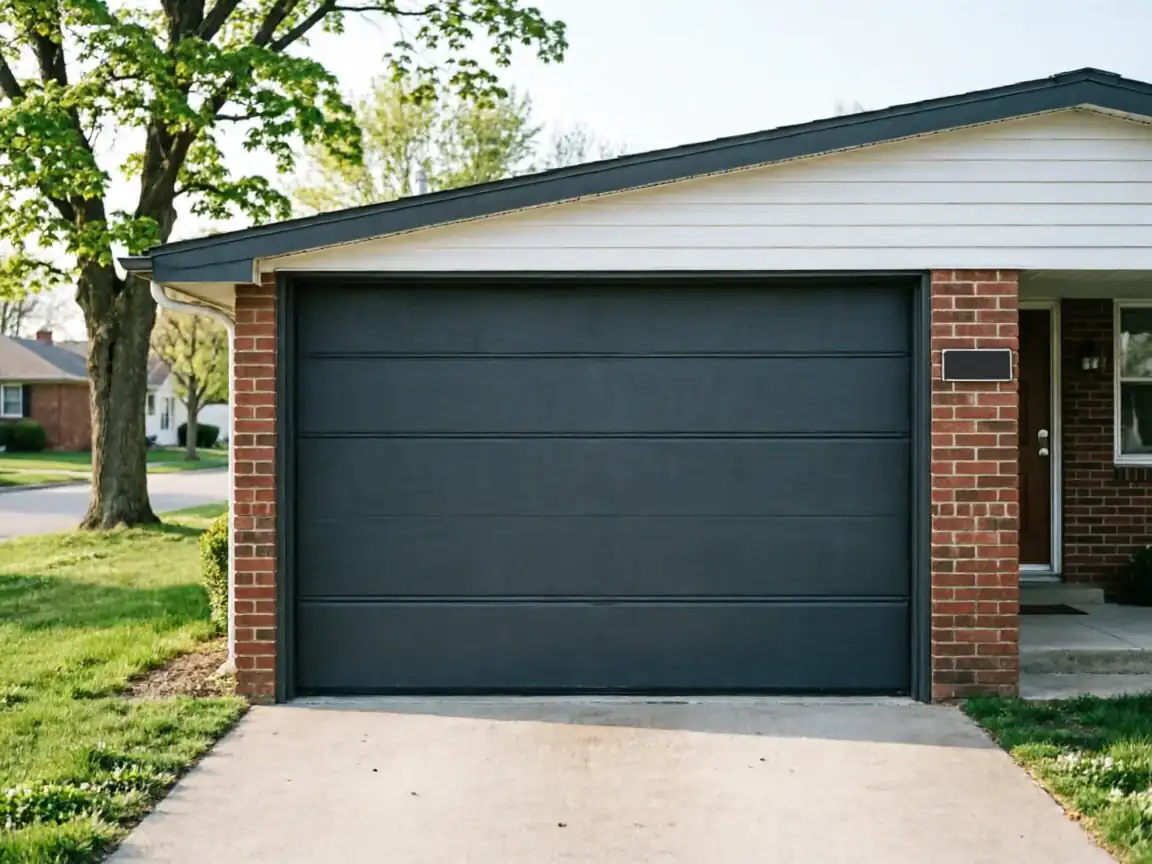
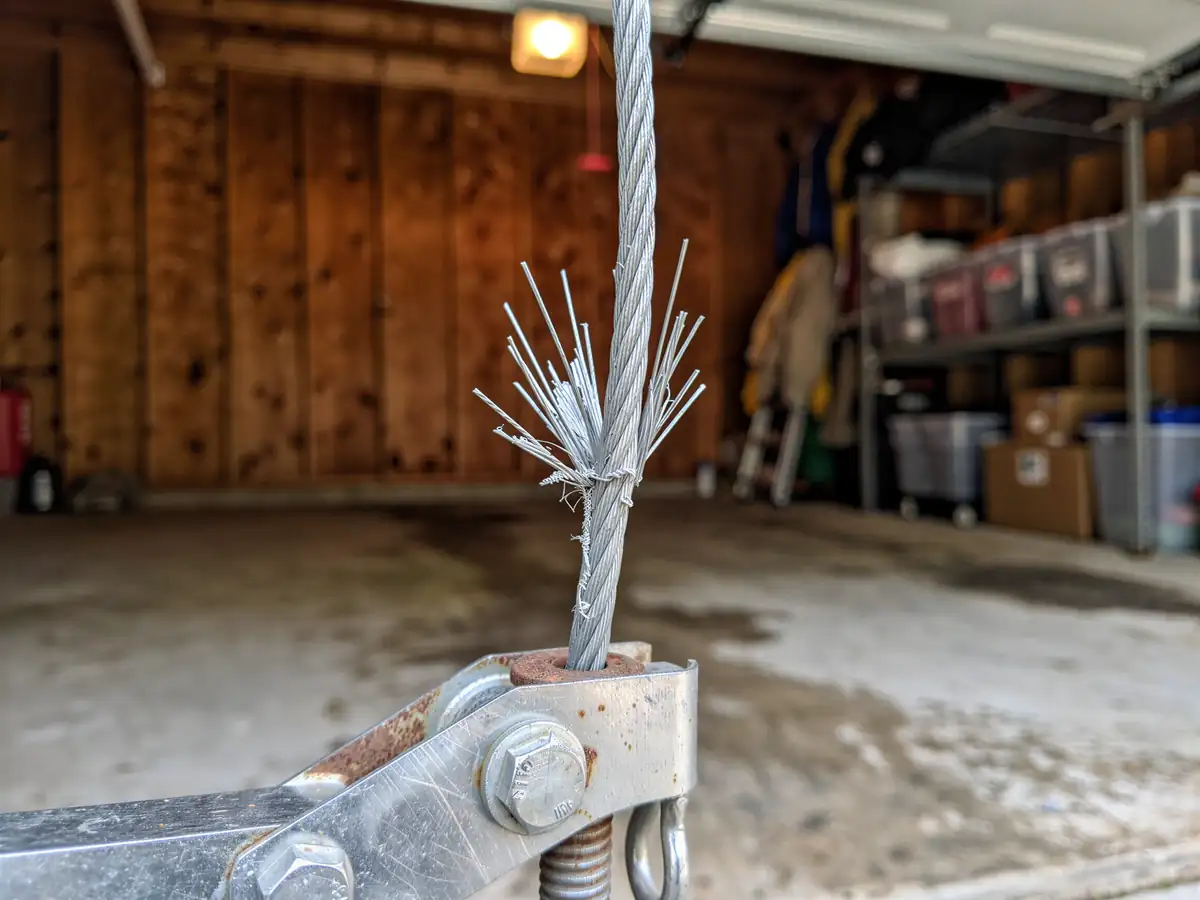
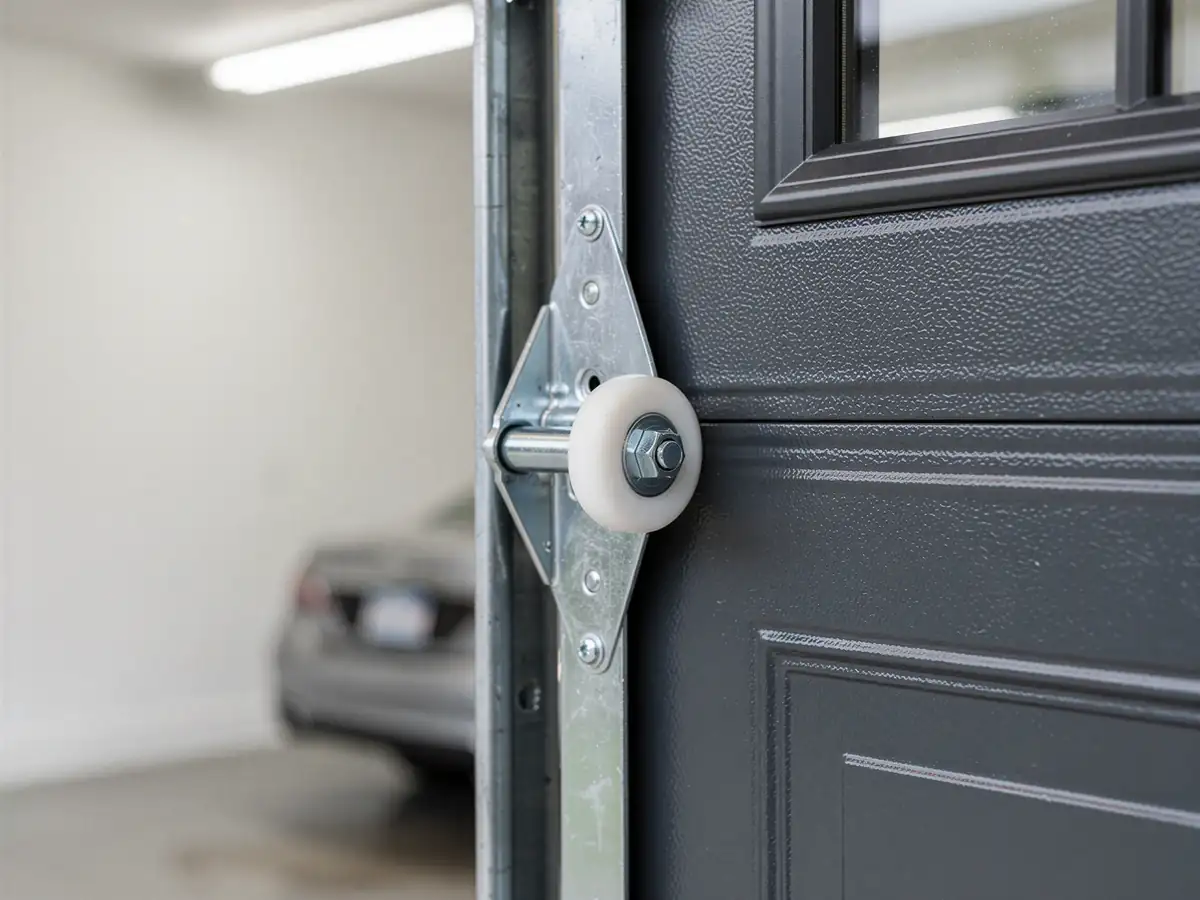
Because so much of the housing stock here dates from 1940 to 1965, we keep common torsion spring sizes on the truck that fit doors from that era, along with standard extension spring kits, safety cables, drums, and bearing plates. A lot of these older doors were built before current spring sizing became standardized, so a wire gauge or coil length that a big-box store doesn't carry isn't unusual out here. When we run into a size that isn't a stock item, we order it rather than force-fit something close, which does mean a short wait on the odd job. We also carry standard nylon rollers and galvanized cable, since a spring failure on an older door often takes a frayed cable or a cracked roller down with it, and fixing the spring without checking those is how a customer ends up calling us back in six months. We don't stock every obsolete spring size that was ever wound for a door from this period - some of the oldest one-piece doors on side-mounted torsion hardware use a size that's genuinely hard to source, and on those we're upfront about lead time before we start.
What Causes It Around Here
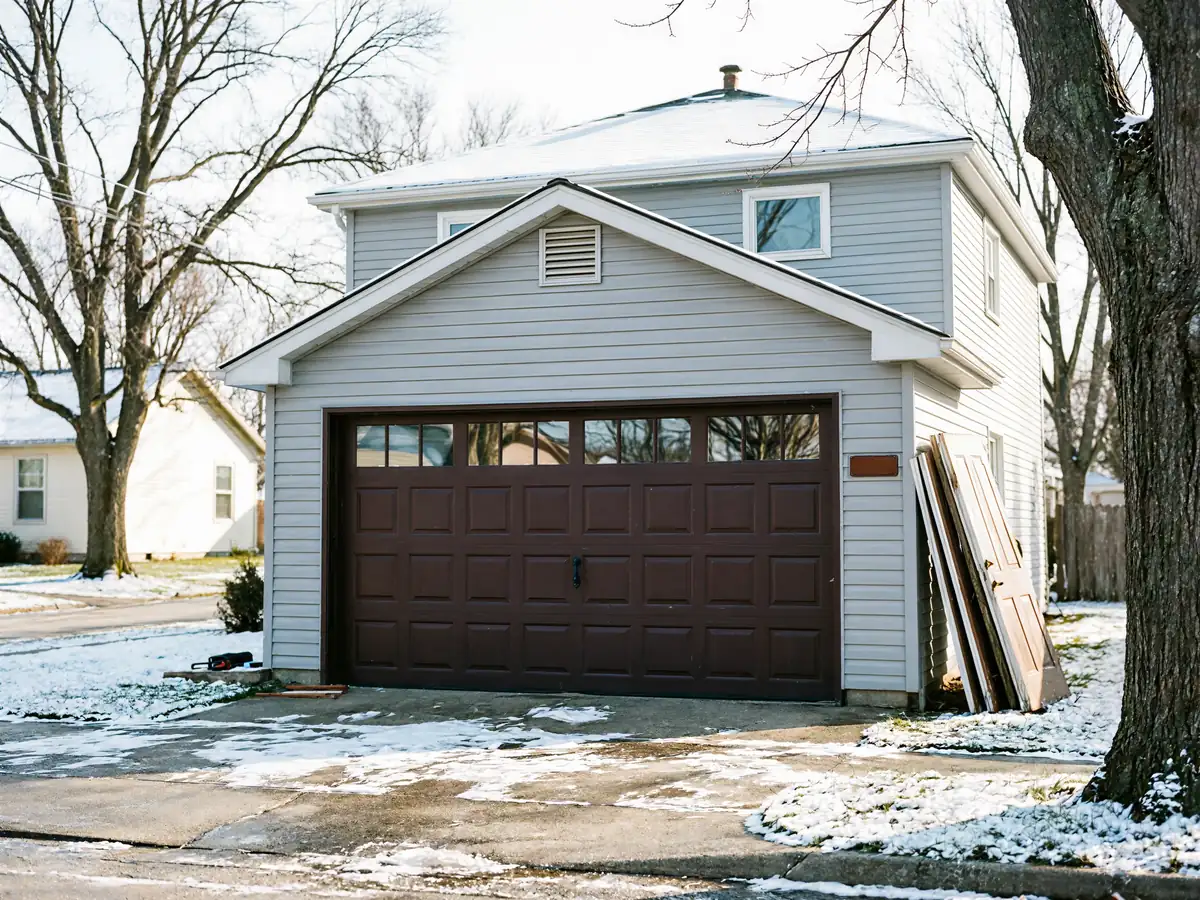
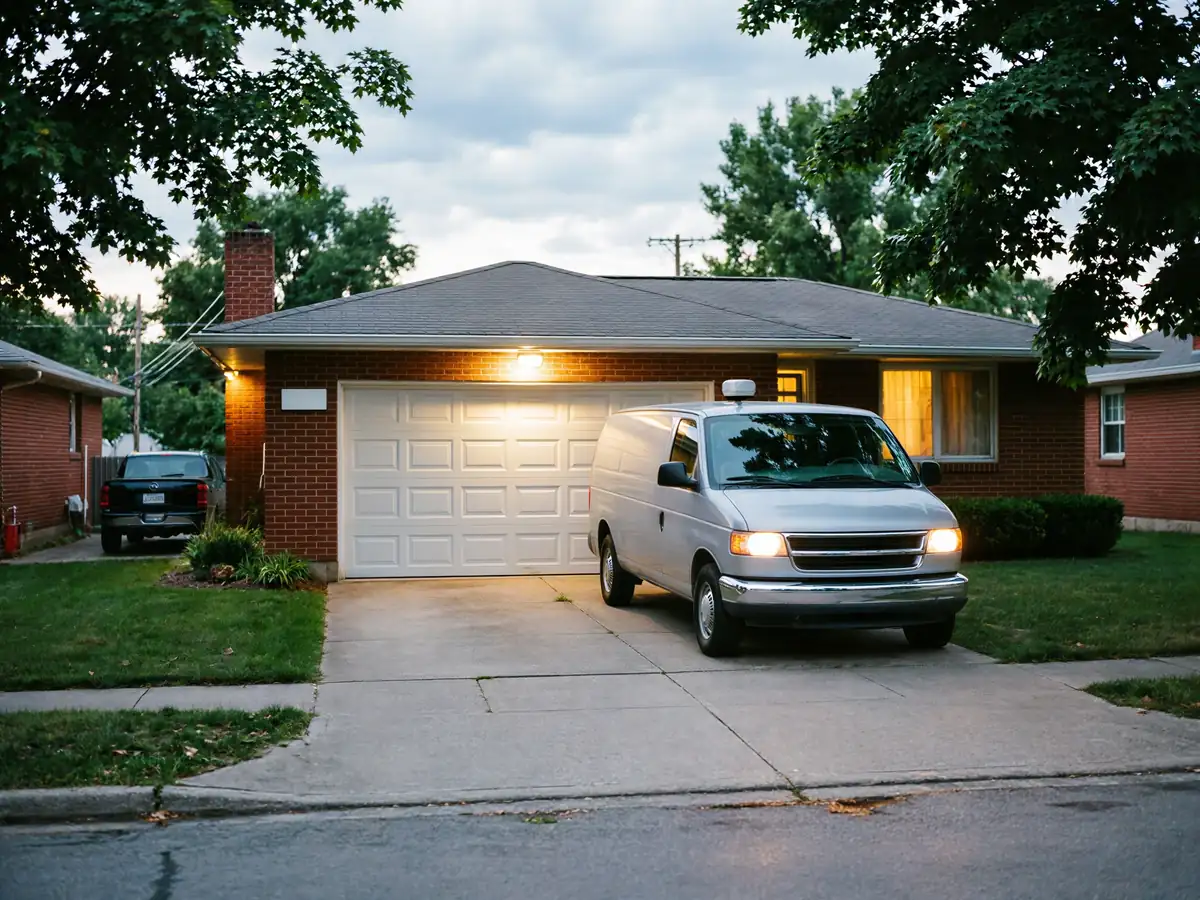
A torsion spring is rated for a set number of open-close cycles, and in a cold-climate area like this one, steel coils see more stress per cycle than they would somewhere milder - the metal stiffens in freezing temperatures and the spring has to work harder to do the same lift. Most of the doors we're called out on sit on houses built between 1940 and 1965, with a median build year of 1952, which means the springs now in service are often well past a reasonable lifespan even if they were replaced once already. Across this service area's roughly 3,534 households, 2,638 of which are owner-occupied houses, a large share still run original or first-replacement hardware that was never upgraded for a modern cycle-rated spring. With a median household income of $54,306, most owners we talk to want the repair done right the first time rather than patched twice, which is part of why we quote the whole spring set and related hardware rather than just the one that snapped.