What the Fix Involves
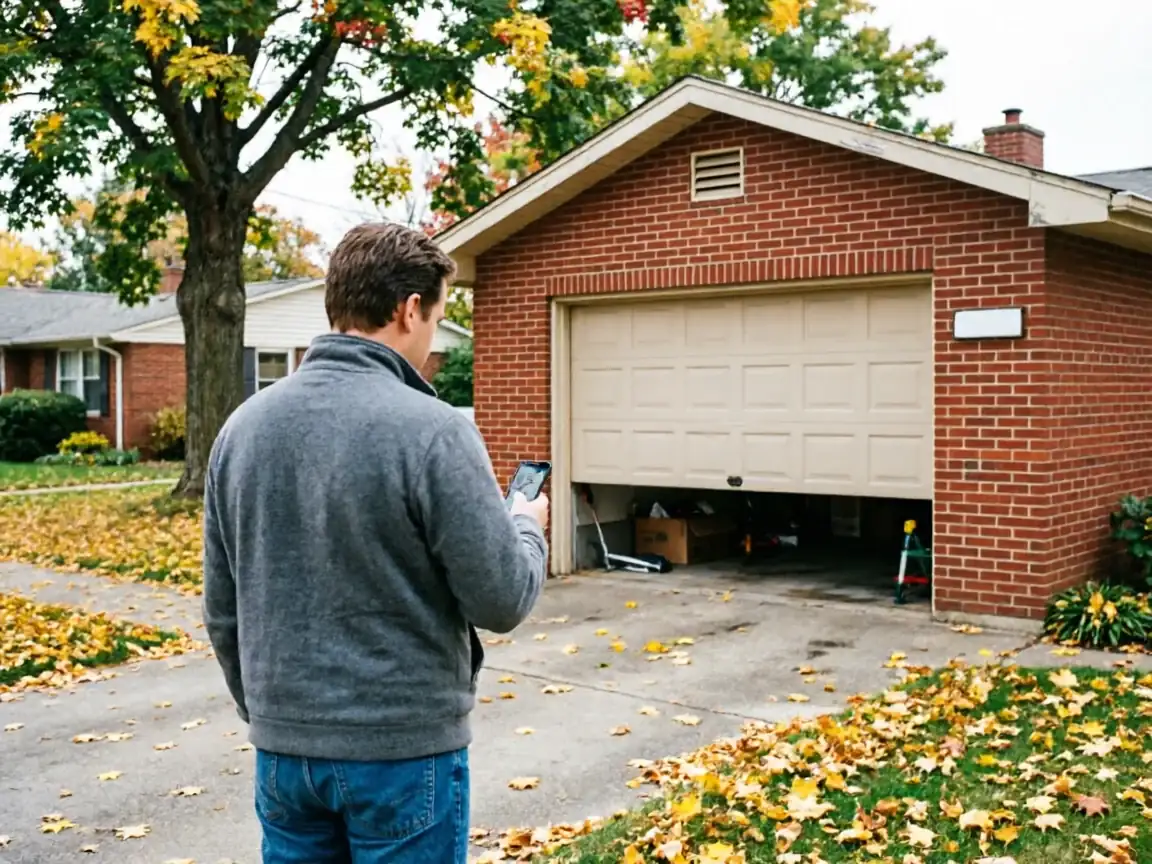
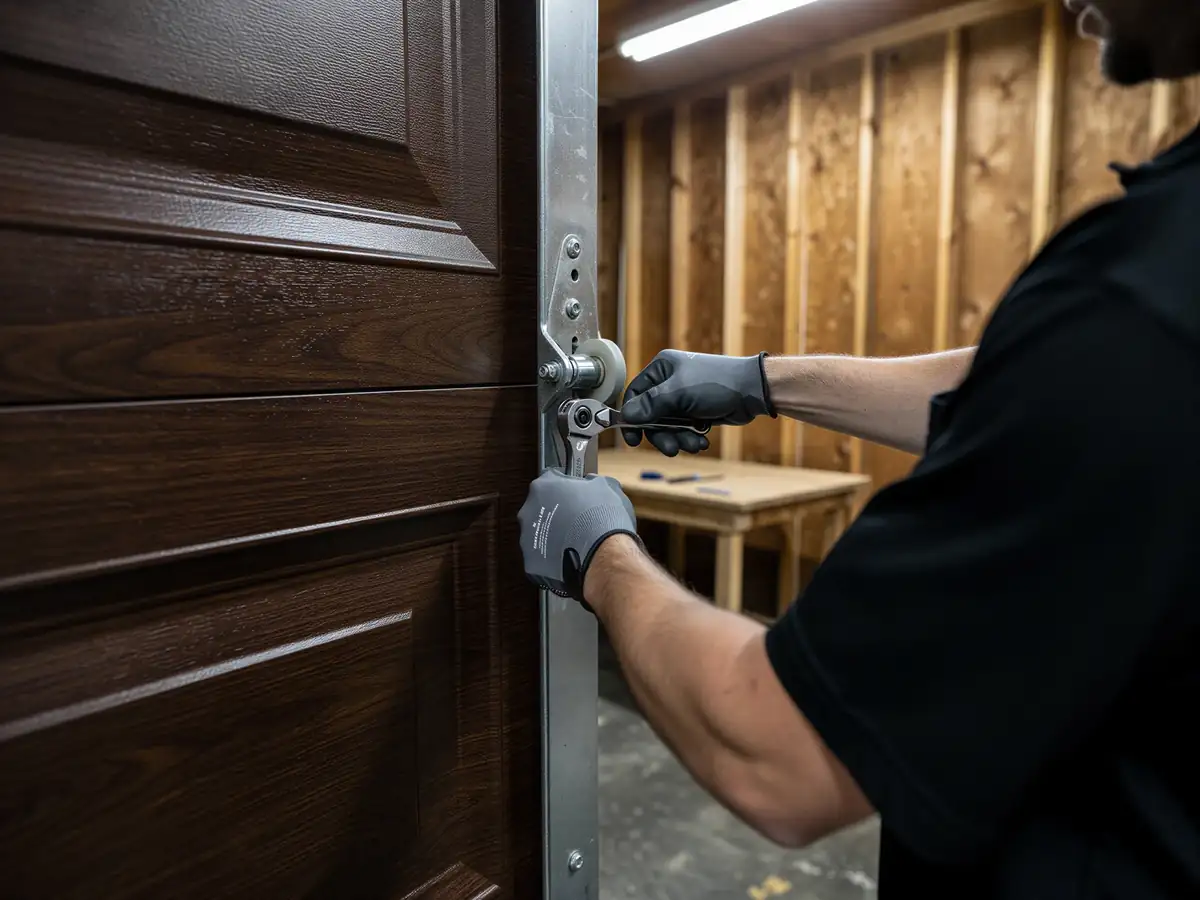
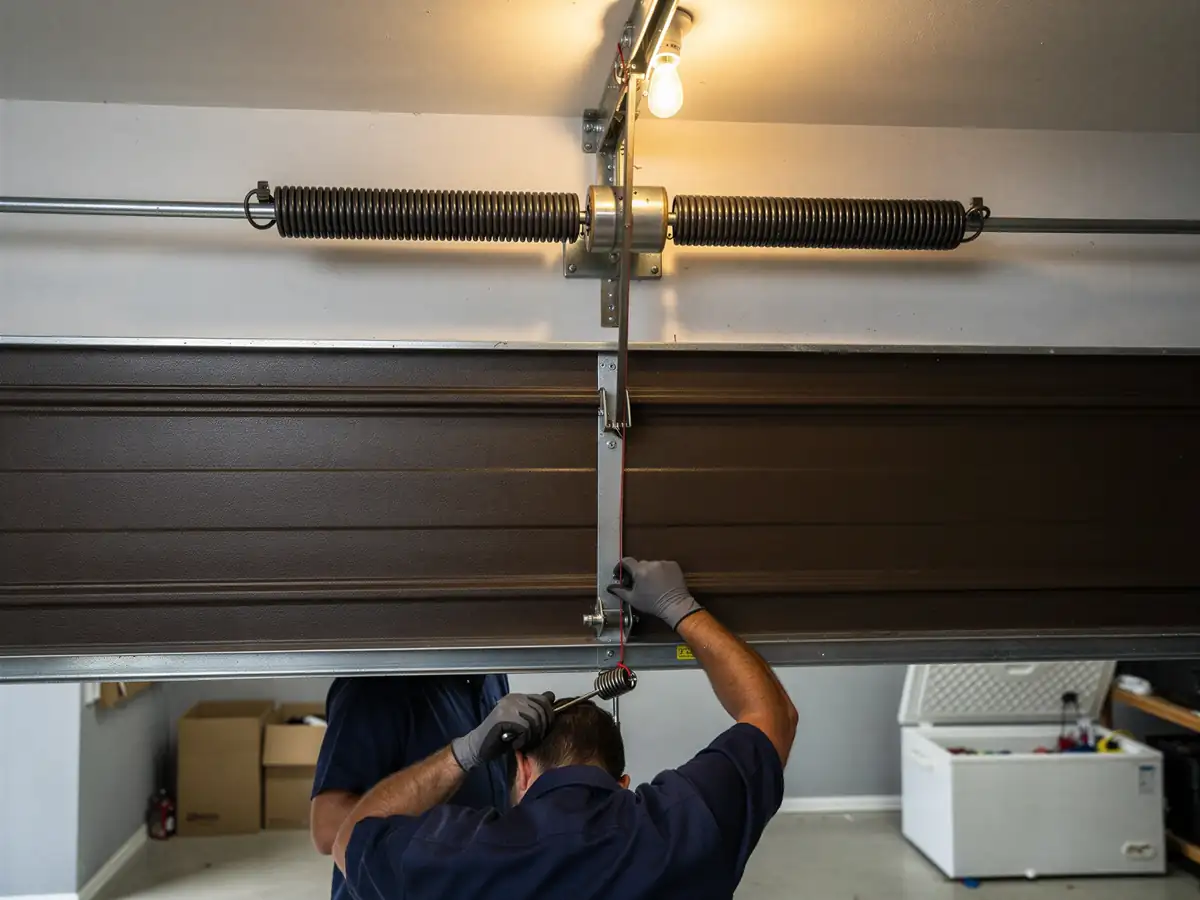
An emergency call usually means one of three things: the door won't move at all, it's hanging crooked off one cable, or it came off the track partway through opening. First step on any of these is making the door safe - that means disconnecting the opener and getting the door into a position where it can't drop on a car or a person. Only after that do we look at what actually failed.
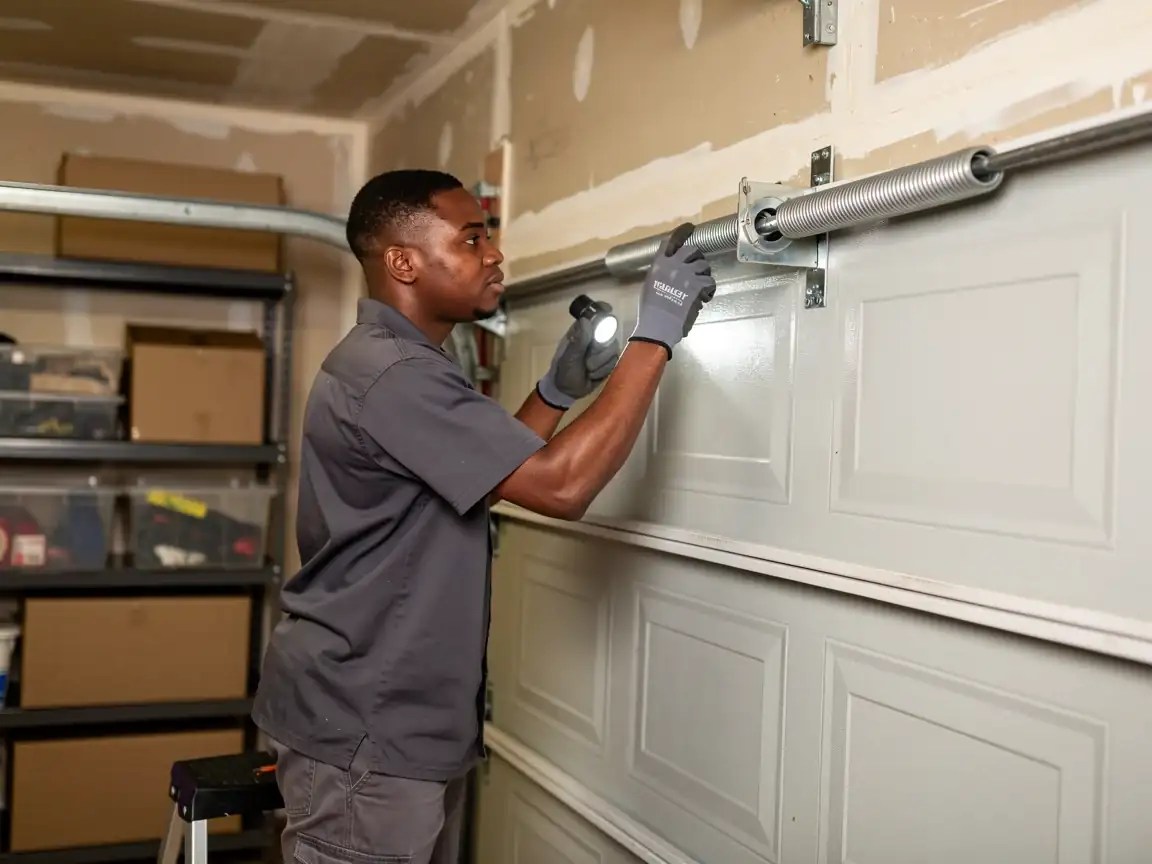
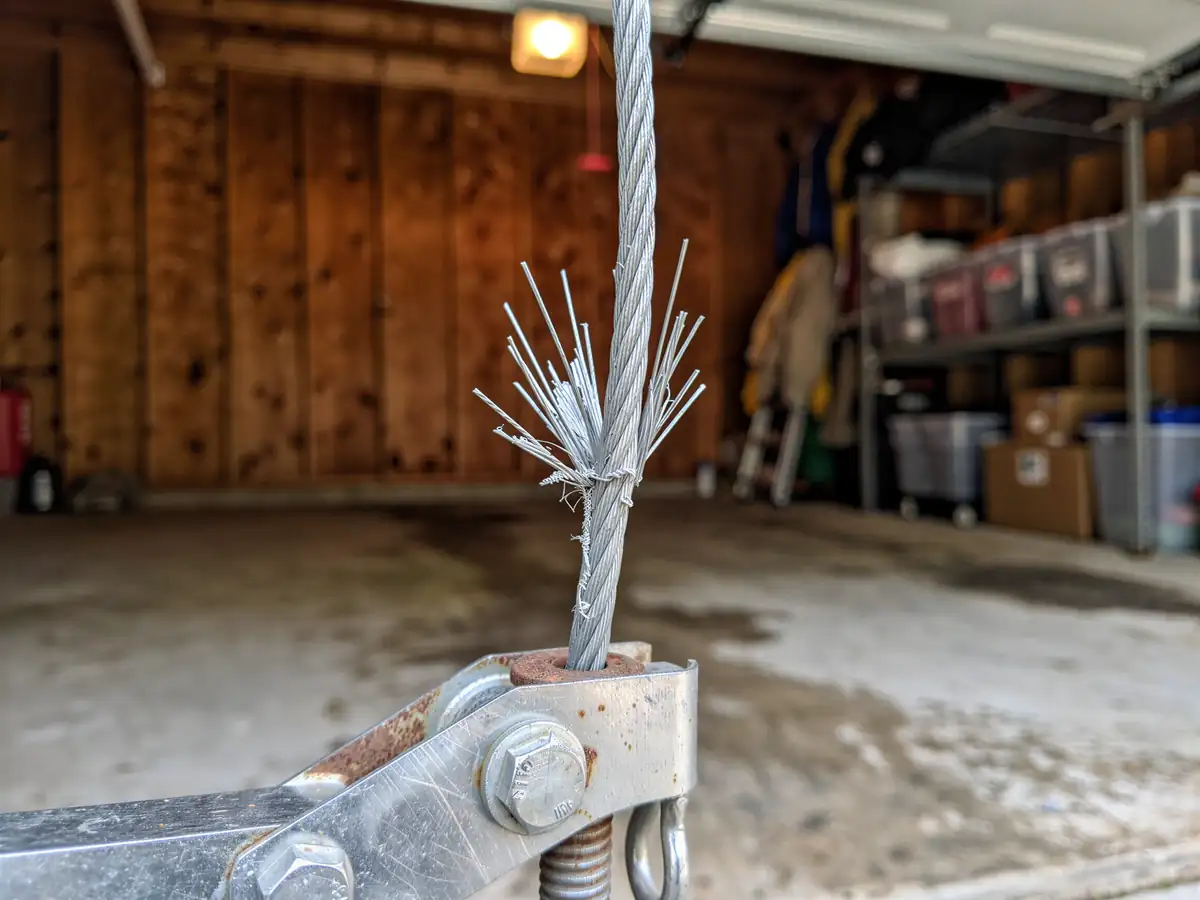
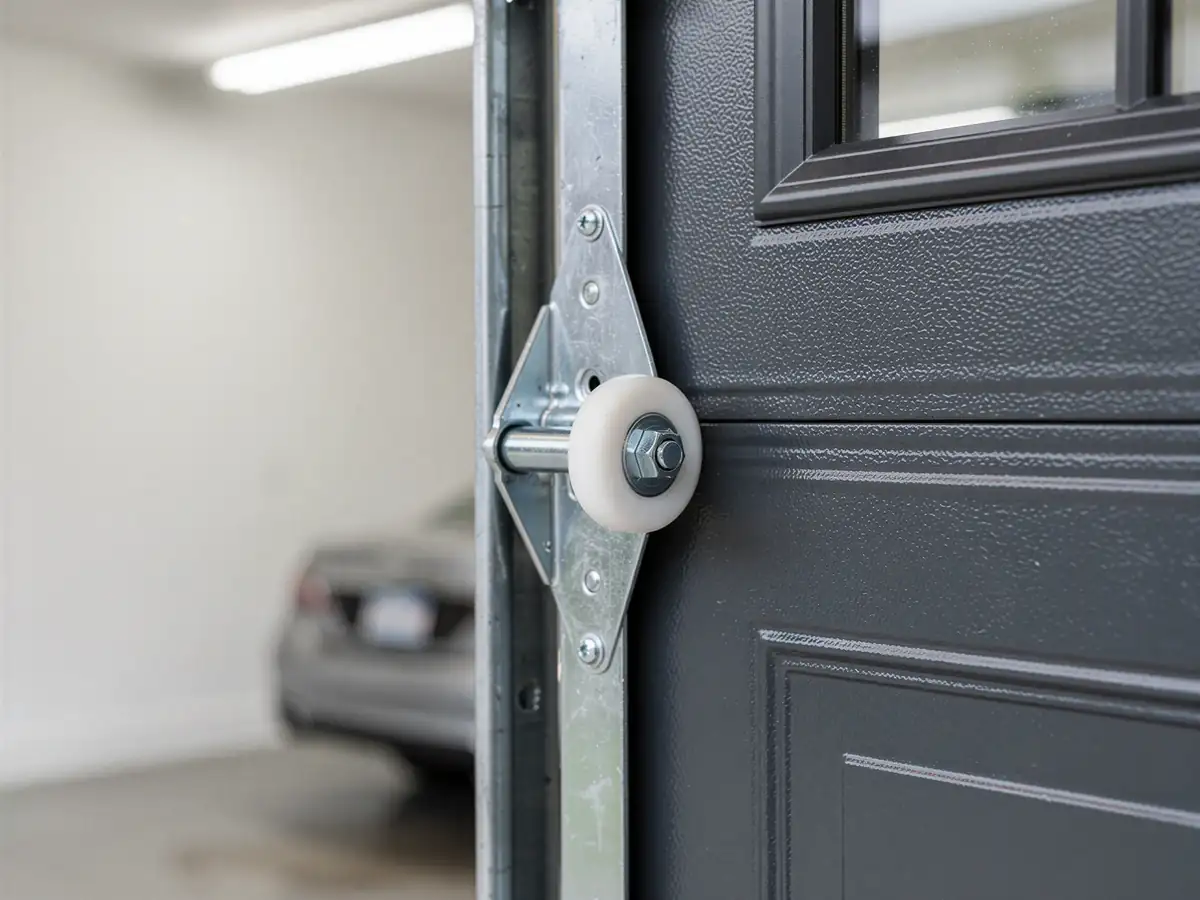
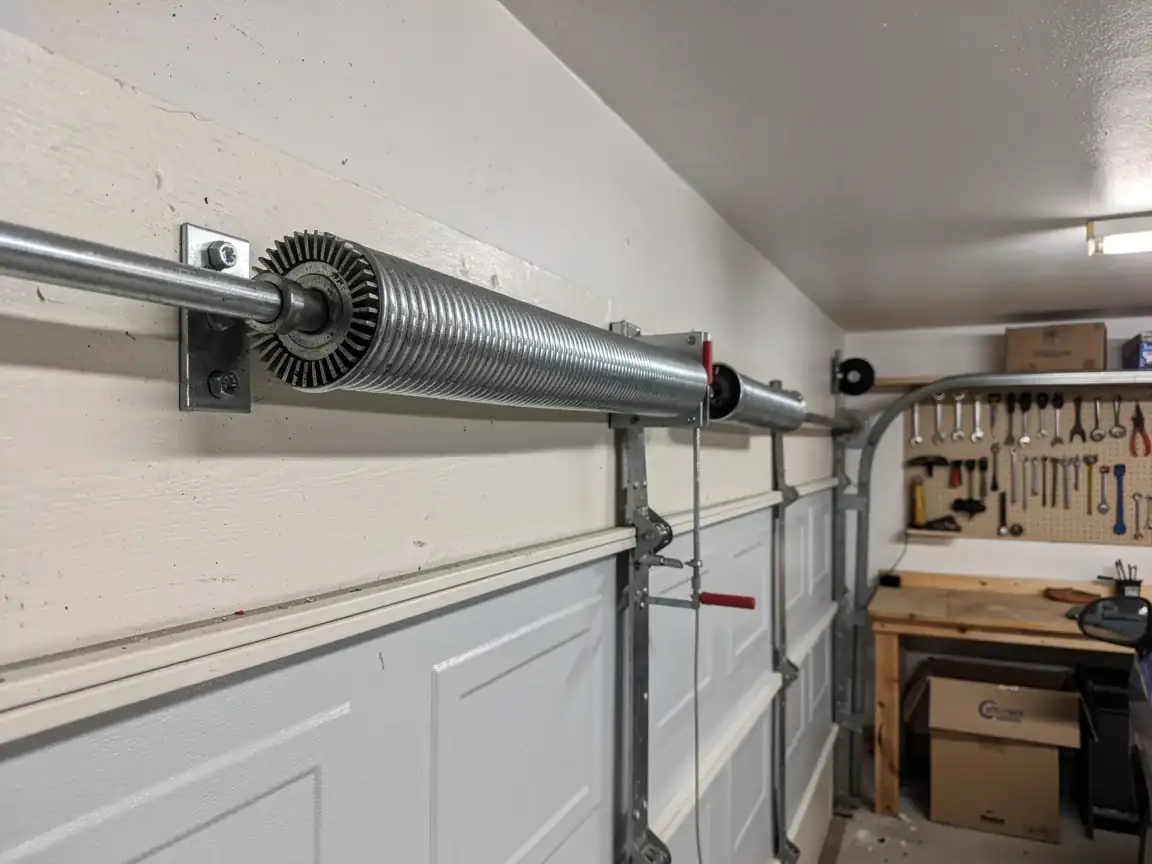
Most emergency jobs in this service area trace back to torsion spring failure or a snapped lift cable, both of which show up without warning on a door that otherwise looked fine the day before. We also see broken rollers that have worked their way out of the track, usually on doors that have been making noise for months before they finally quit.
We won't tell you a repair will hold if the drum, track, or panel underneath the symptom is bent or rusted through - on a lot of the older housing stock here, the spring is the cheap part and the hardware around it is the real question. If that hardware is shot, we'll say so before we quote the fix, not after.
Parts We Carry
Torsion springs sized for single and double doors, extension springs, lift cables, rollers, and the hinges and brackets that go with them ride on the truck for same-day work. These cover the overwhelming majority of what breaks on the roughly 2,638 owner-occupied houses across this service area.
What we don't stock on the truck: openers in every brand and horsepower, and replacement panels or sections for doors that are no longer made. Housing in this area runs mostly pre-1960 across the nine towns we cover, which means some doors still in service are old enough that matching a single damaged panel means special-ordering it or replacing the whole door. We'll tell you straight if your door falls into that category rather than quoting a patch job that won't match.
What You Are Seeing
A door that slams down the last foot instead of lowering smooth is almost always a spring that's lost tension or broken outright
A door that opens a few inches and stops, with a clunking sound from overhead, points to a cable that's slipped off the drum or snapped. If the door is sitting crooked, higher on one side than the other, one cable has let go while the other is still holding - don't force the opener again until that's looked at.
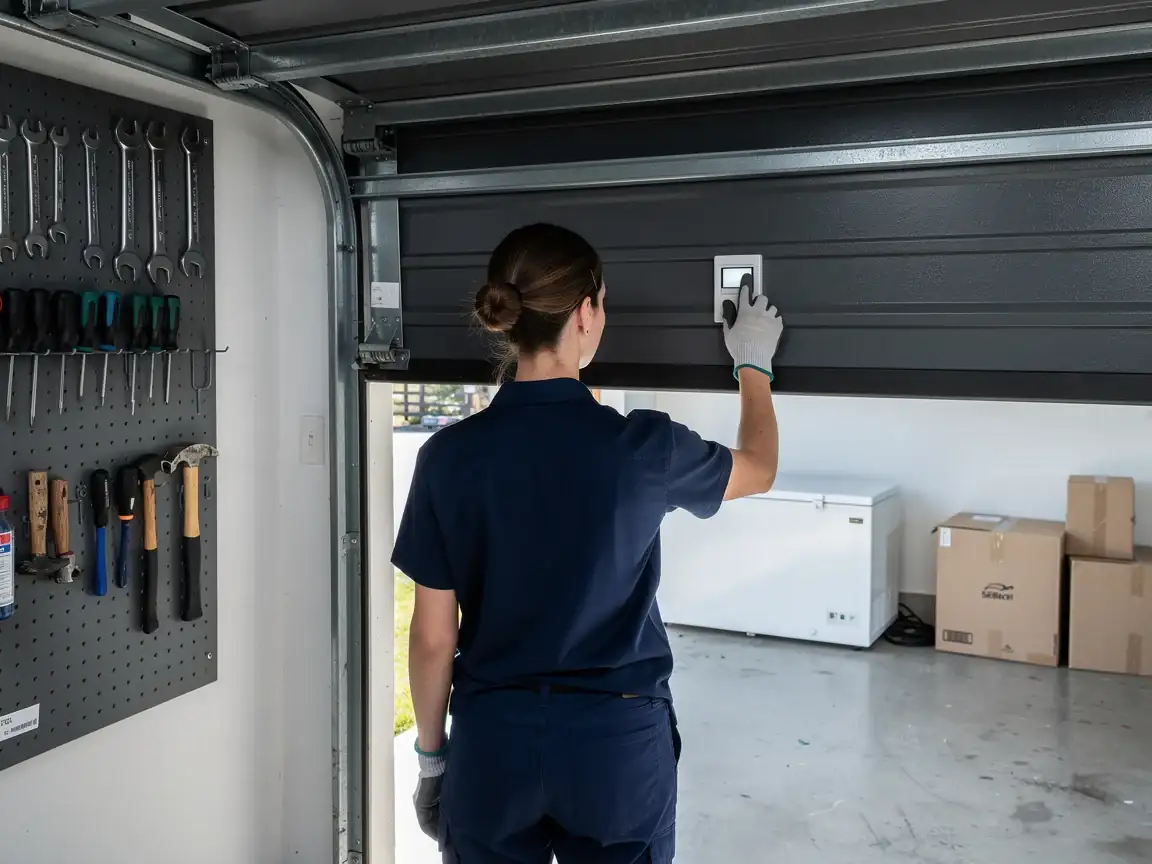
A door that opens fine but won't close all the way, reversing partway down, is usually a safety sensor out of alignment rather than a structural failure
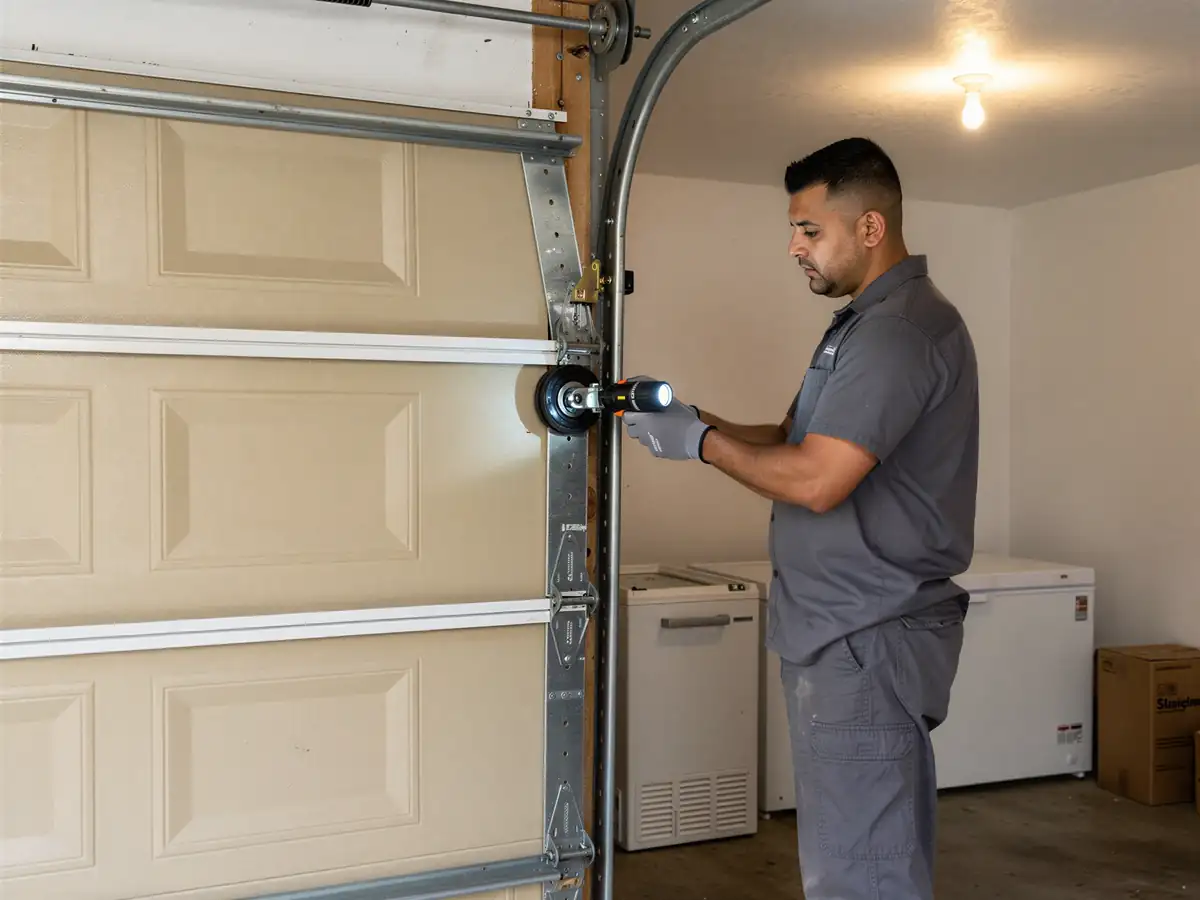
And that's a far cheaper fix. Grinding or popping noises during travel usually mean a roller has worn out or jumped the track, which is a wear item rather than an emergency most of the time - unless the door is now stuck in the open position overnight.
What Causes It Around Here
Housing in this service area was mostly built between 1940 and 1965, with a median year around 1952. Doors and hardware from that era, where they haven't already been replaced, run on torsion setups that weren't engineered for today's heavier insulated panels - so when a homeowner upgrades the door but not the spring system, the old hardware takes on load it wasn't sized for and fails sooner than it should.
The climate band here is cold and moderate, and that matters more for garage doors than people expect. A winter freeze-thaw cycle stiffens lubricant in springs and rollers, and a door that's been straining quietly all season will often pick the coldest morning to finally let go - which is why emergency calls cluster in the cold months. On top of that, nine-tenths of the area's homes predate 1960, so original hardware that's 50-plus years old, patched rather than replaced over the decades, is simply more of what we're working on here than you'd find in a newer subdivision.