What the Fix Involves
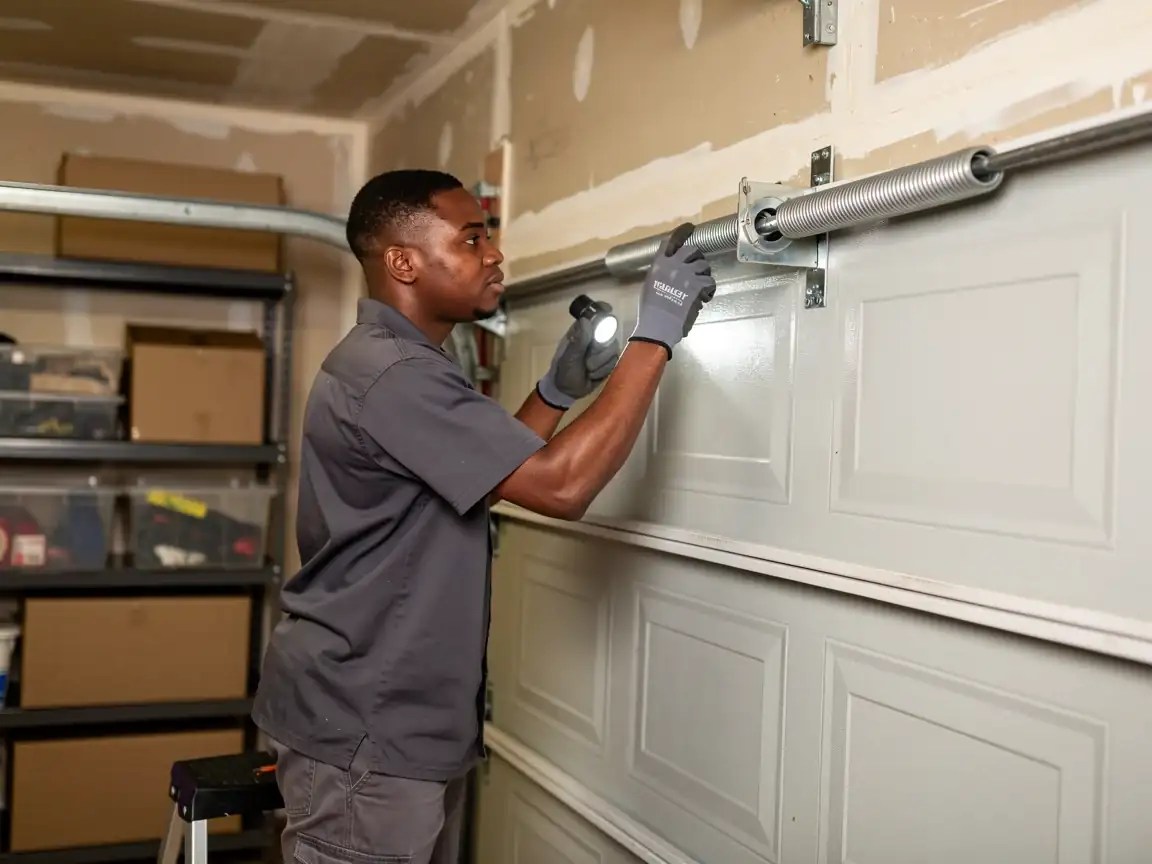
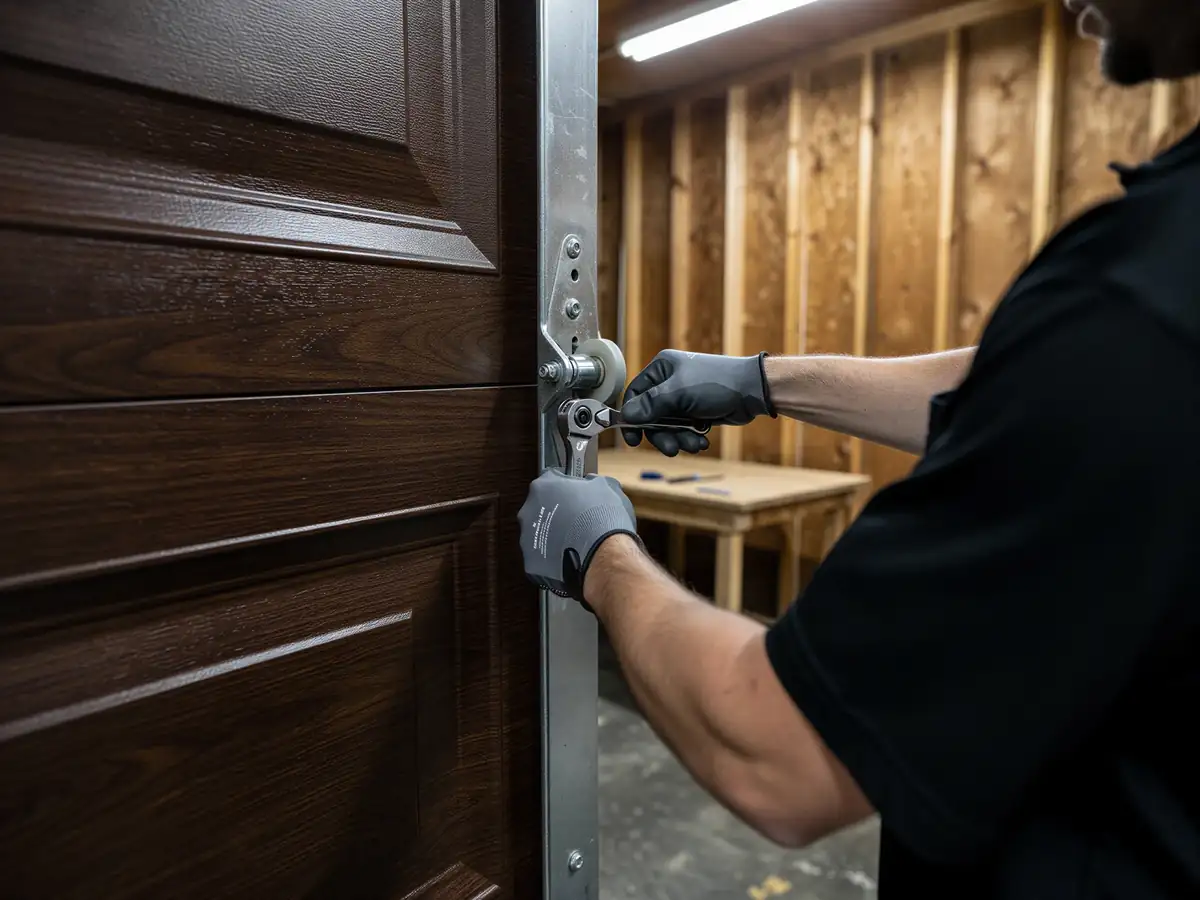
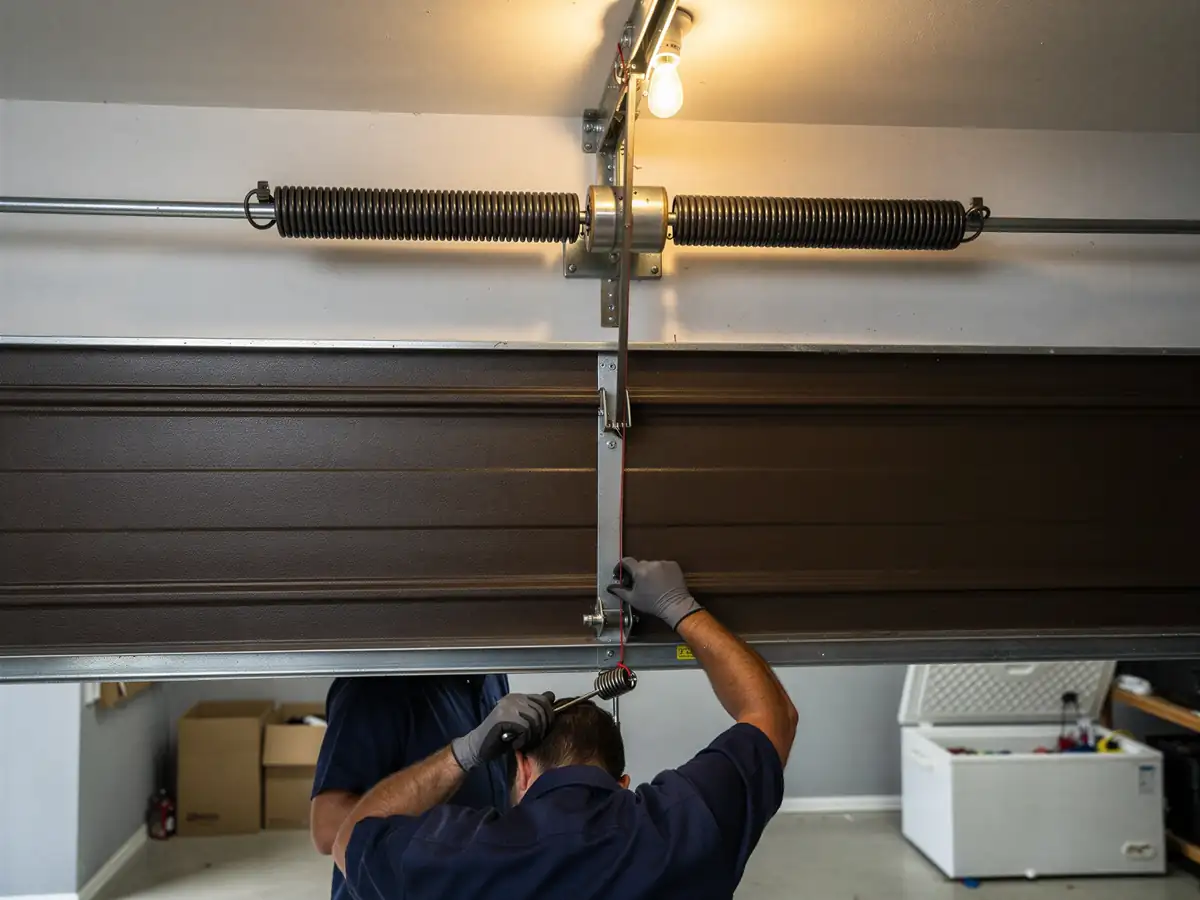
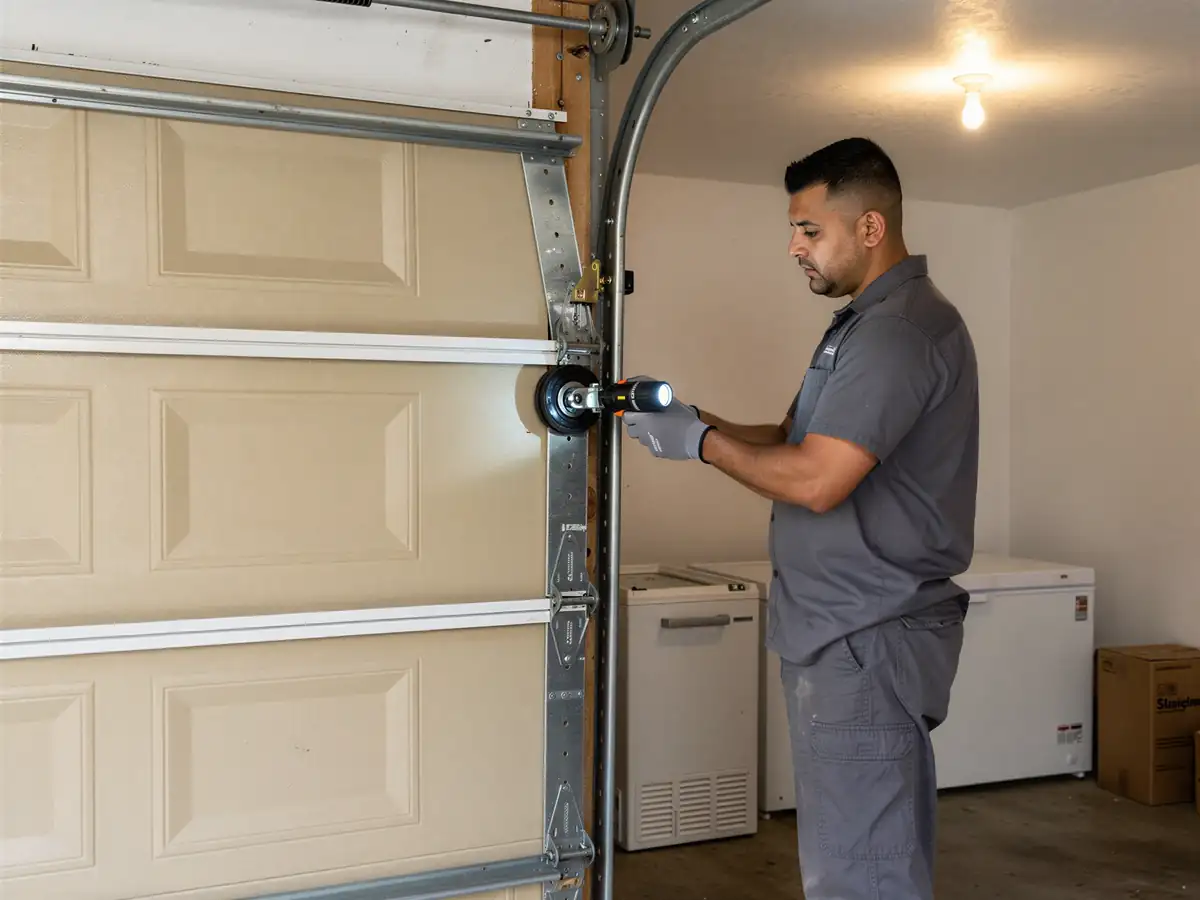
A snapped or frayed lift cable almost always means the door is sitting crooked, hanging on one side, or refusing to move at all because the opener's safety sensor reads it as off-track. The job starts with finding out why the cable let go - a rusted drum groove, a frayed strand that finally parted, or a spring that lost tension and dumped the load onto the cable instead of carrying it. We release spring tension safely, pull the old cable and drum assembly, check the track and rollers for wear that caused the uneven pull in the first place, and install new cable sized to the door's weight and drum diameter.
On a lot of Macomb houses this isn't a stand-alone fix. The housing stock here runs 1940 to 1965, median build year 1952, which means a good share of doors are still on their original extension-spring setups or early torsion conversions. Cable that's original, or close to it, has been doing this job for seven decades in some cases. We don't just swap the cable and send you on your way if the drum is scored or the spring is shot - we tell you what else needs to come with it so you're not back here in six months.
We do not patch a cable by splicing it. If it's frayed, it gets replaced, full length, matched to the correct drum.
Parts We Carry
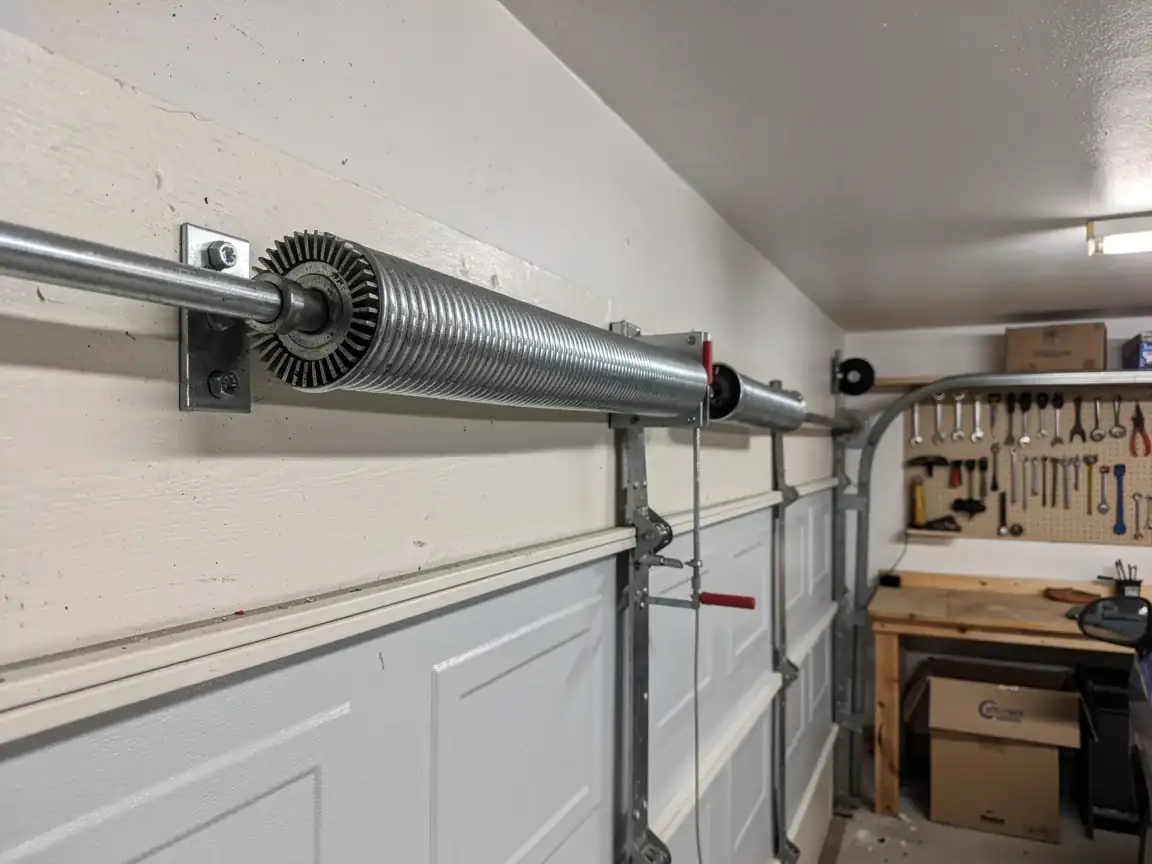
We stock cable, drums, and fittings sized for the extension-spring and early torsion hardware common on homes built in the 1940s through the 1960s, since that's what most of the service area is still running. That includes aircraft-cable in the standard gauges used on residential doors from that era, galvanized cable for exposed installs, and drums machined for both older high-headroom torsion setups and the simpler extension-spring tracks found on garages that haven't been touched since they were built.
We also carry current cable and drum hardware for newer torsion systems, for the houses in the area built or renovated since. Not every part fits every door - a drum pulled off a 1950s extension system won't bolt onto a modern torsion shaft, and vice versa - so we bring options on the truck rather than guess from a phone description.
One limit worth saying plainly: if a cable has jumped the drum and jammed the door against the frame hard enough to bend the track or crack a panel, cable alone doesn't fix it. We'll tell you on site if the job has grown past a cable repair and into a track or panel replacement, rather than charge you for parts that won't solve what's actually wrong.
What You Are Seeing
The usual signs: the door hangs lower on one side than the other, it jerks or binds partway up
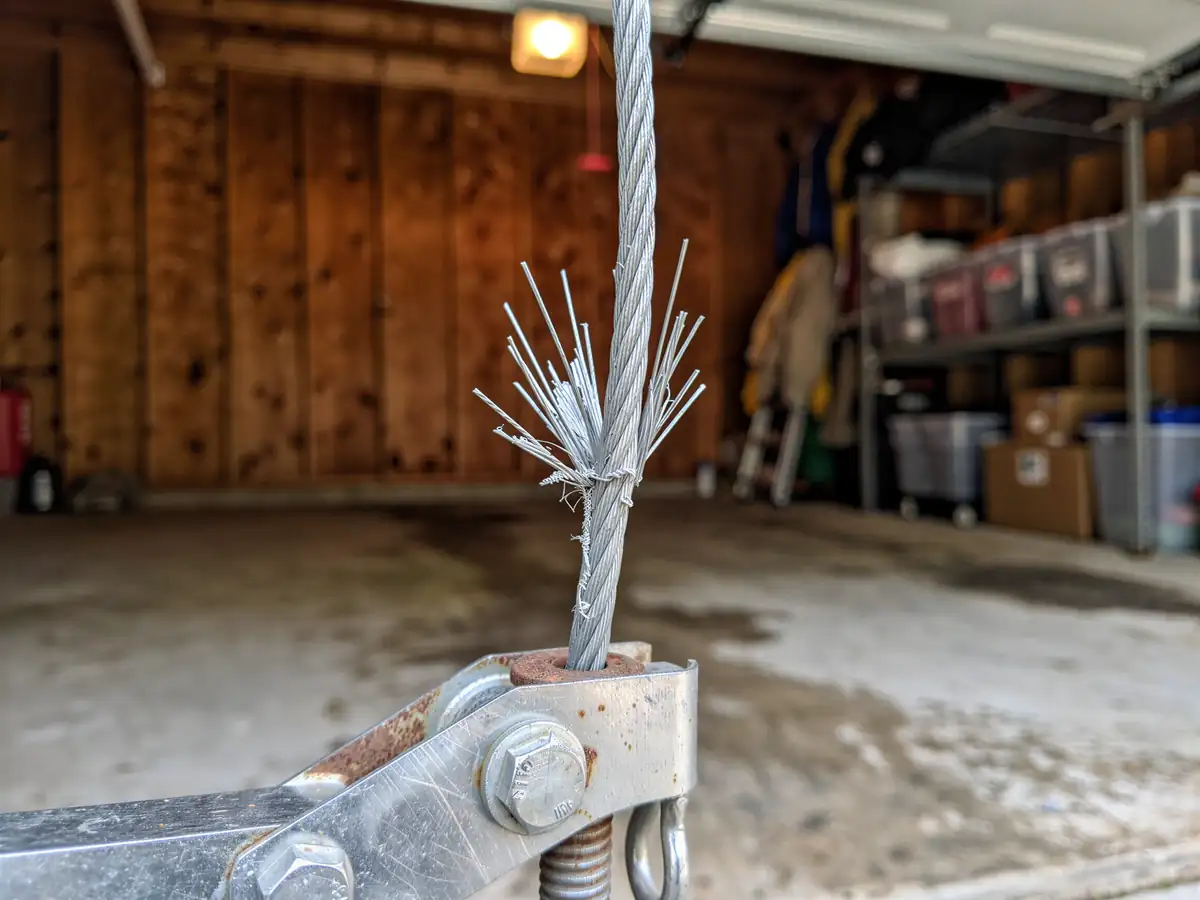
Or it comes down crooked and catches the frame before it seats. Sometimes there's a visible loose loop of cable at the bottom corner, or you can see frayed wire strands near the drum. In the worst case the door comes off the track entirely and drops - which is also the most dangerous version, because a door that's lost cable tension has nothing holding its weight except the spring, if the spring is even still intact.
Another pattern we see
The opener runs, the motor sounds normal, but the door doesn't move, or it moves an inch and stops. That's usually the opener's travel limit or force sensor reacting to a door that's bound up on a bad cable, not an opener problem at all. Replacing the opener in that situation doesn't fix anything - the cable has to go first.
If you hear a loud bang and the door won't budge afterward, that's more often the spring letting go than the cable
Though a failed spring can take the cable with it on the way down.
What Causes It Around Here
Cold, moderate winters put repeated stress on cable and hardware that doesn't get touched most of the year - metal contracts in the cold, cable stretches and relaxes with temperature swings, and galvanized coating wears thinner on cable that's been through a few decades of that cycle. Combine that with a housing stock where most garages still carry their 1940s-to-1960s original hardware, and cable fatigue shows up more often than it would on newer stock.
Across the roughly 3,534 households in the service area, with about 2,638 of those owner-occupied houses, a large share were built in that same 1940-1965 window - the original doors and lift hardware on those garages have had seventy-plus years to wear. Cable doesn't usually fail from one event; it fails from thousands of freeze-thaw cycles pulling on a drum groove that's slowly cutting a groove of its own into the wire.
We're not guessing at this from a brochure - it's what we find on the truck, door after door, on the same handful of hardware types that keep showing up on houses from that era.