What the Fix Involves
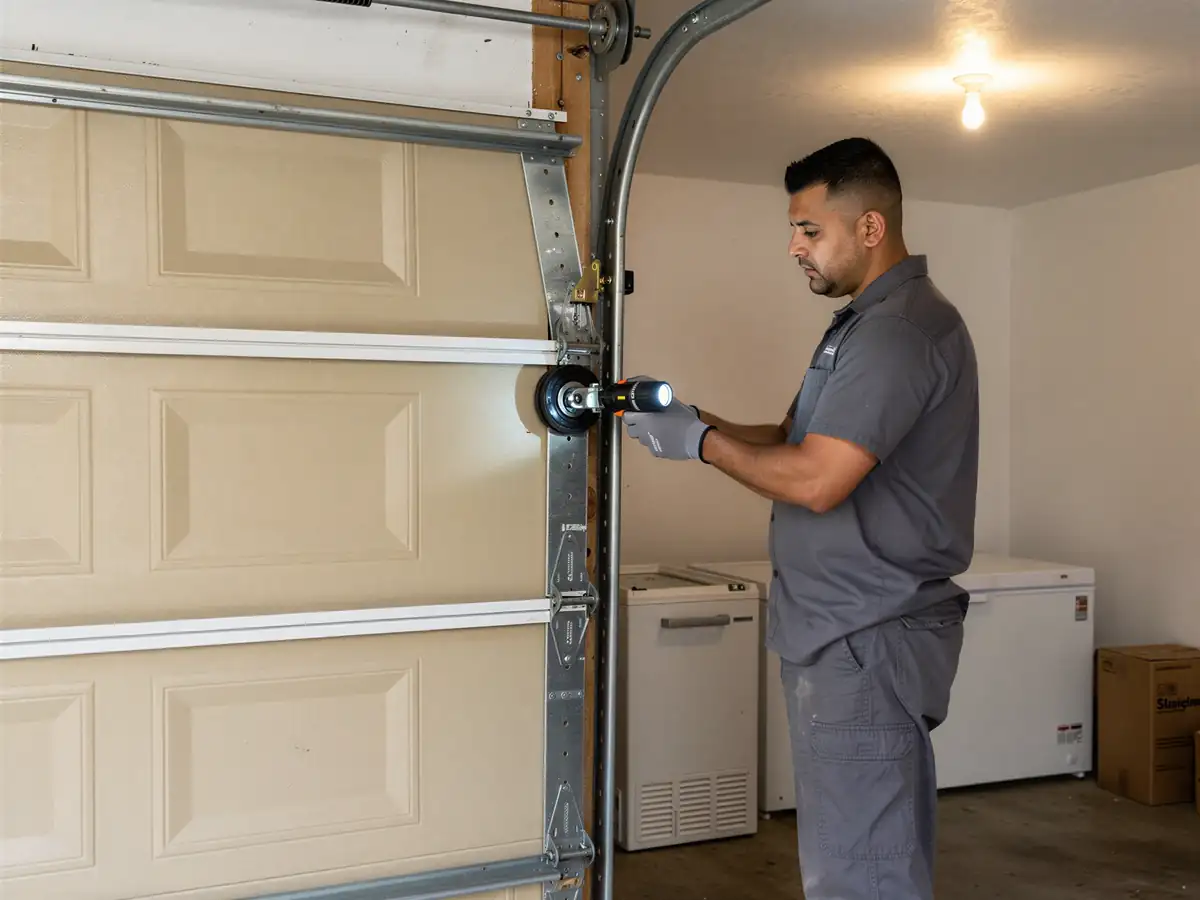
When a door jumps its track, the first job is figuring out why before touching anything. We check whether the track itself got bent - usually from a car bumping it or a roller that finally gave out - or whether a cable snapped and let one side of the door drop. On older one-piece and sectional doors common across this area's housing stock, the vertical track brackets loosen over decades and let the whole rail shift a half-inch, which is enough to throw rollers out on the next cycle.
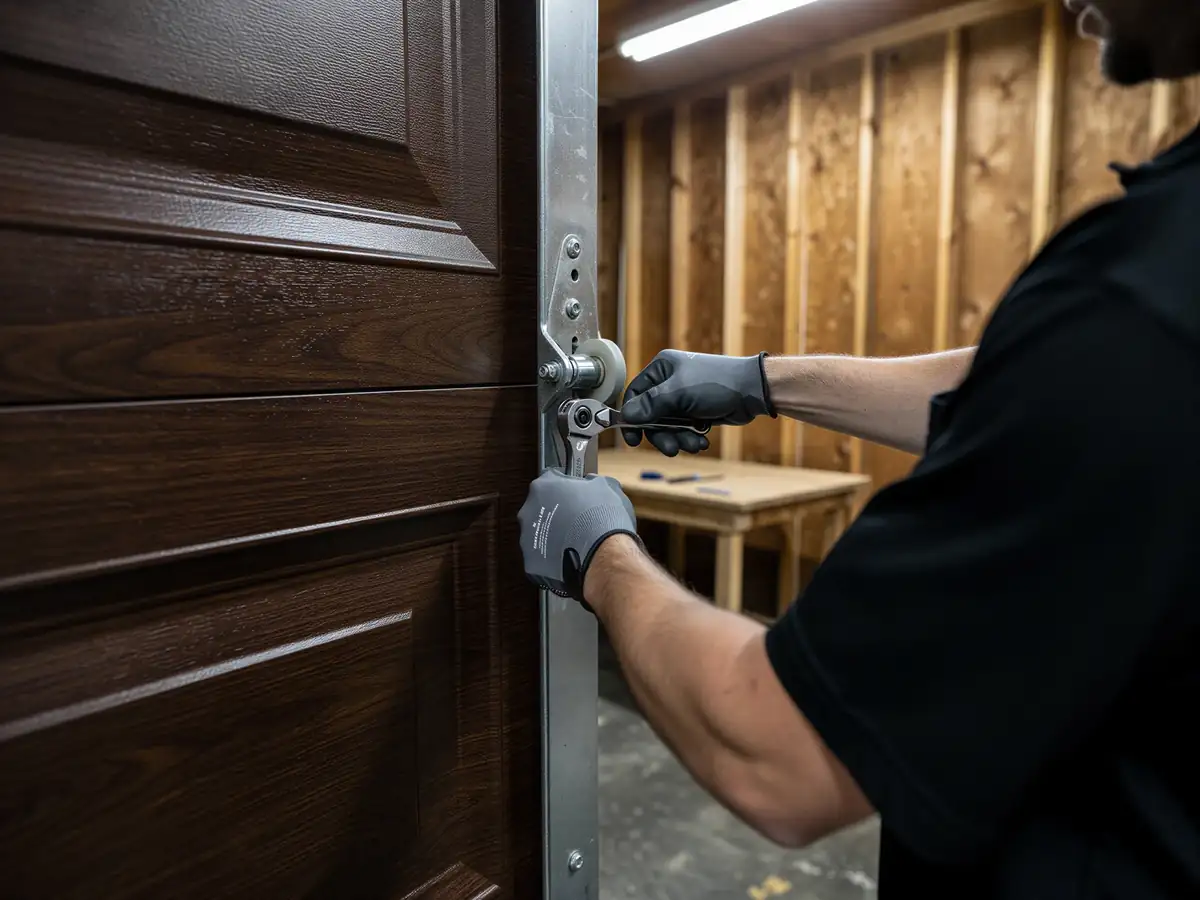
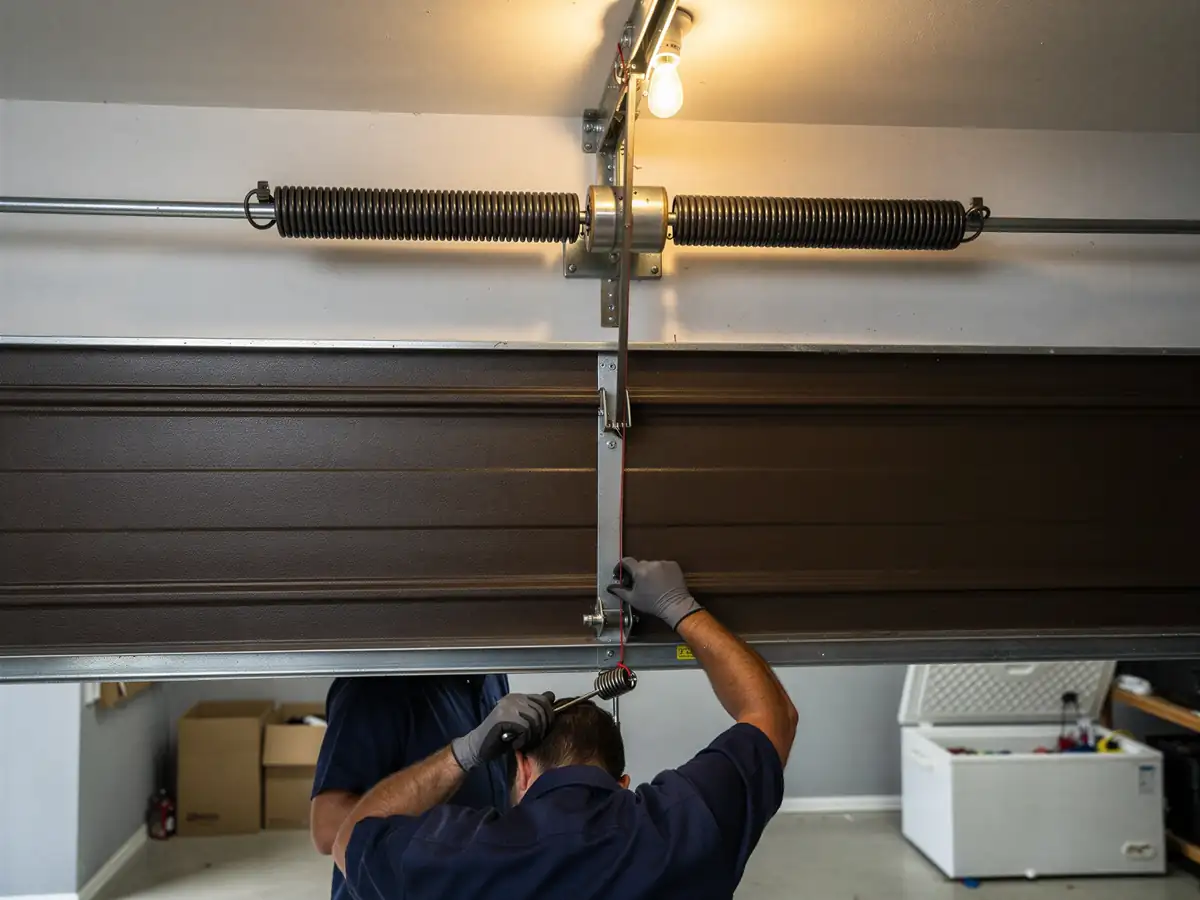
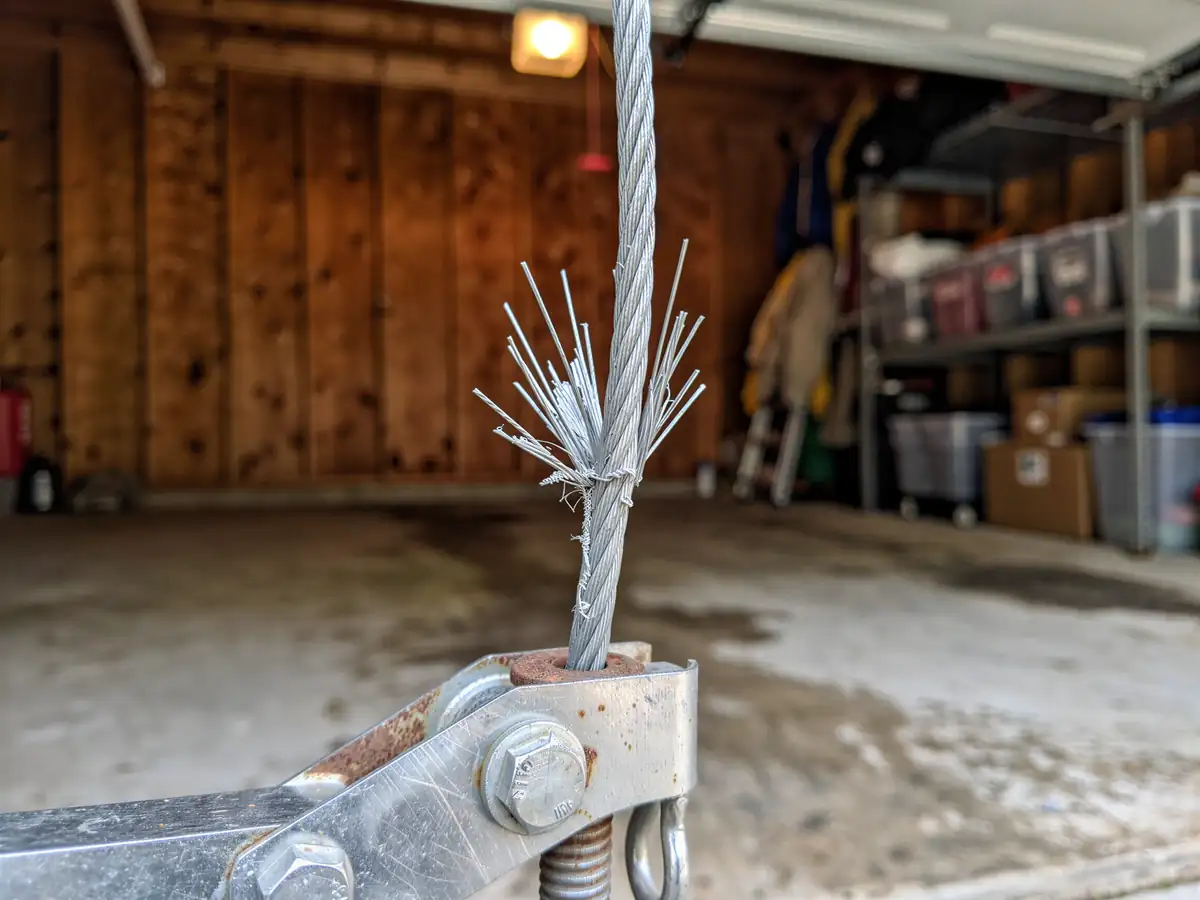
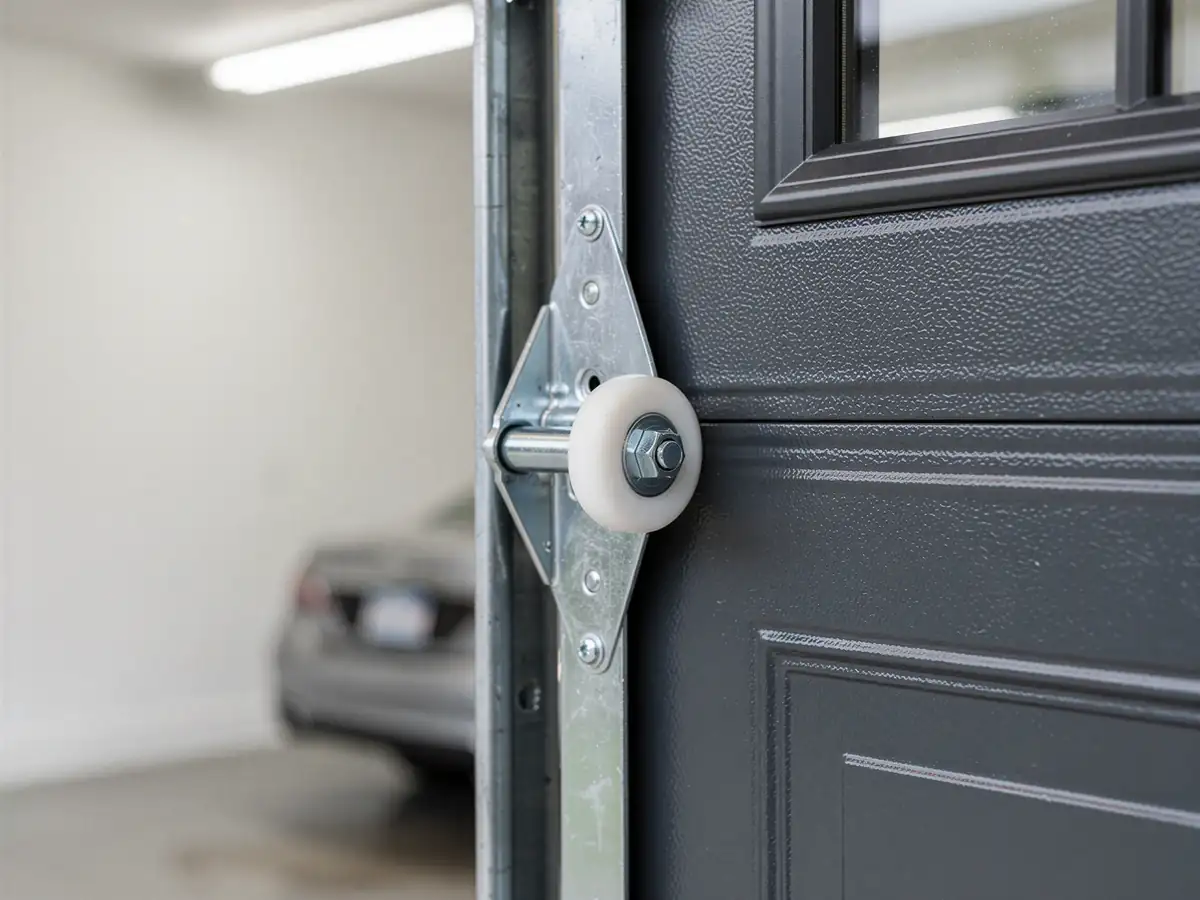
We re-set the door onto the track where that's possible, straighten or replace bent sections, and re-square the brackets to the jamb. If a roller has worn down to the point it's chewing up the track edge, we swap the whole roller set rather than patch one spot, since the others are usually close behind. On doors with broken cables, we don't force the panel back up - a door under spring tension with a cable failure needs the spring released first, or you risk the whole assembly dropping.
Sometimes the track is fine and the real problem is a opener that's fighting a door it can no longer lift square, which bends the track slowly over months. We'll tell you if that's what we're looking at instead of just rehanging the door and sending you on your way.
Parts We Carry
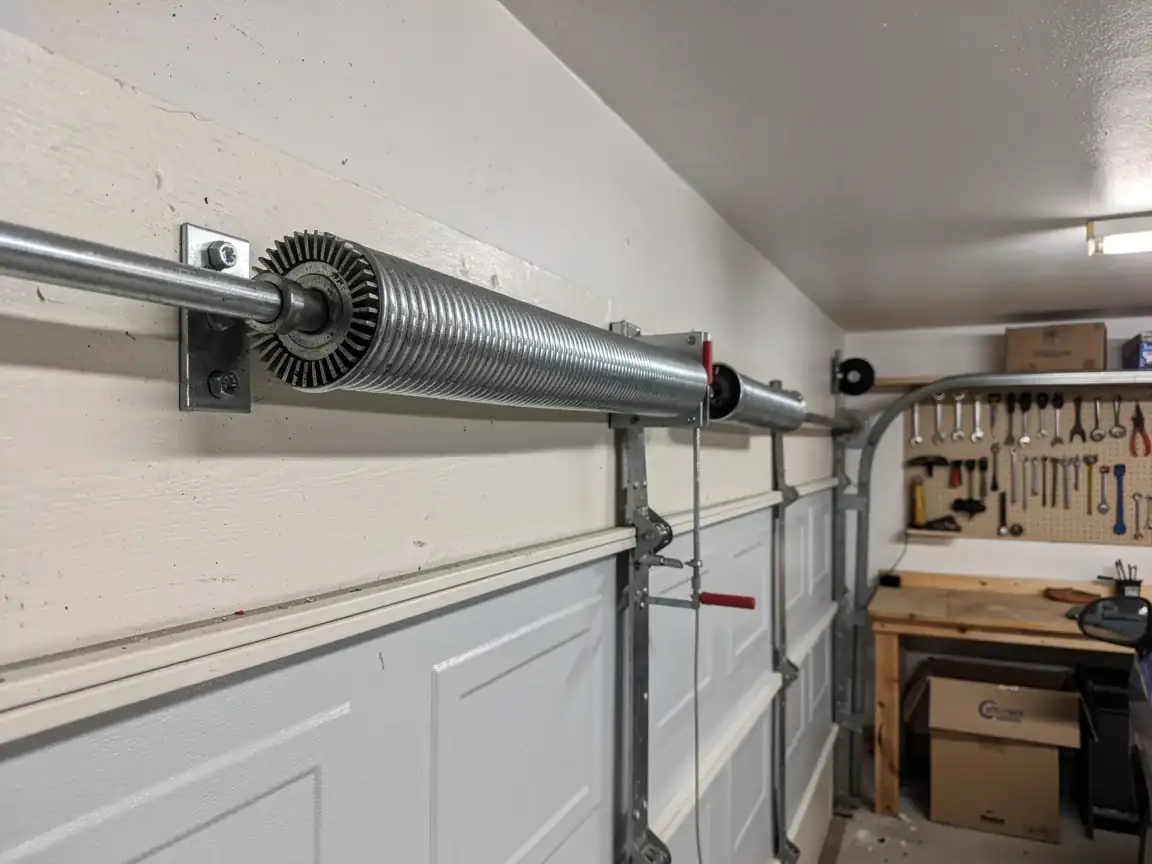
We stock replacement track sections, both standard and heavy-gauge, along with the roller brackets and carriage hardware that fit the older torsion and extension setups still common on houses built in the 1940s through 1960s across this service area. Steel rollers with sealed bearings are the usual swap-in for the stamped-steel rollers original to that era, since the originals wear a groove into themselves after enough winters.
Cables, bottom brackets, and the lag screws that anchor track to jamb are all truck stock items - most off-track jobs don't need a special order. Where we run into trouble is matching track profile on some of the original heavier doors from that same build period; that hardware isn't made anymore; and if a bracket is cracked instead of just bent, we're ordering a part rather than fixing it same-visit. We'll tell you up front if that's the situation rather than guessing.
What You Are Seeing
The door stops a few inches up and won't go further
Or it's crooked - one side higher than the other - with a visible gap between the roller and the track channel. Sometimes you'll hear a grinding or popping sound right before it happens, which is usually a roller failing in real time rather than track failure out of nowhere. On a double door, if one cable lets go, the whole panel will hang at an angle, and the opener will keep trying and straining against it, which is worse for the opener than for the door.
A door that's only slightly off track might still close and open rough, scraping along one side, rather than stopping outright
That's usually the early version of the same failure - worth a call before it fully jumps the rail and bends something that was still straight.
What Causes It Around Here
Most of the housing across this service area went up between 1940 and 1965, with a lot of it clustered right around 1952, and that build era means original track hardware, lighter steel, and brackets fastened into jambs that have shifted some over seventy-plus years. None of that was built for the loads that came later - heavier insulated doors, stronger openers - and the track takes the strain first.
The climate here is the other half of it. Cold winters mean steel contracts, grease stiffens, and a roller that's borderline in October can seize or crack by January, right when a stuck roller under tension is most likely to pop the door off the rail. Across the roughly 2,600 owner-occupied houses in the area, that combination - original 1950s-era hardware plus cold-weather wear - is the pattern we see on most off-track calls, not a one-off accident.