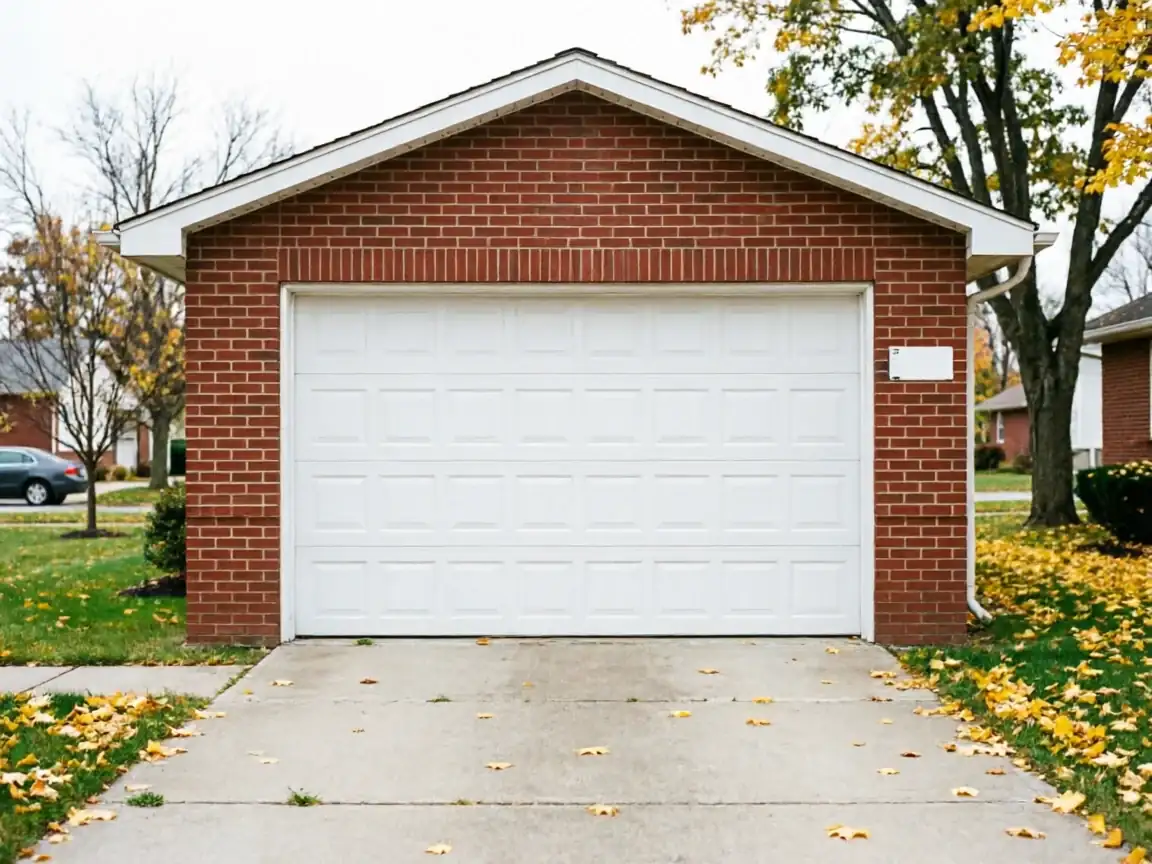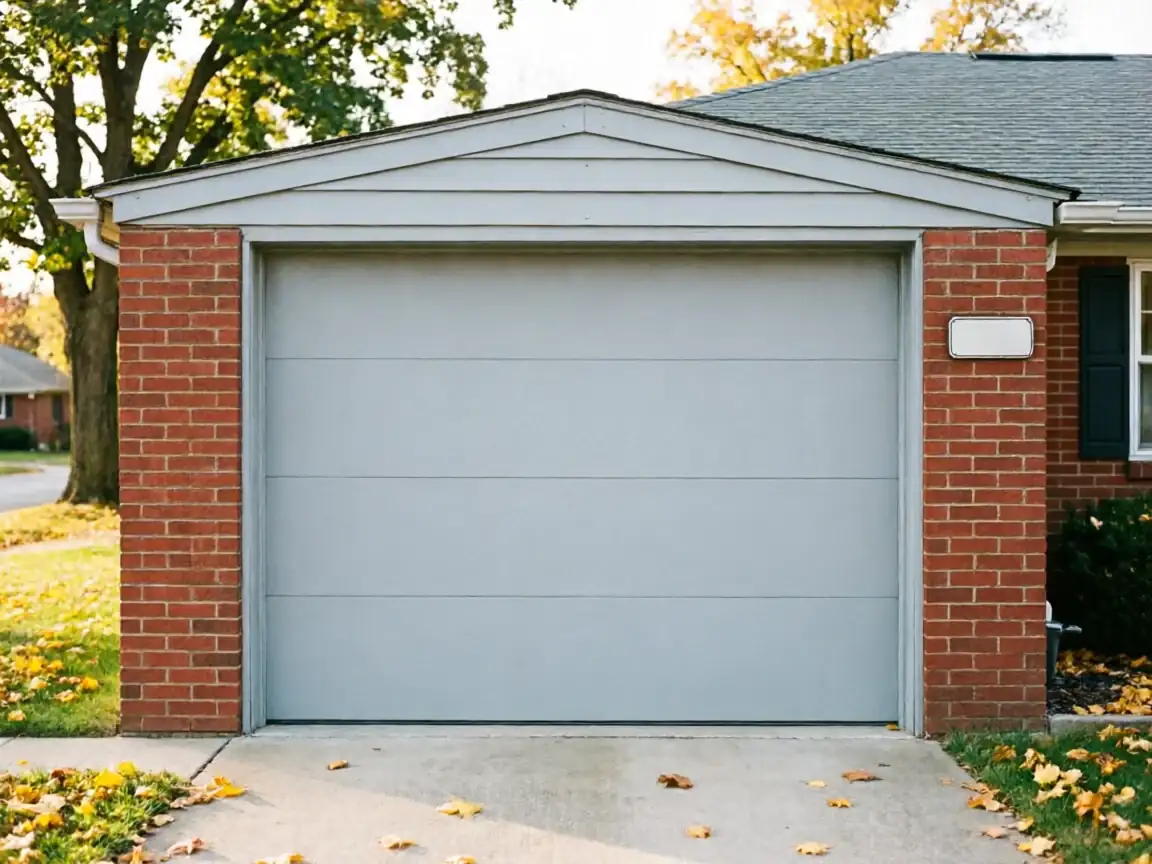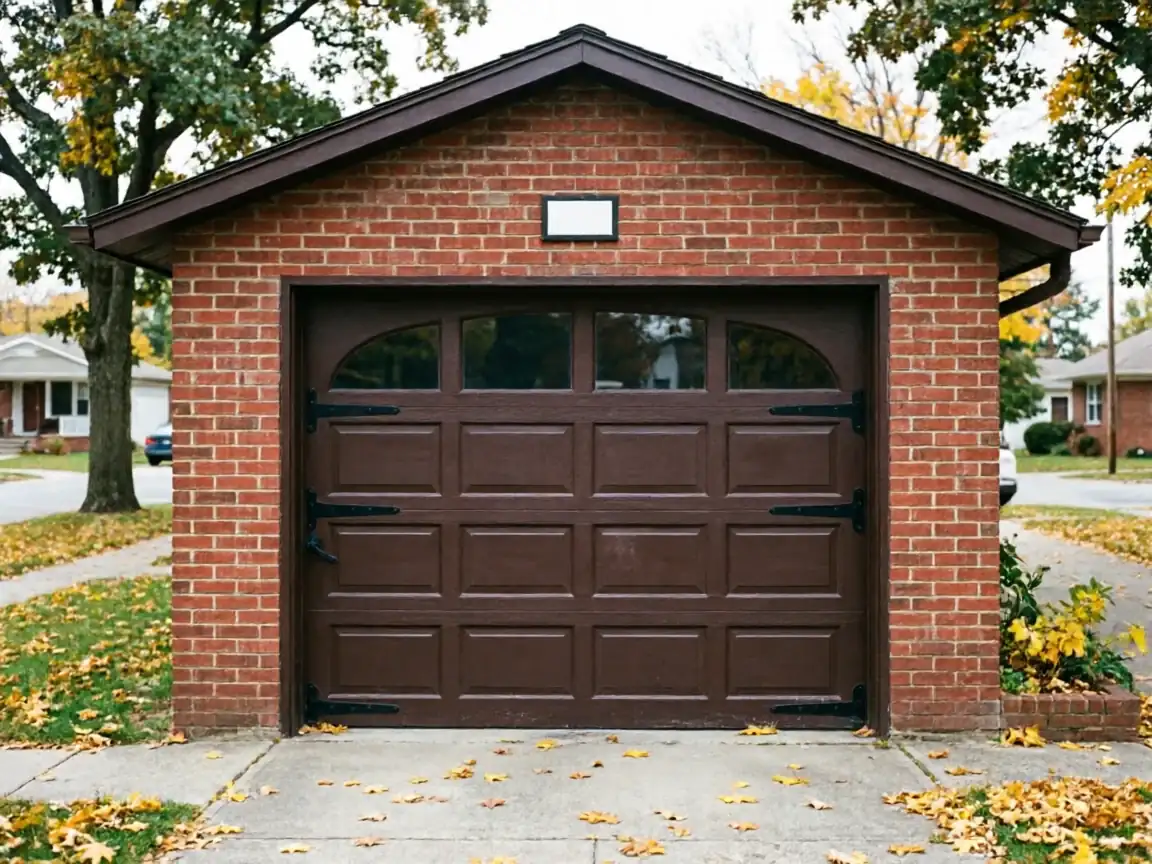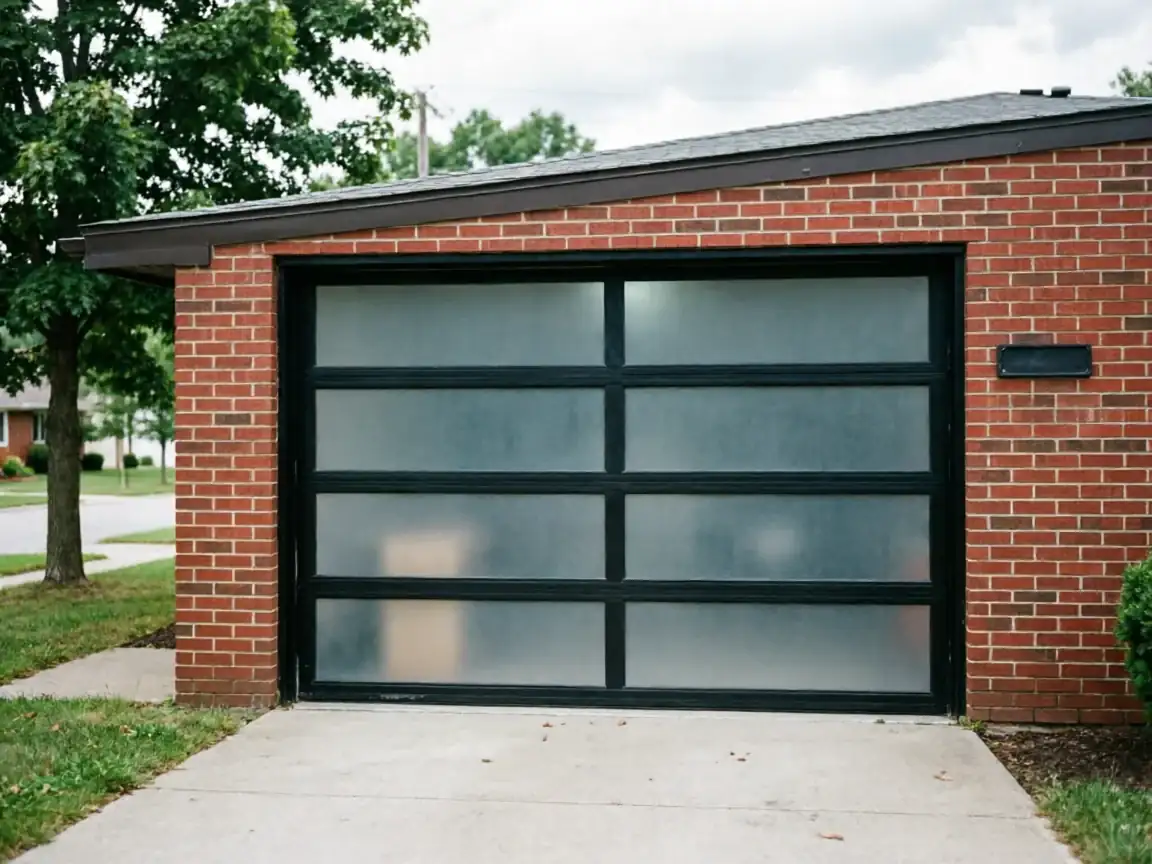
What You Are Seeing
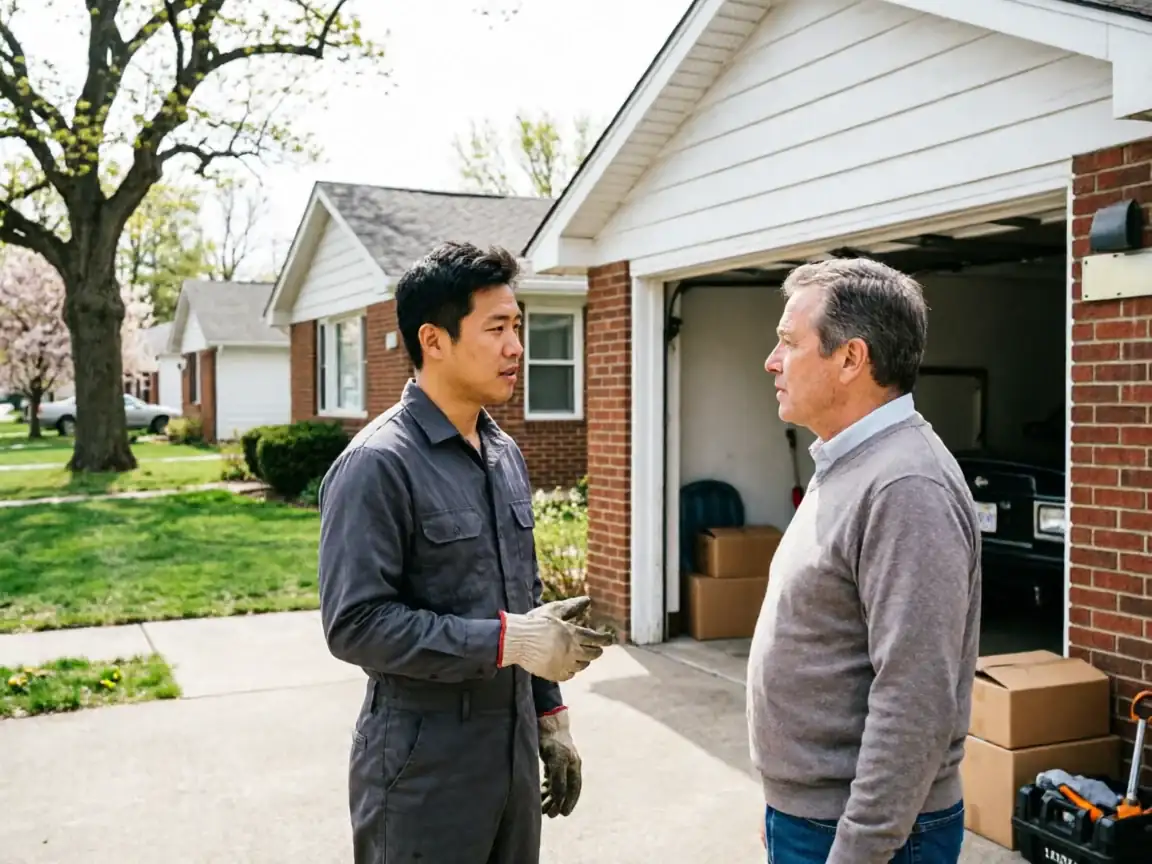
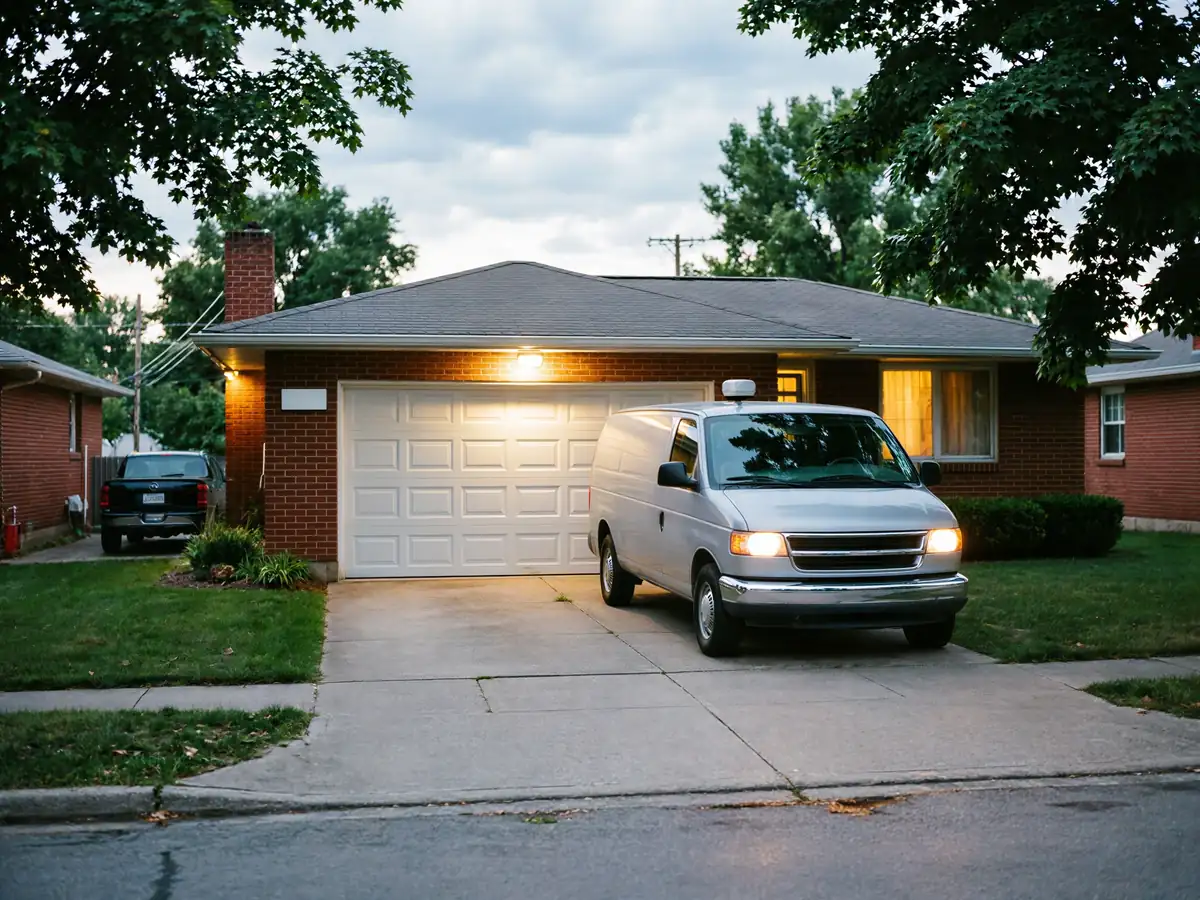
Plymouth sits 17 miles out from our shop in Macomb, which is the first thing worth saying plainly: a call here isn't a five-minute hop, it's a planned trip, so when you call we're figuring the drive into the window we give you, not pretending we're already around the corner. That drive matters less for how fast we show up and more for how we load the truck before we leave - if you can tell us on the phone whether the spring let go, the opener quit, or the door's hanging crooked on one side, we bring the right parts the first time instead of a second trip eating another 34 miles round-trip.
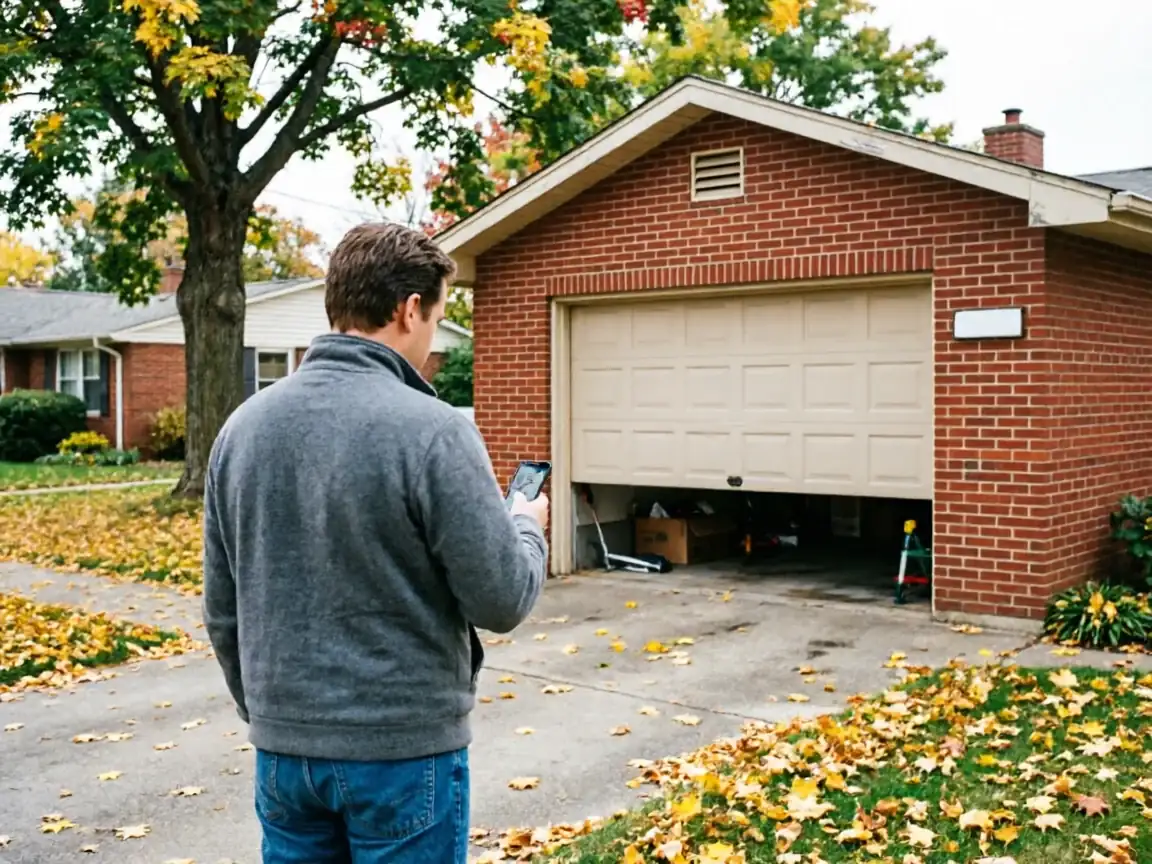
Most of what we see called in from Plymouth is tied to the age of the house. The typical home here went up around 1948, which puts the door and the opener hardware squarely in an era where springs are undersized for the door weight by today's standard and track brackets were often set with lag screws straight into framing that's shifted some in seventy-plus years. None of that means something's wrong with your house - it means the fix has to account for what's actually on the wall, not what a 2020 install guide assumes.
The DIY Question
A broken spring on a door this old is not a project to pick up on a Saturday with a borrowed clamp set. Torsion springs built for 1948-era doors are often under more tension than people expect, and the mounting hardware has had decades to work loose or rust. If the spring's broken, the opener's grinding, or the door's come off a track, the safe move is to leave it alone and call - not because the job is magic, but because the hardware underneath it has had a long time to wear unevenly.
Where a homeowner can reasonably help themselves: tightening a loose panel bolt, lubricating a dry hinge, or clearing a track of debris. Past that, with household incomes in this area running lower than the wider service area average, we understand the instinct to save the service call by doing it yourself. We'd rather tell you honestly what's safe to touch than have you find out the hard way what isn't.
What Causes It Around Here
Two things drive most of the repair calls we get from Plymouth
The age of the housing stock and the cold. With median construction around 1948, a lot of these doors are original replacements or early retrofits, meaning springs sized for lighter wood doors now carrying heavier insulated panels, or openers bolted to headers that were never built for the load. That mismatch shows up as a spring that snaps years before it should, or a motor that strains and burns out early.
The climate here sits in the cold-moderate band
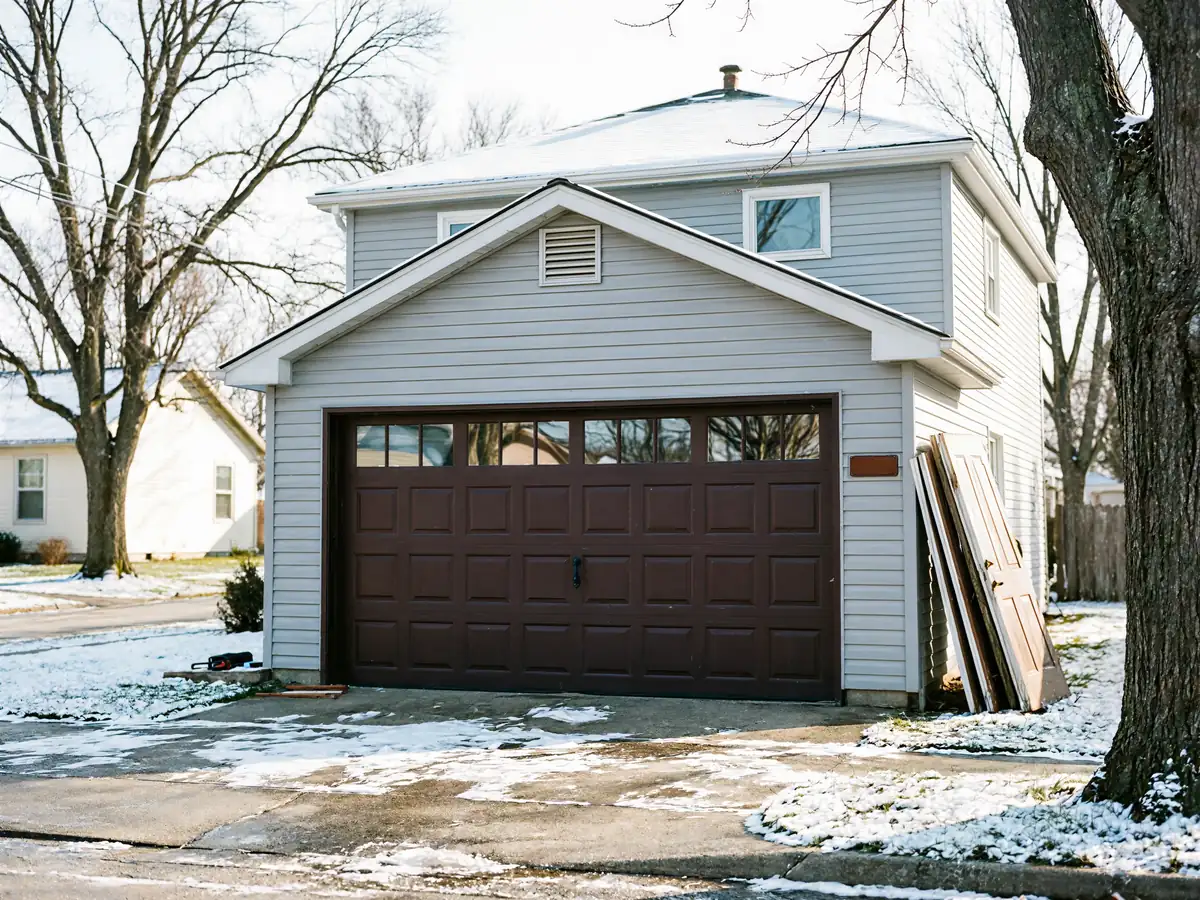
And cold does specific things to old garage door hardware: metal contracts, lubricant stiffens, and a spring already carrying borderline tension is more likely to let go on a frigid morning than a mild afternoon. We see this pattern across the older housing in the area we cover, and Plymouth's stock fits it closely. It's not bad luck - it's a 70-plus-year-old door doing what 70-plus-year-old doors do in January.
What the Fix Involves
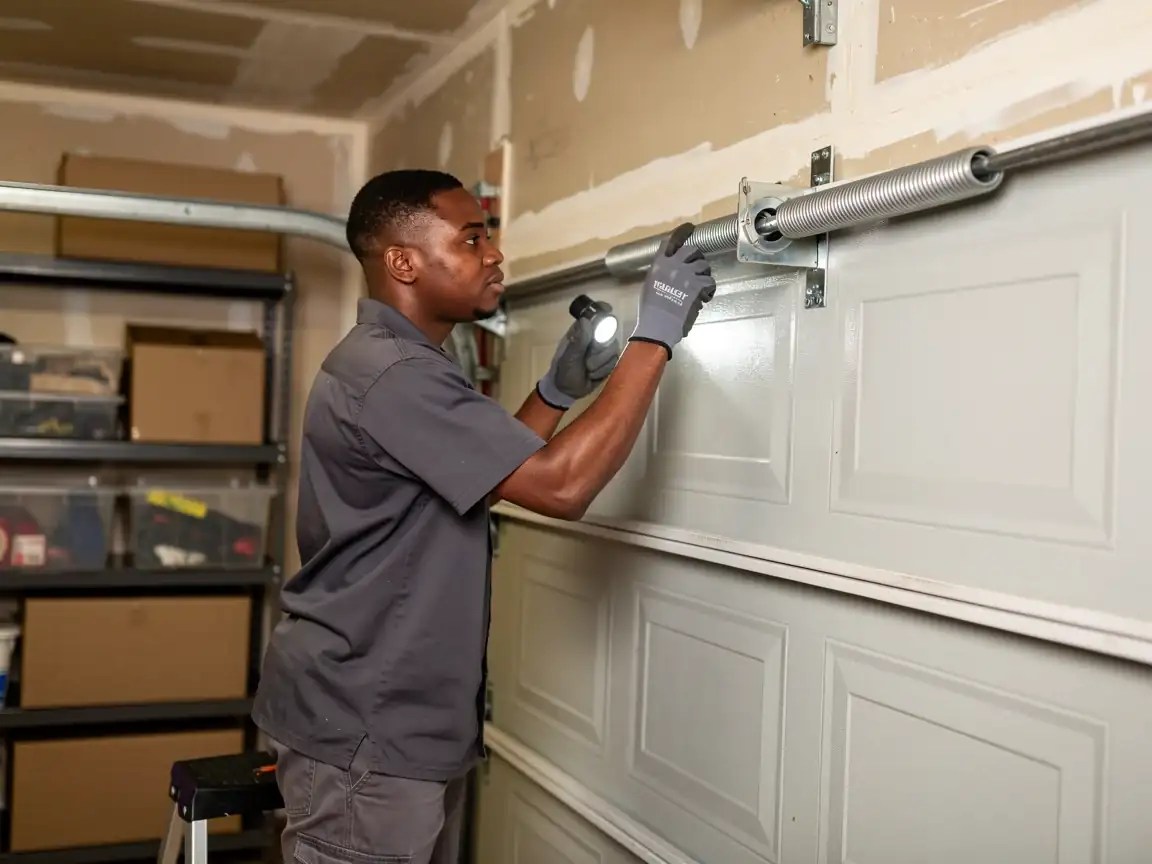
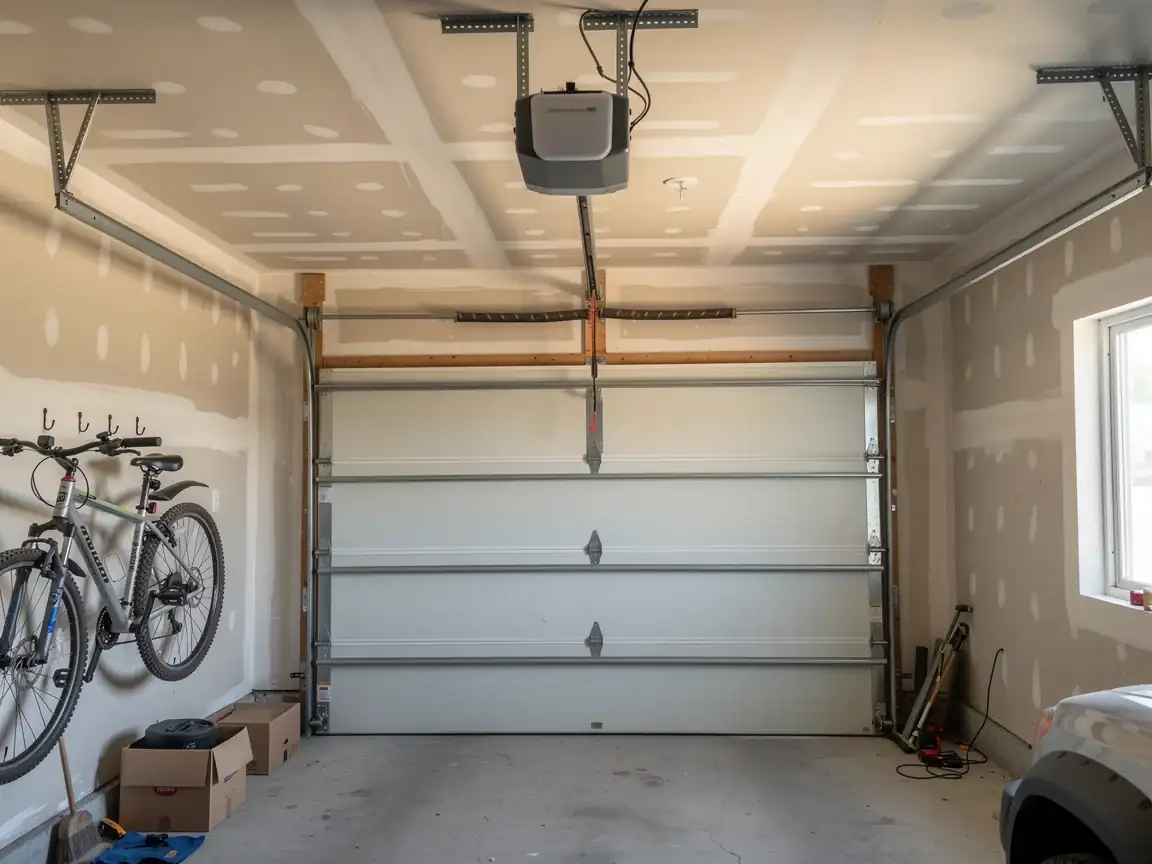
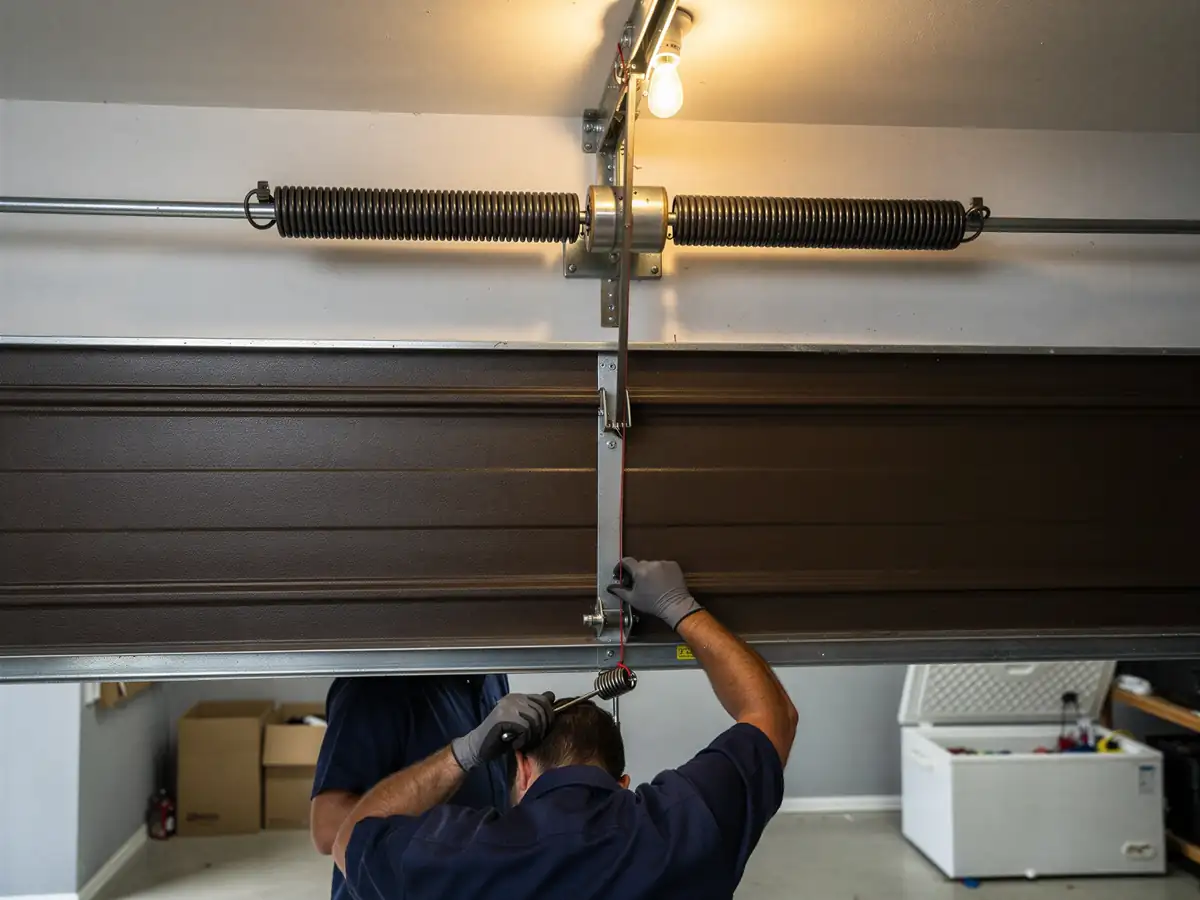
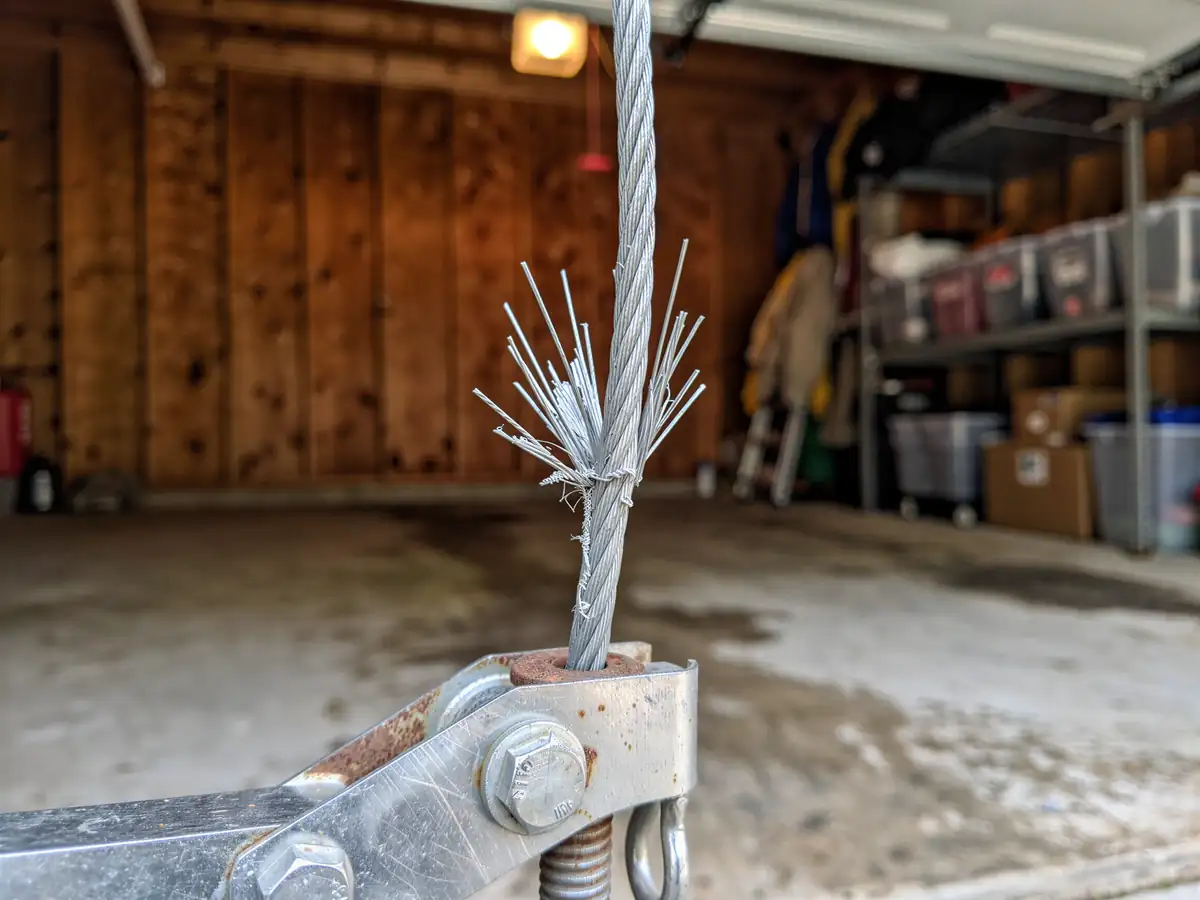
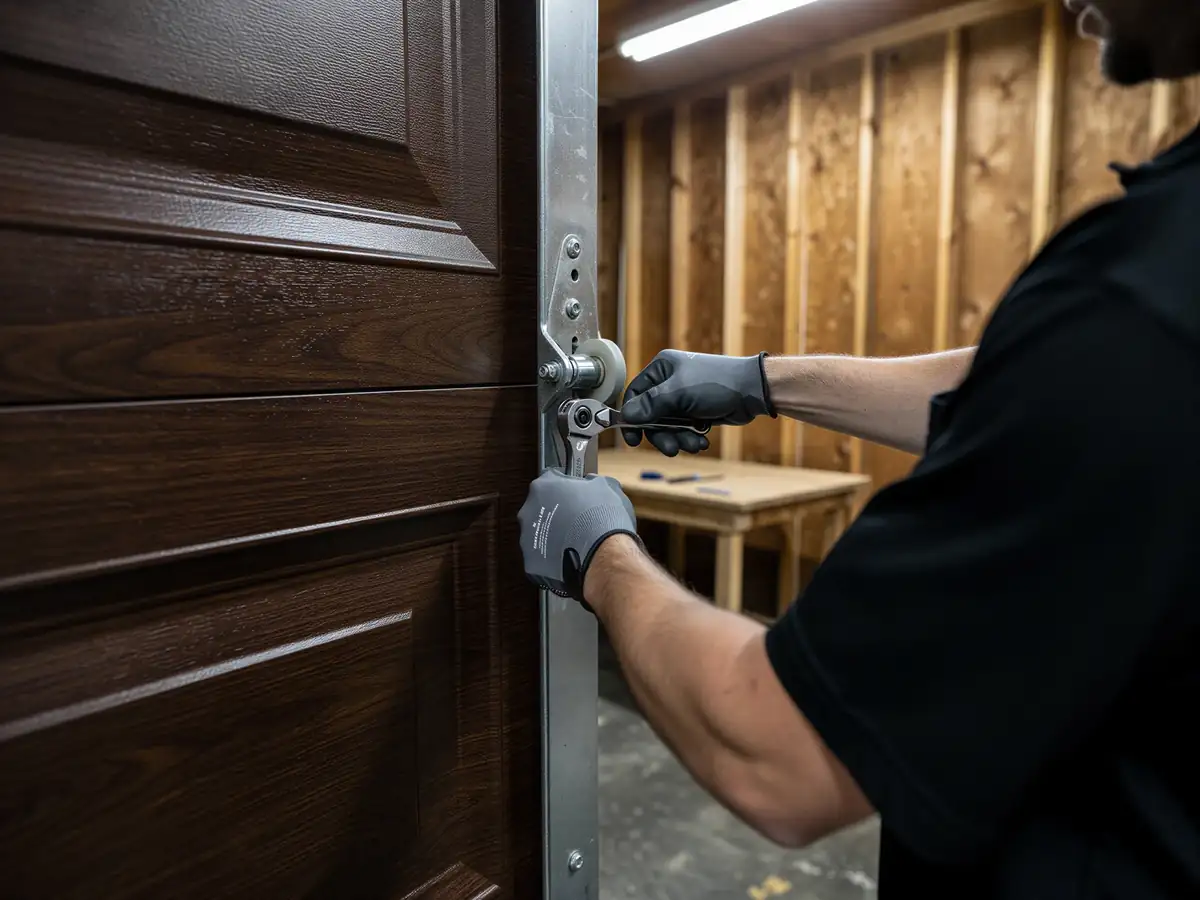
Most calls here start with a look at the spring and cable setup before anything else, because on houses this age the spring is rarely the only thing that's tired - the cable drums and the bottom brackets have usually been under the same load for just as long. We replace what's actually worn rather than swapping a spring and leaving brittle cable behind to fail next winter.
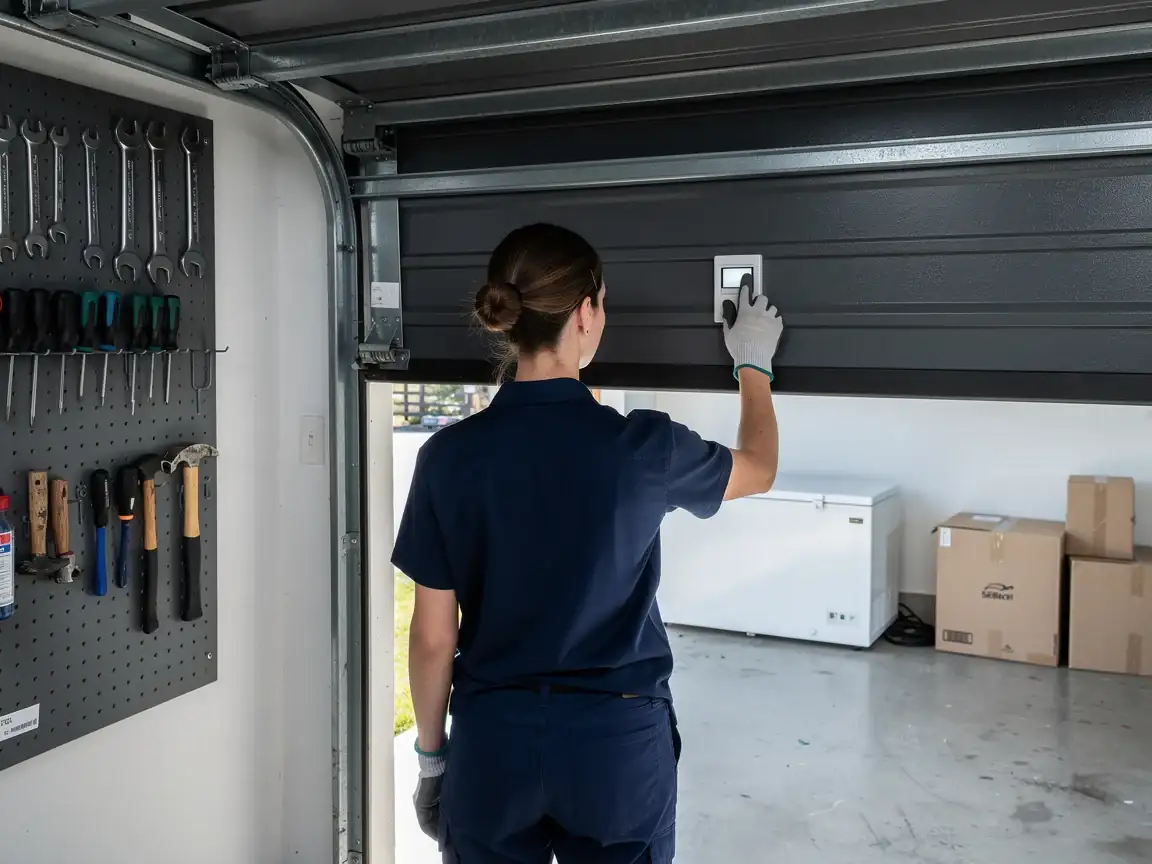
On openers, we check the mounting first. A header that's racked or softened over seven decades won't hold a new motor any better than it held the old one, so sometimes the job includes reinforcing the mount before the opener goes back up. We're upfront when a repair isn't worth doing - if a door's track is bent badly enough or the panels are rusted through, patching it costs more over time than putting in a new door built for the load it's actually carrying now.
What Can Go Wrong
The honest limitation: parts for some of the hardware still in use on 1948-era doors aren't something we keep on every truck, and an exact-match bracket or an obsolete drum size can mean a short wait on a special order rather than a same-visit fix. We'll tell you straight if that's the case instead of jury-rigging something that'll fail again in a month.
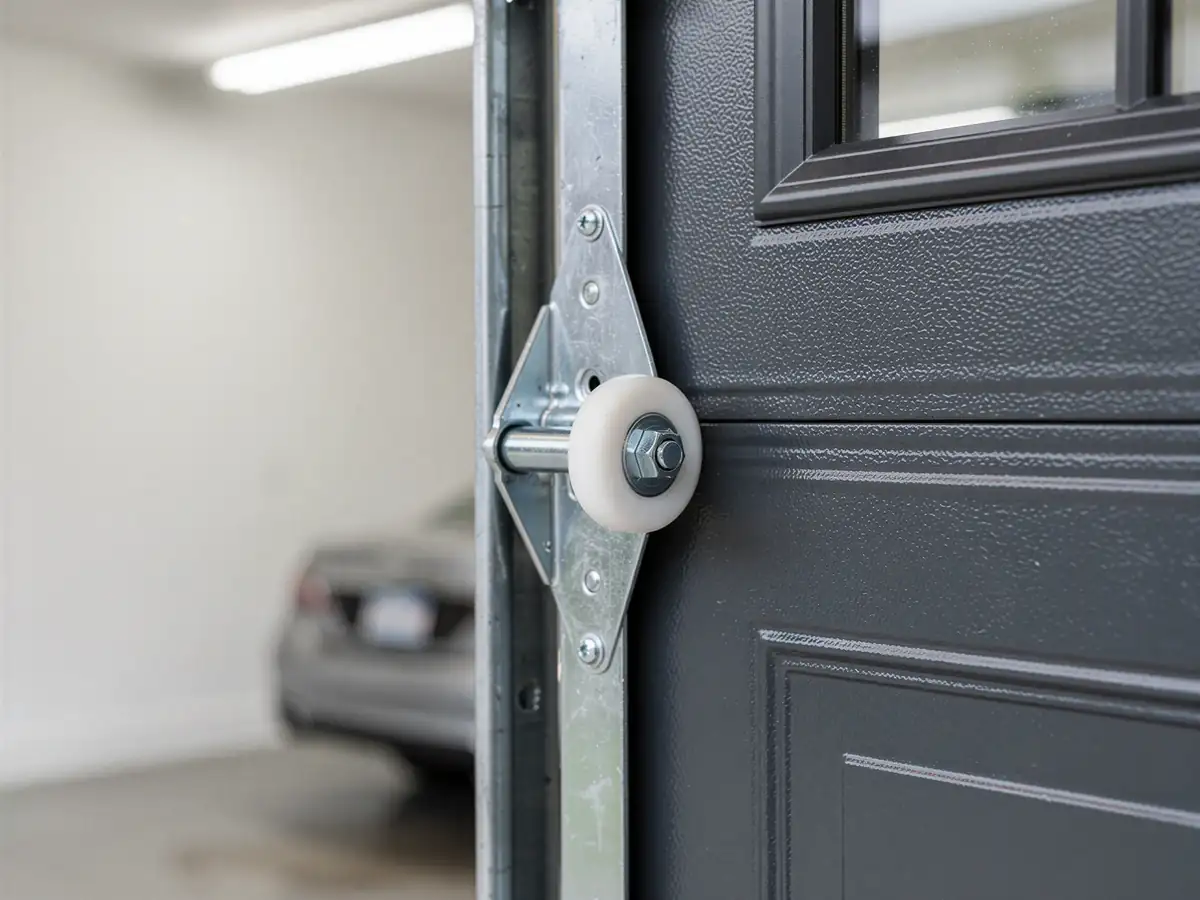
The other risk is skipping the diagnosis and treating the symptom. A door that won't open isn't always the opener's fault - on houses this old it's just as often a seized roller or a cable that's frayed past the point the drum can grip it. Fix the wrong part and you've spent money without solving anything, and on a 17-mile round trip, that's a second visit nobody wants to pay for twice.