What the Fix Involves
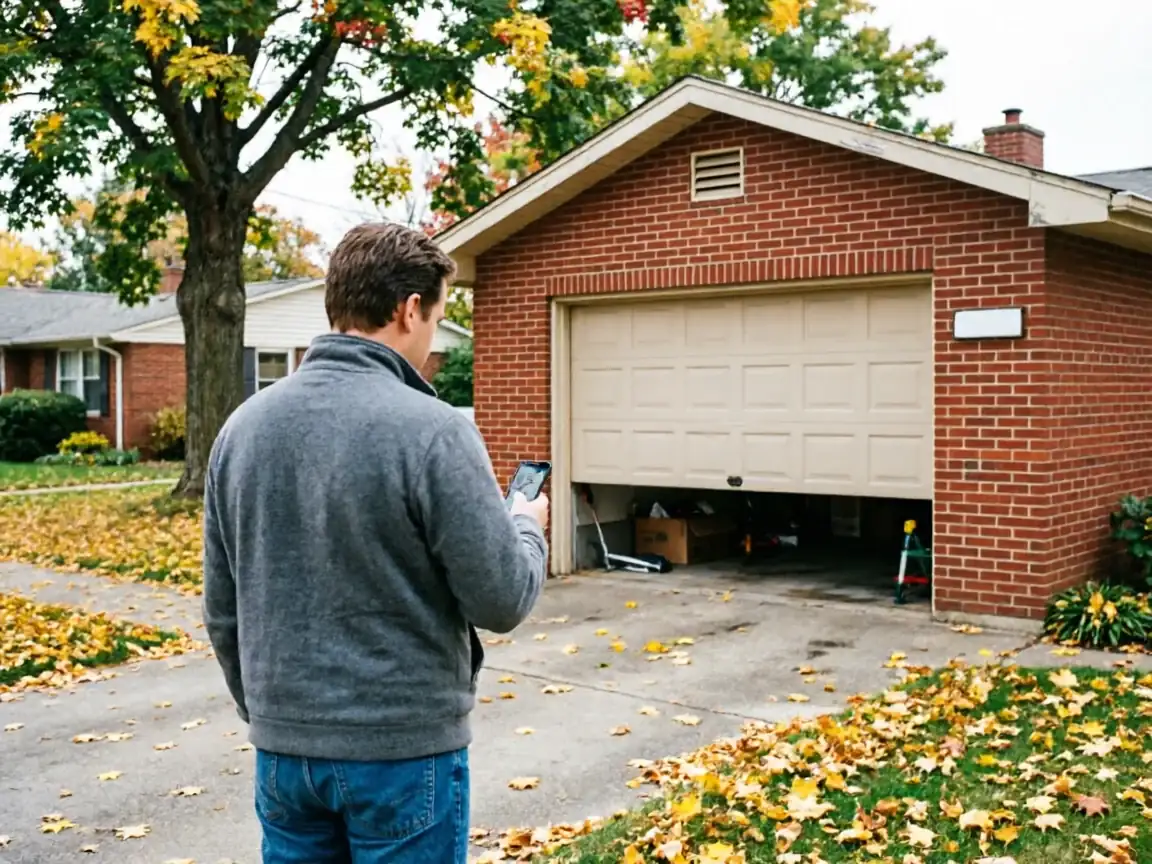
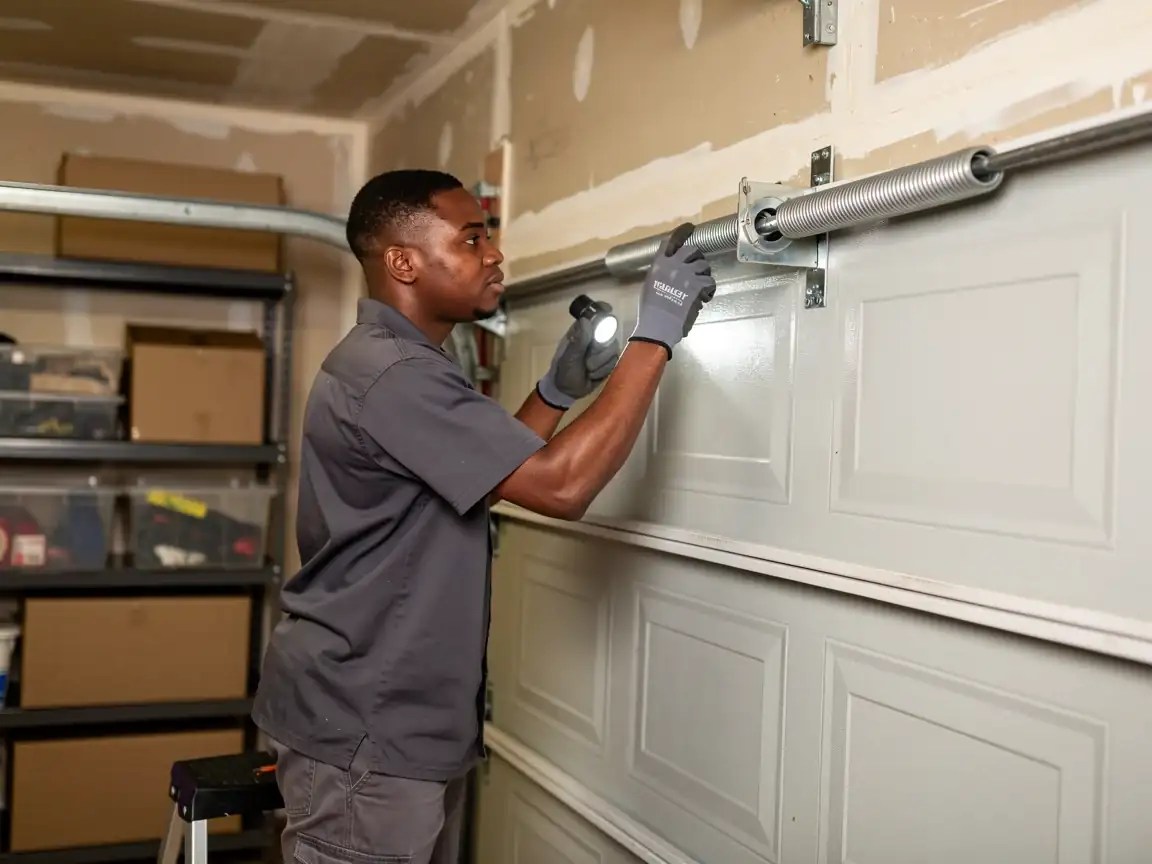
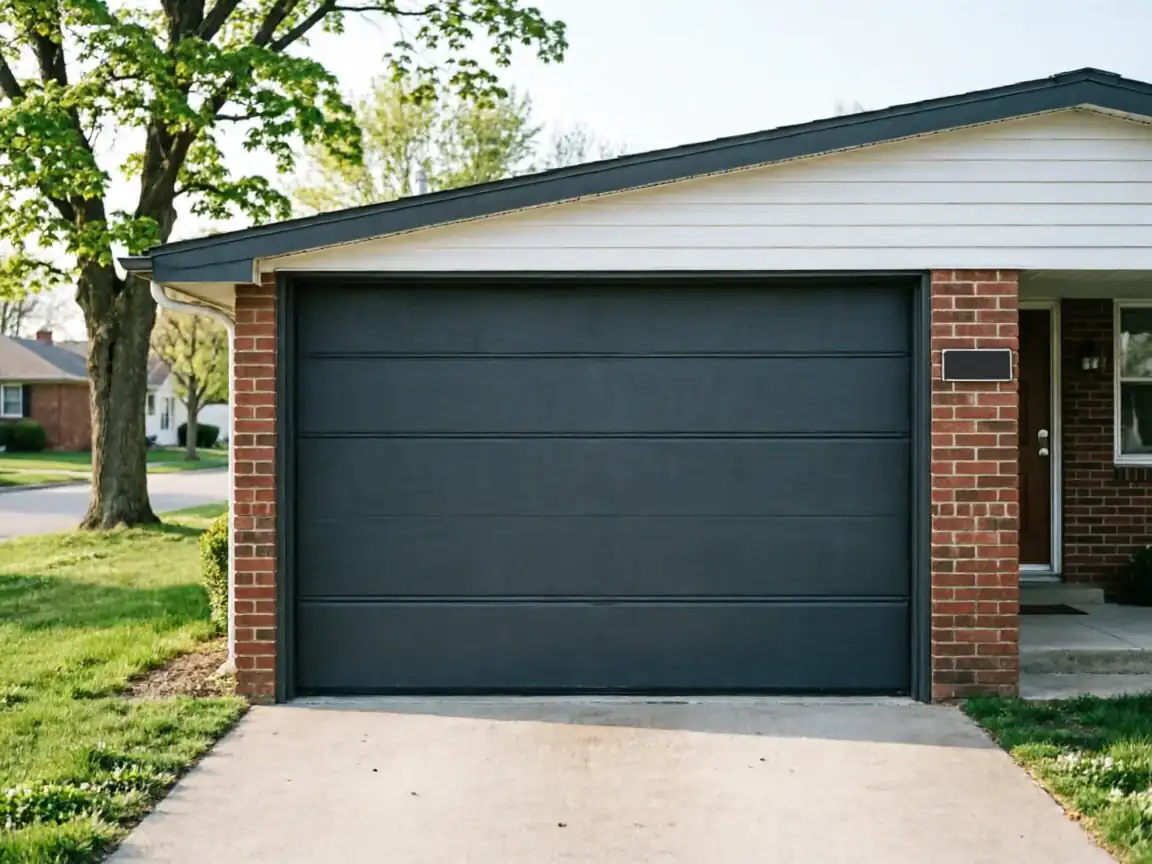
Table Grove's housing stock centers on 1946, a bit older than the 1952 median across the areas we cover out of Macomb. That six-year gap doesn't sound like much until you're standing in front of the door. Houses built in the mid-40s more often got the earliest versions of extension spring setups before torsion conversions became standard, and a lot of those original systems have been patched piecemeal for decades rather than replaced outright. The fix usually starts with figuring out which era of hardware you're actually dealing with, because the bracket spacing, the drum sizes, and even the track gauge shifted more than once between 1946 and the 1960s builds that make up the rest of the service area. We bring stock that covers both generations, but we confirm on site before we quote anything, since guessing wrong on a 15-mile trip from Macomb wastes everyone's afternoon.
What Causes It Around Here
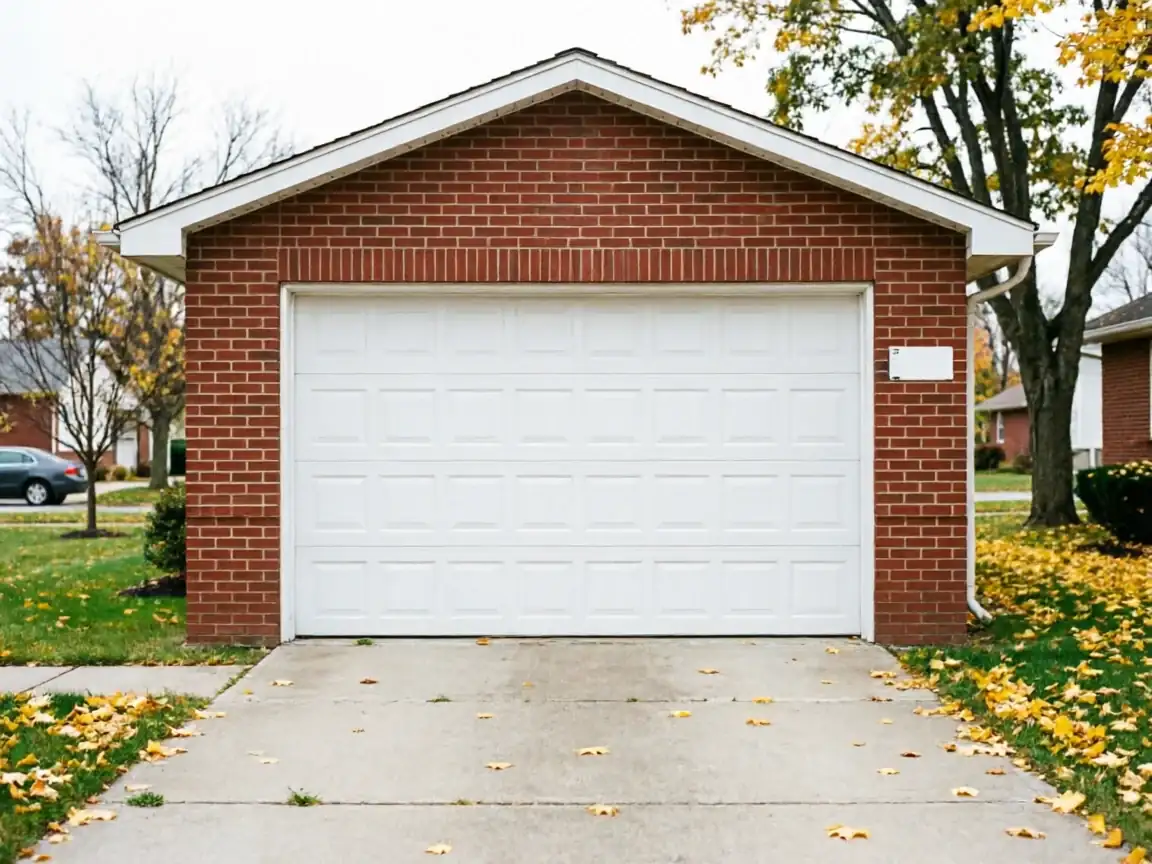
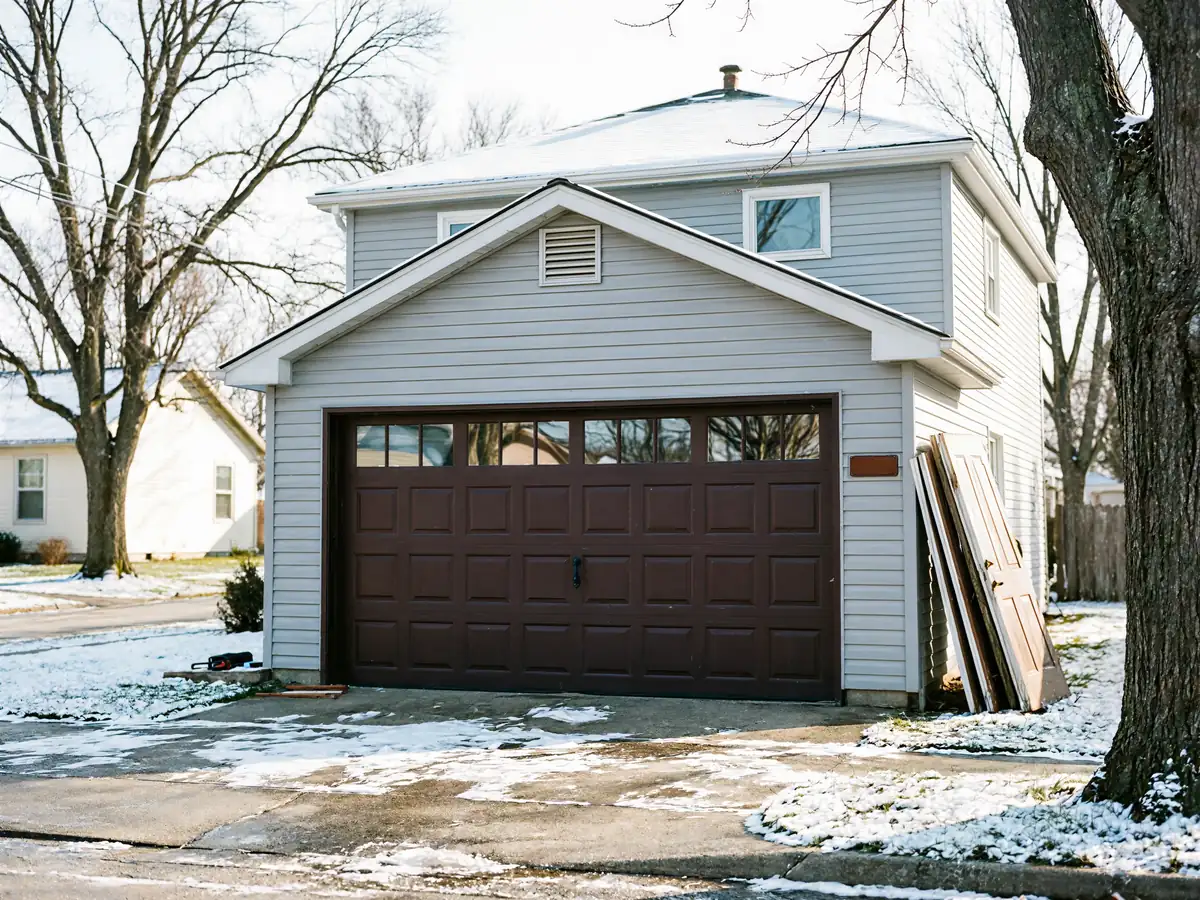
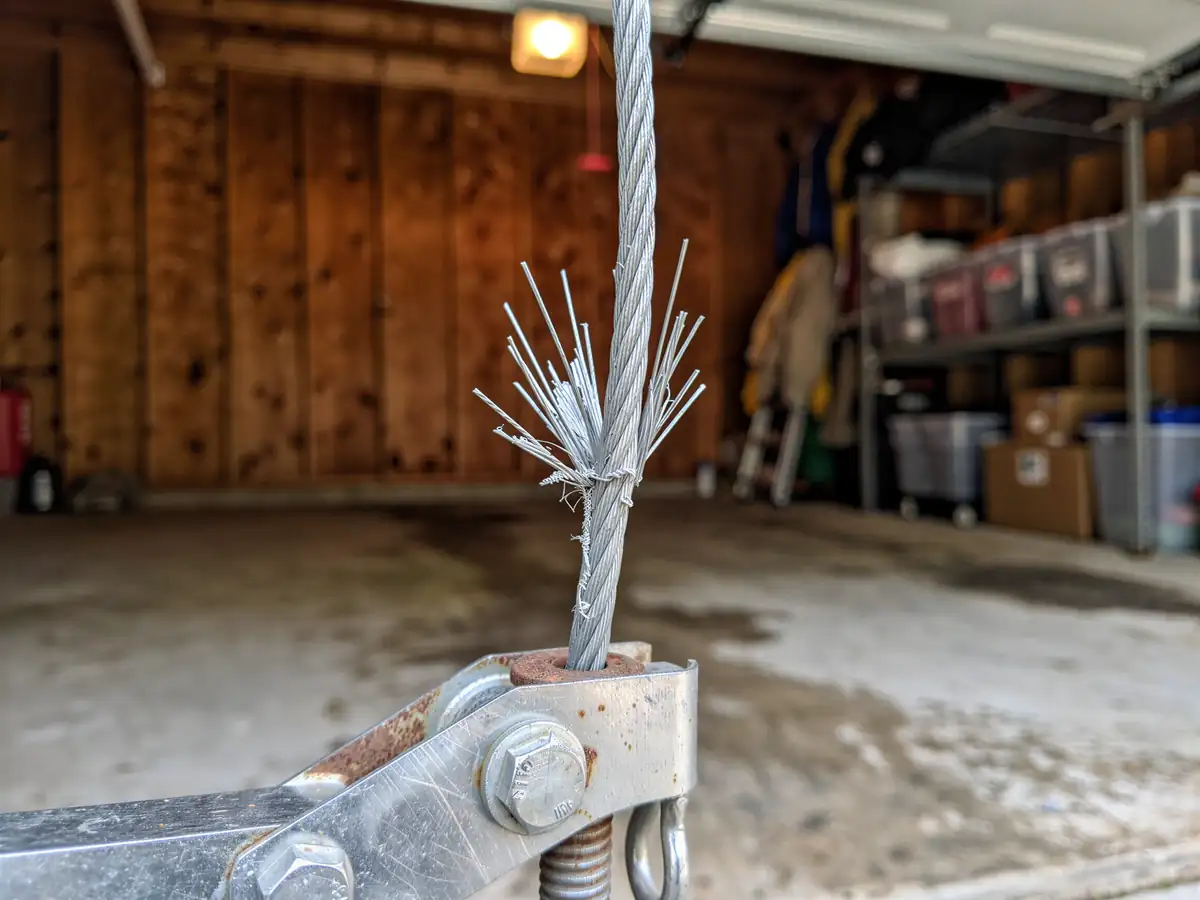
With 147 households in Table Grove, this isn't a town where doors get replaced on a schedule - most get repaired until repair stops making sense. The cold-moderate climate here means steel doors go through real freeze-thaw cycling each winter, and on a door built when Table Grove's housing stock was new, the galvanizing on original hardware has usually worn thin enough that rust finds the stress points first: cable ends, bottom brackets, the bolts holding hinges to a panel that's flexed for seventy-plus years. Add in that median household income here is $52,083, a touch under the wider area's $54,306, and what we see most is deferred maintenance rather than neglect - owners stretching a repair as far as it'll go before calling, which is a reasonable call on an older door but changes what's actually fixable by the time we're on site.
The DIY Question
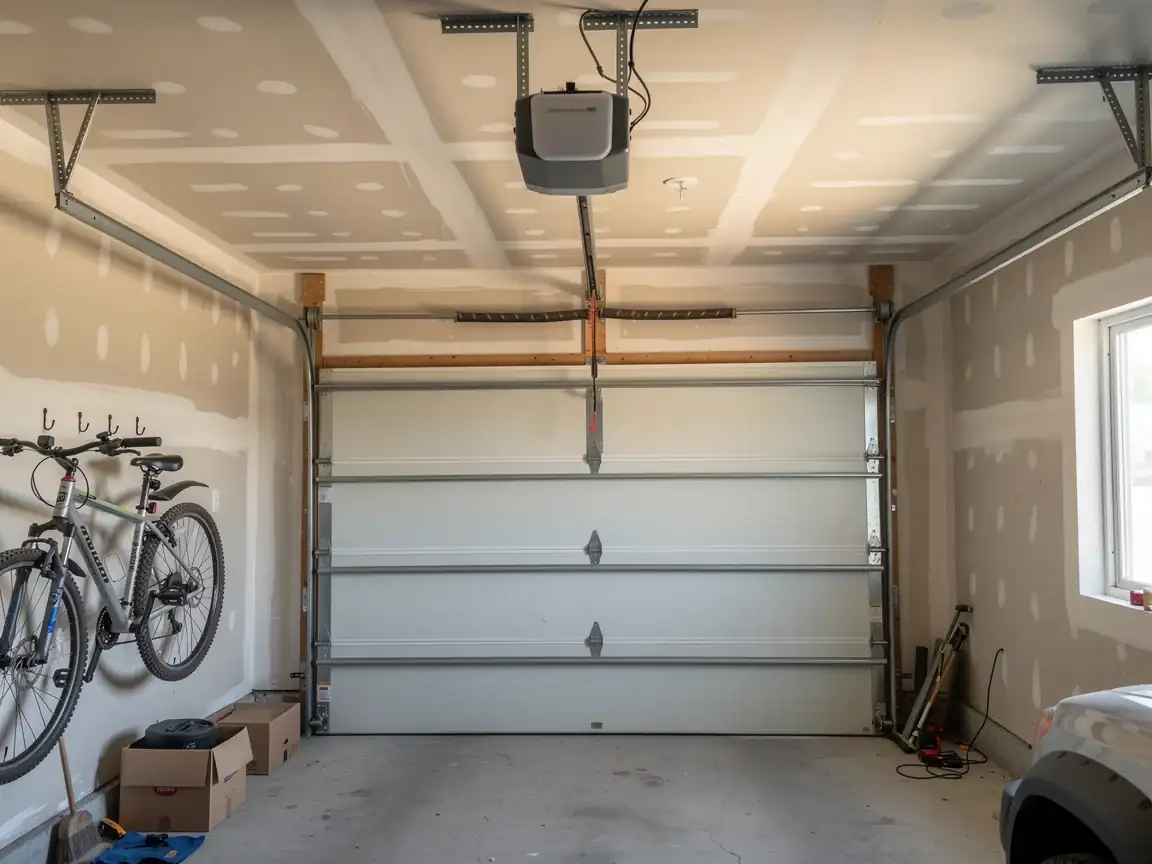
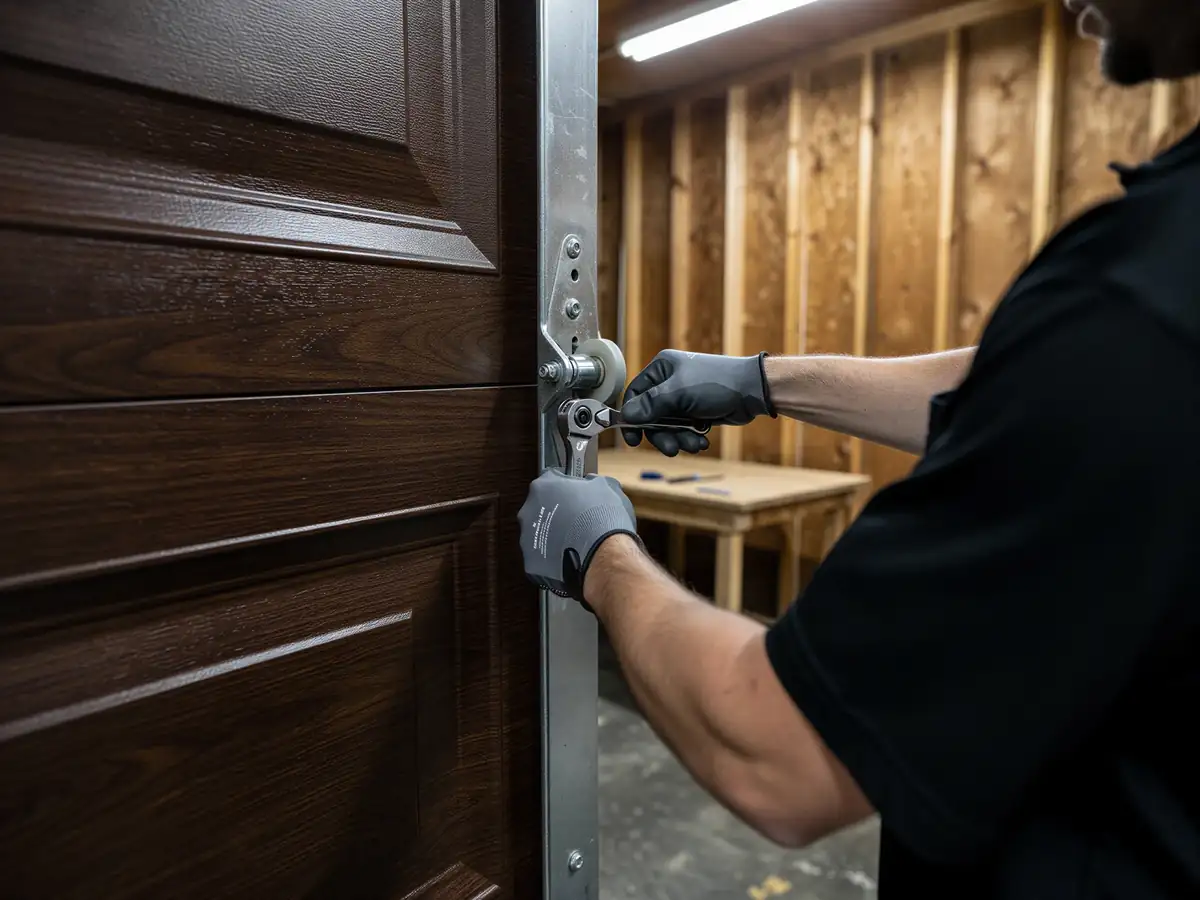
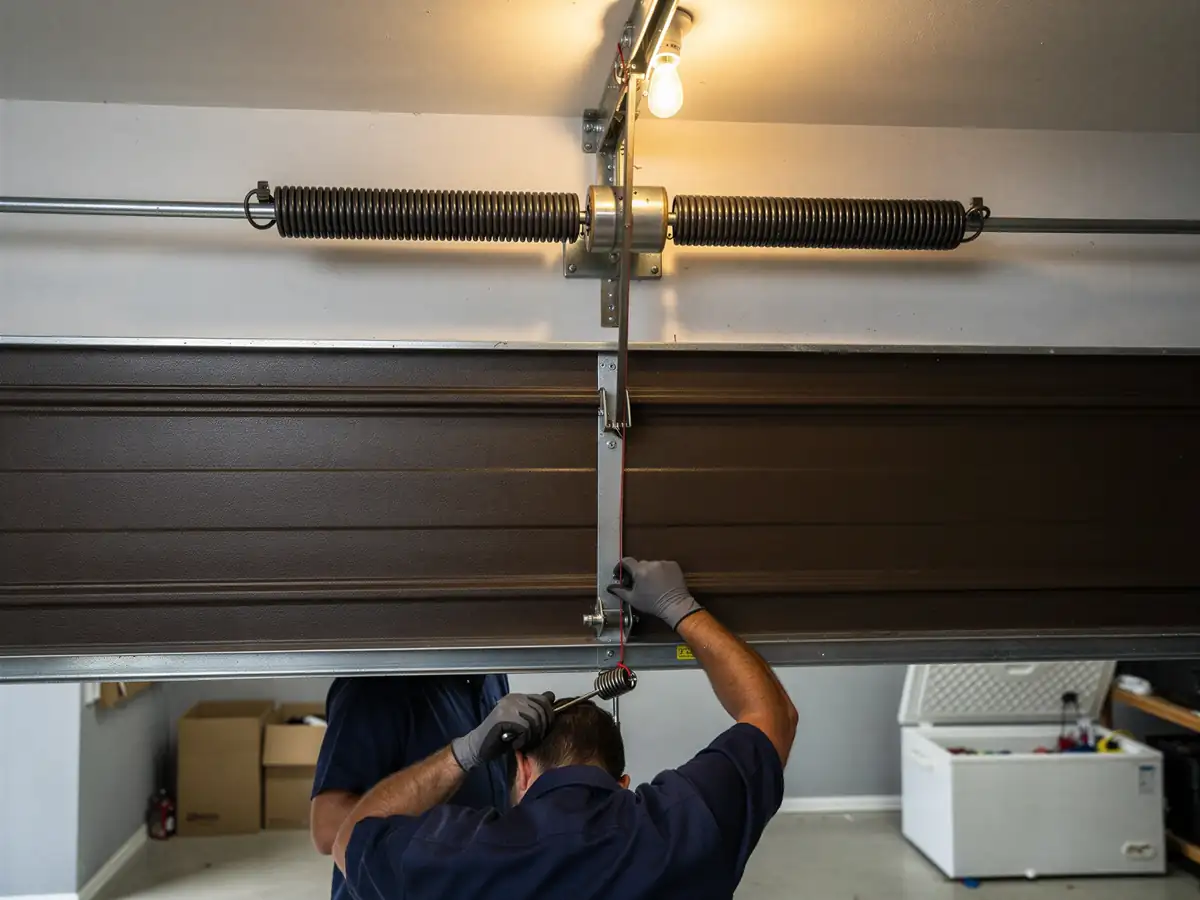
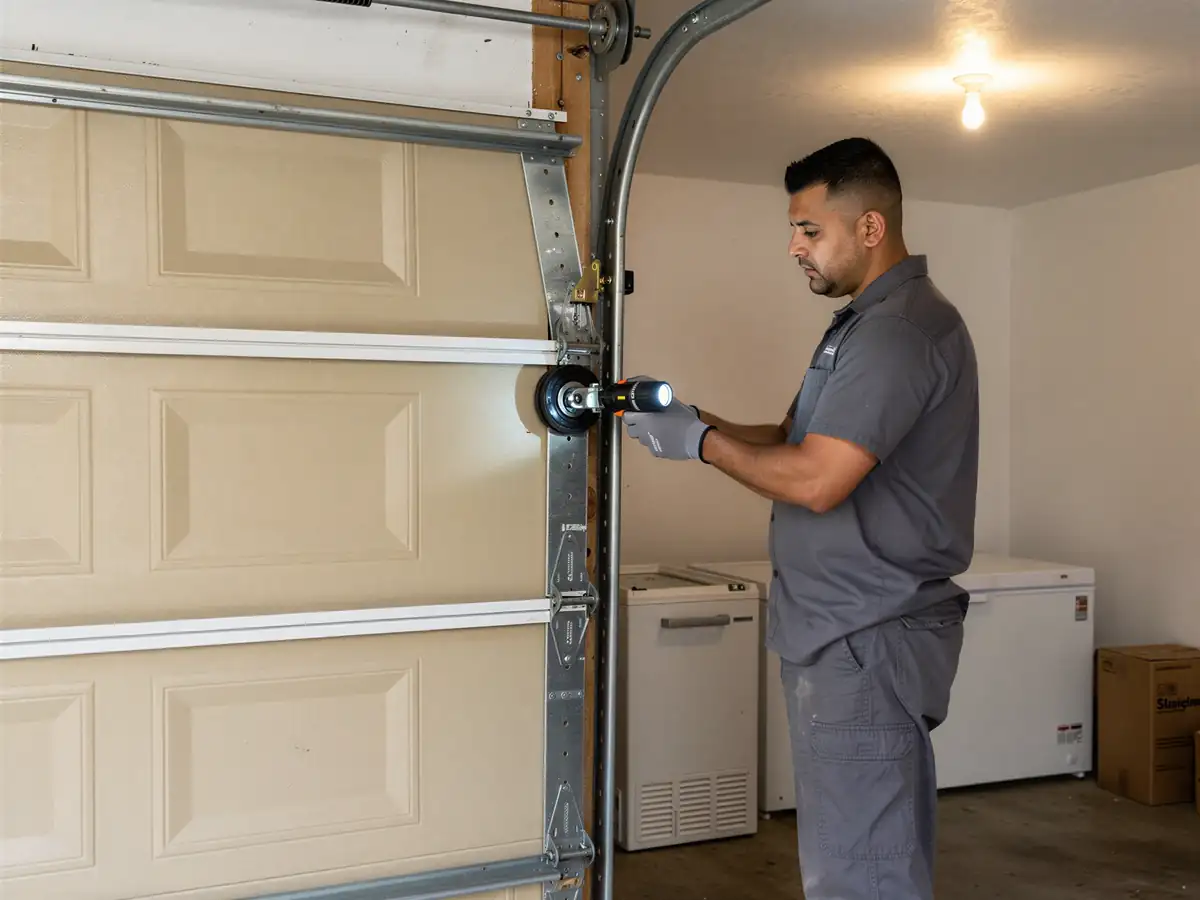
Tightening a loose track bracket or swapping a worn roller on a door this age is reasonable DIY if you know what you're looking at. What isn't reasonable is touching the spring system. A door with extension springs - more common on Table Grove's older stock than on the area's typical 1950s builds - stores less force per spring than a torsion system, but the failure mode is still the same: a spring under tension that lets go without warning. We'd rather get a call about a squeak than a call after a hand injury. If your opener is original equipment from decades back, don't troubleshoot the circuit board yourself either - at that age, the part usually isn't worth sourcing, and that's a replacement conversation, not a repair one.
Parts We Carry
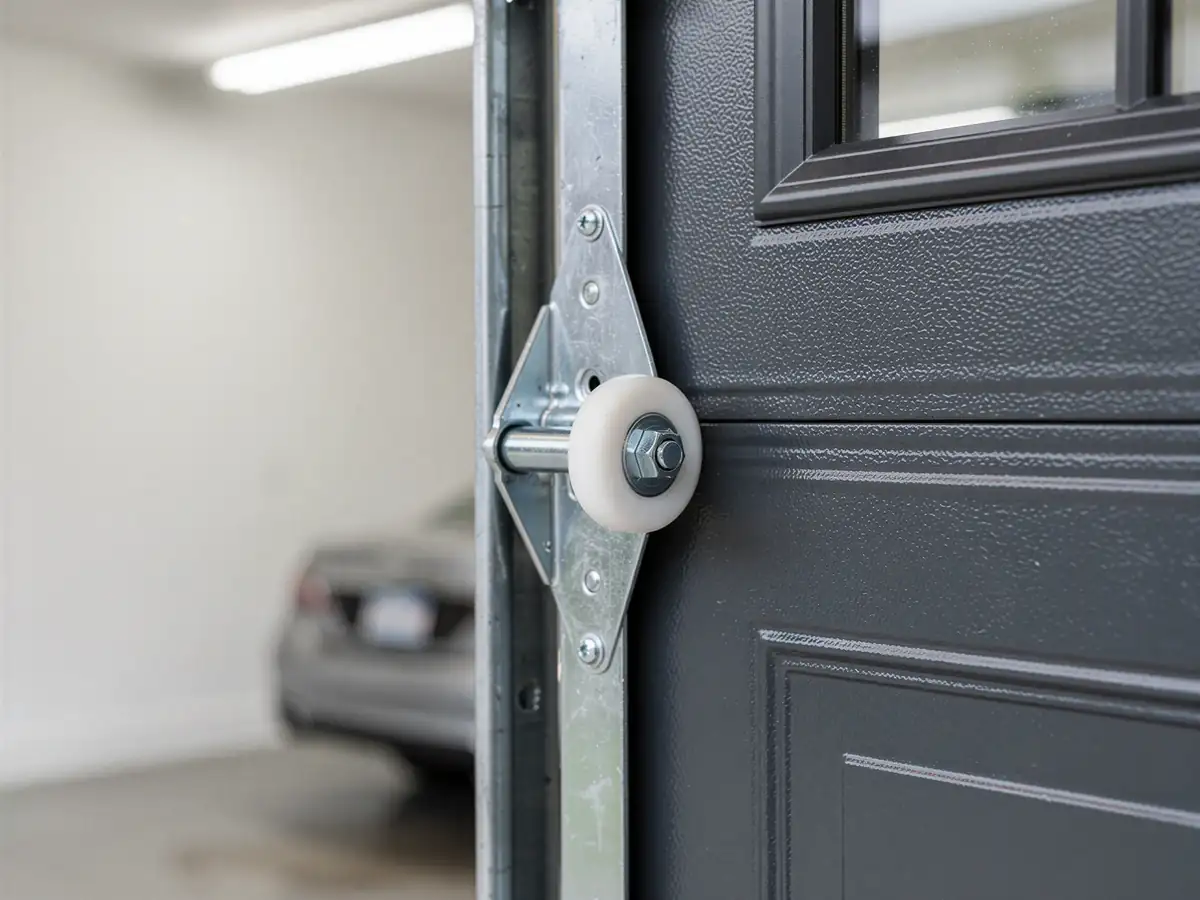
We keep stock sized for the 1940s-1965 housing range that covers this whole service area, which includes Table Grove's slightly earlier builds. That means both extension and torsion spring sizes, bracket hardware for older track gauges, and rollers that fit steel track from before nylon became standard. What we don't keep on the truck is anything proprietary to a specific manufacturer's opener board from that era - those get special-ordered once we've confirmed the make on site. We're honest about that lead time upfront rather than promising same-day on a part we don't stock, because a door with a seized opener can usually wait a few days once it's secured, and we'd rather tell you that than guess.