What the Fix Involves
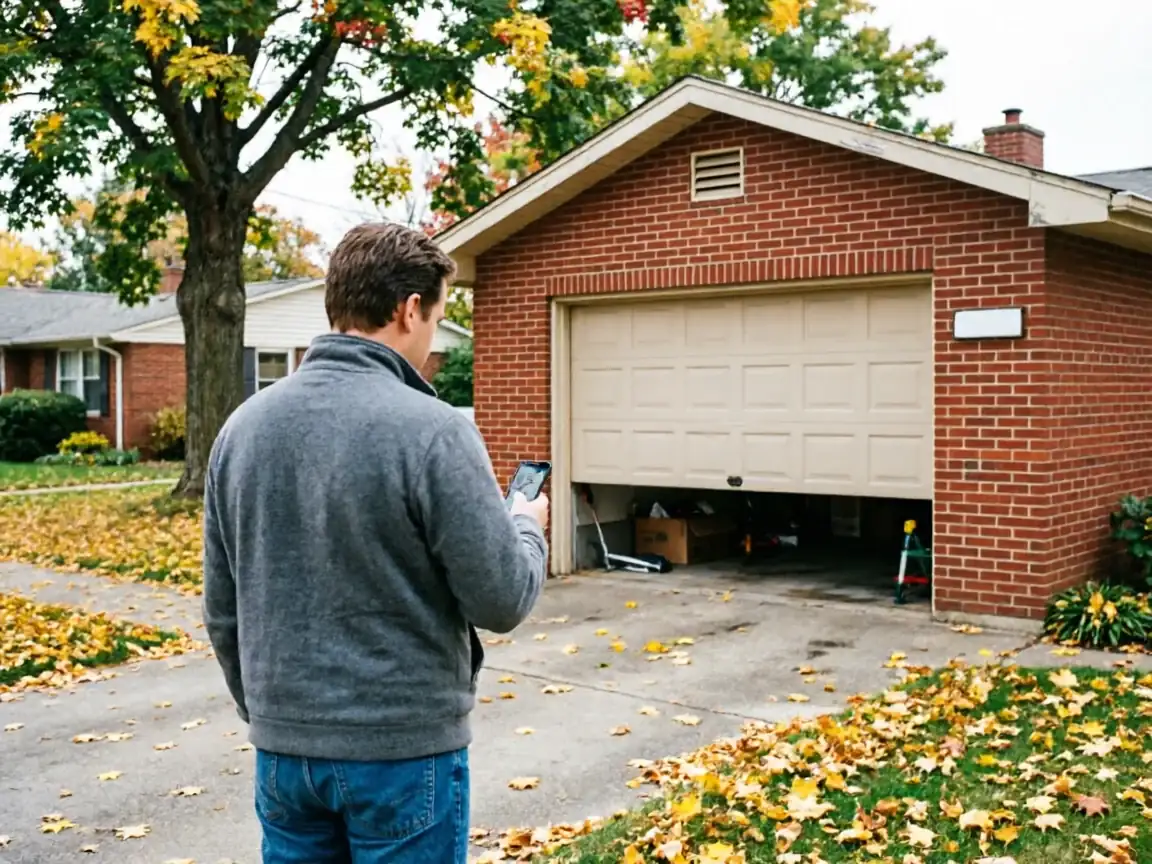
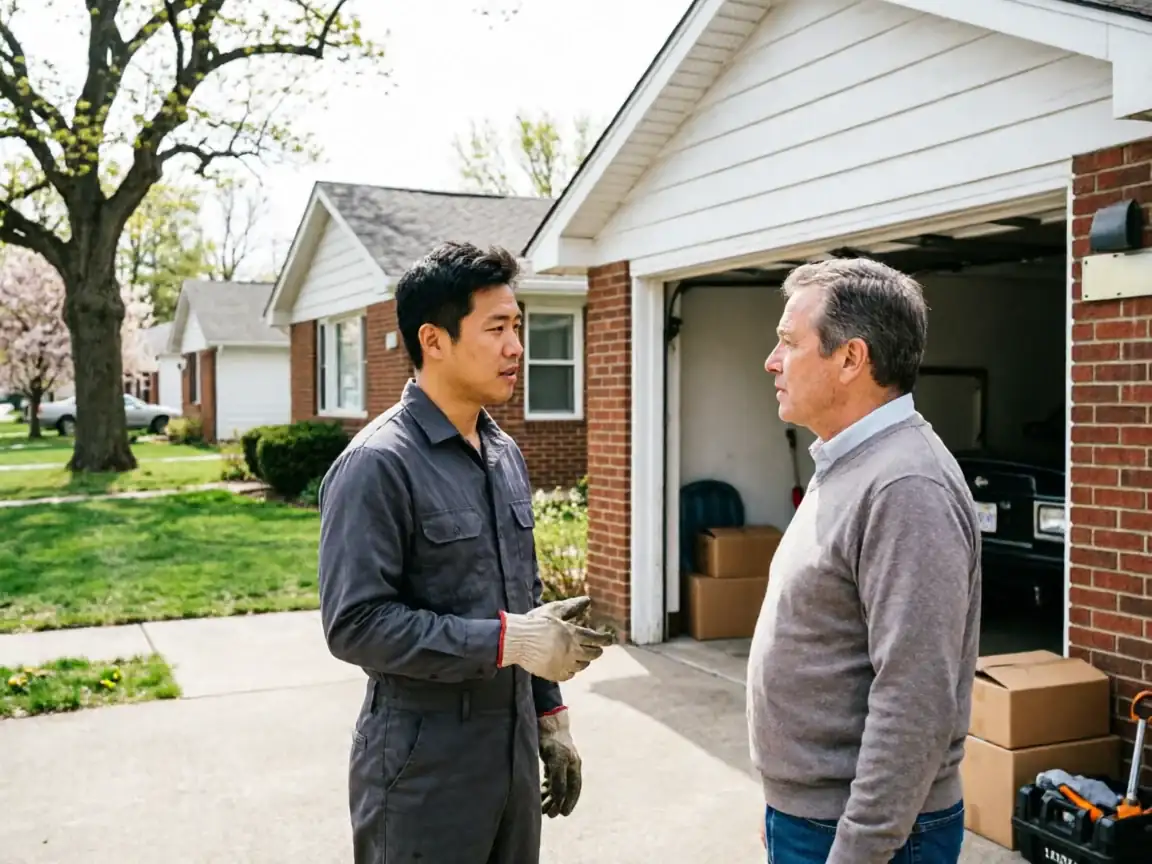
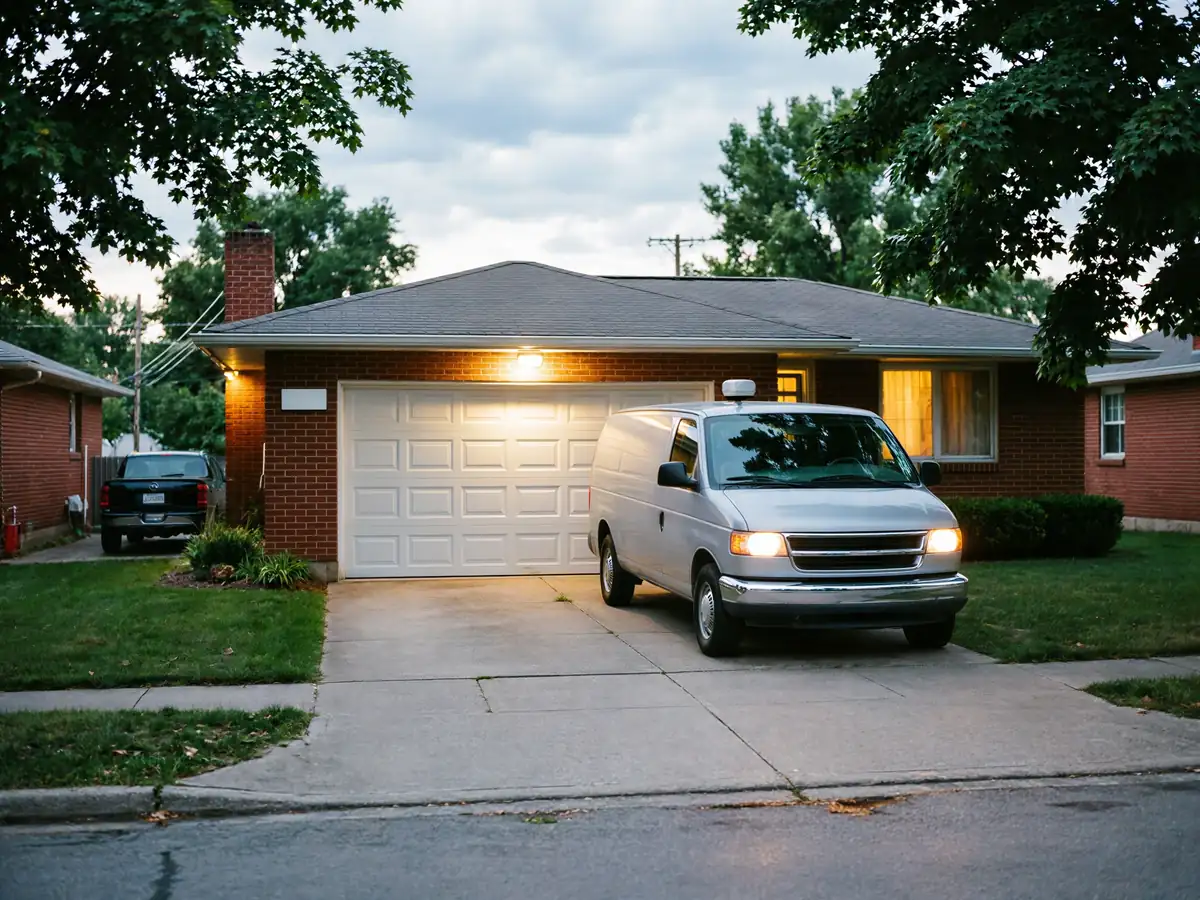
Bushnell sits 11 miles out from our shop in Macomb, so when a call comes in from here, the truck is loaded before it leaves - torsion springs in a couple of common sizes, a spare set of rollers and cables, and the usual opener parts, because a second trip out costs time neither of us wants to spend. That drive shapes the visit more than people expect. We're not swinging by on the way to another job; we're coming out to you, so we ask a few questions up front - is the door stuck open or shut, is it making noise, did something snap - so the right parts are on the truck the first time.
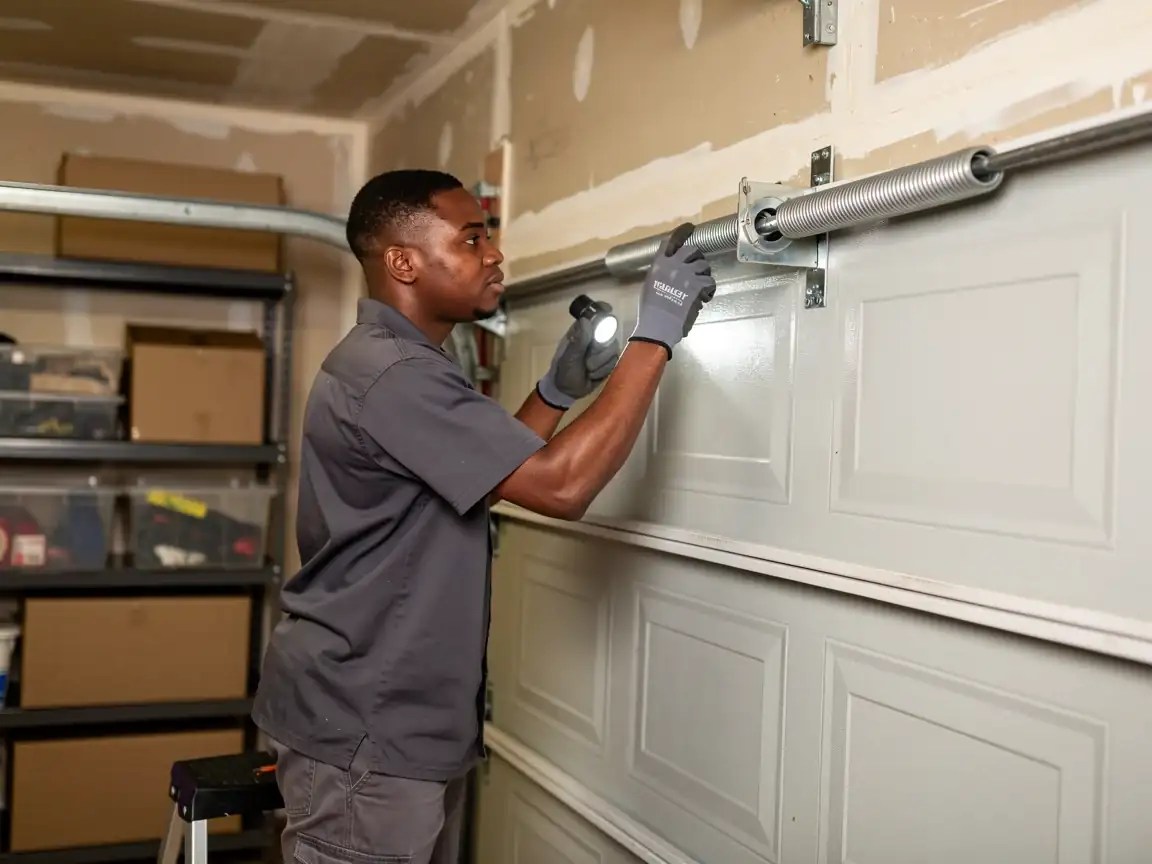
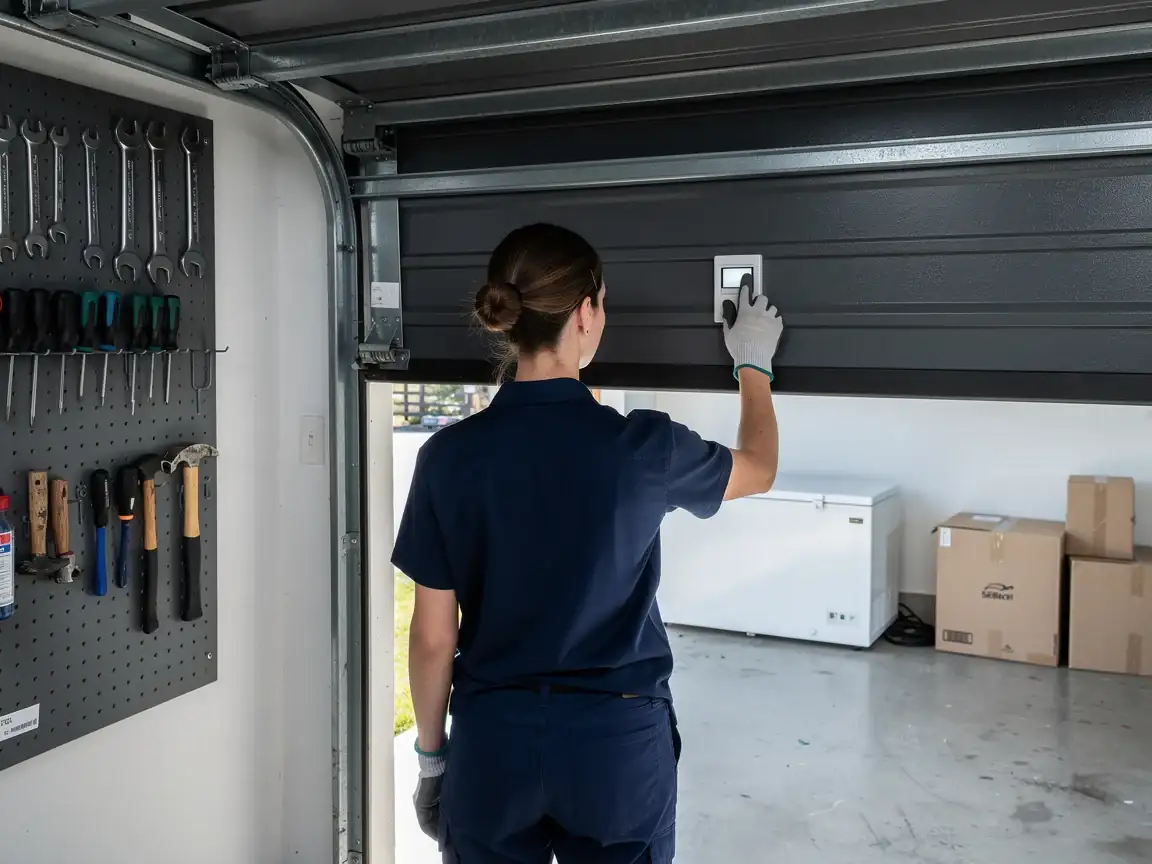
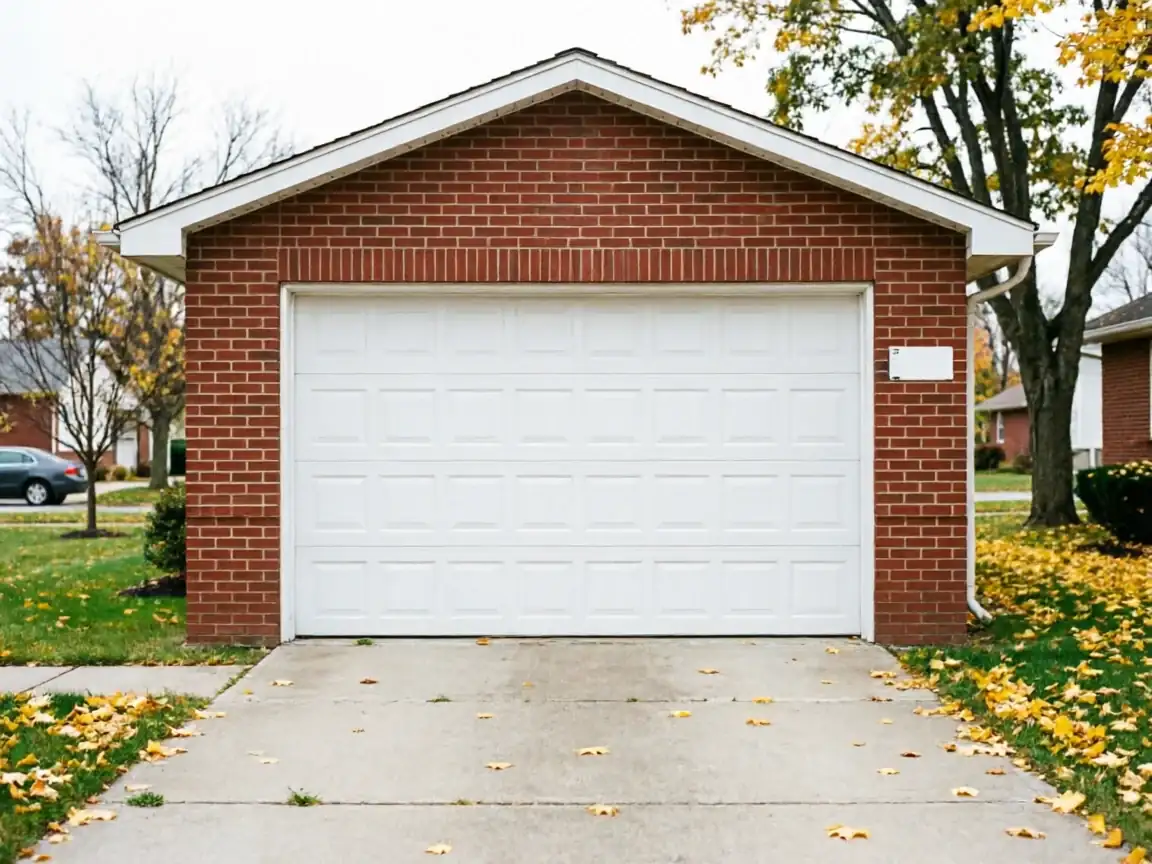
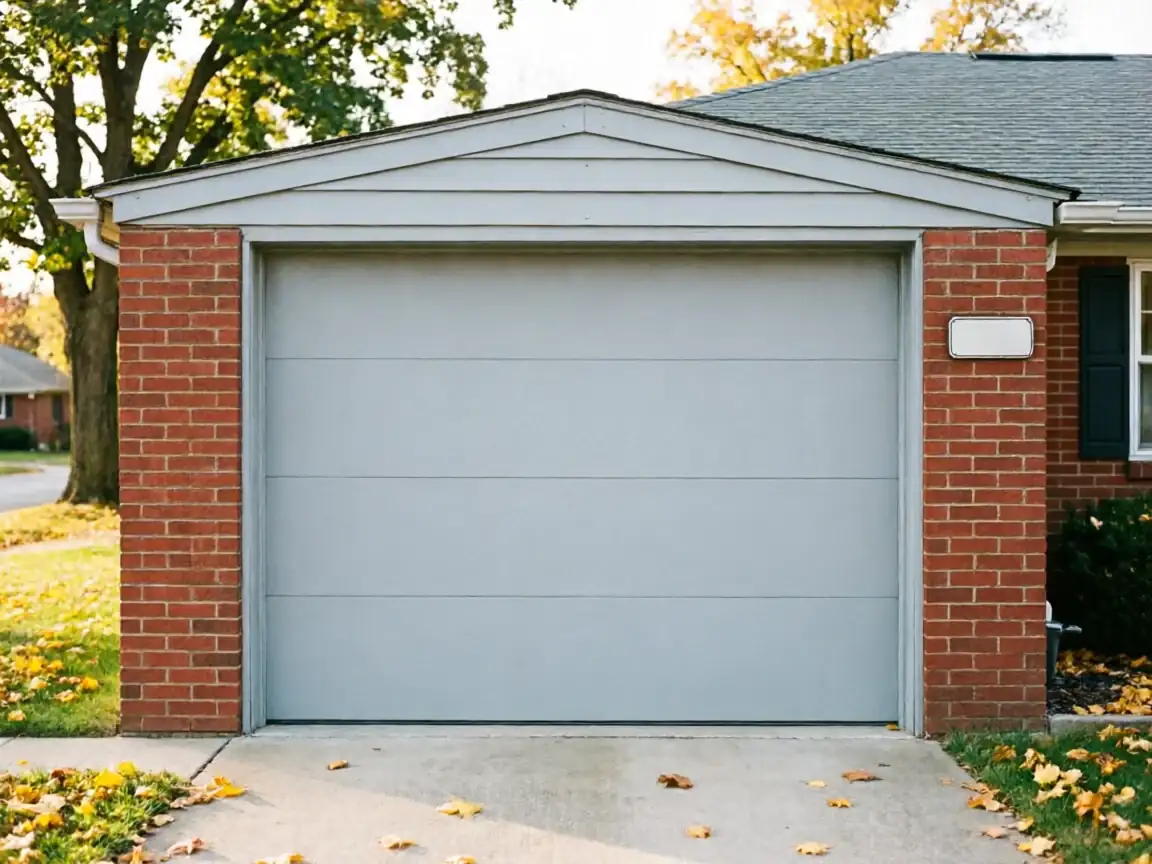
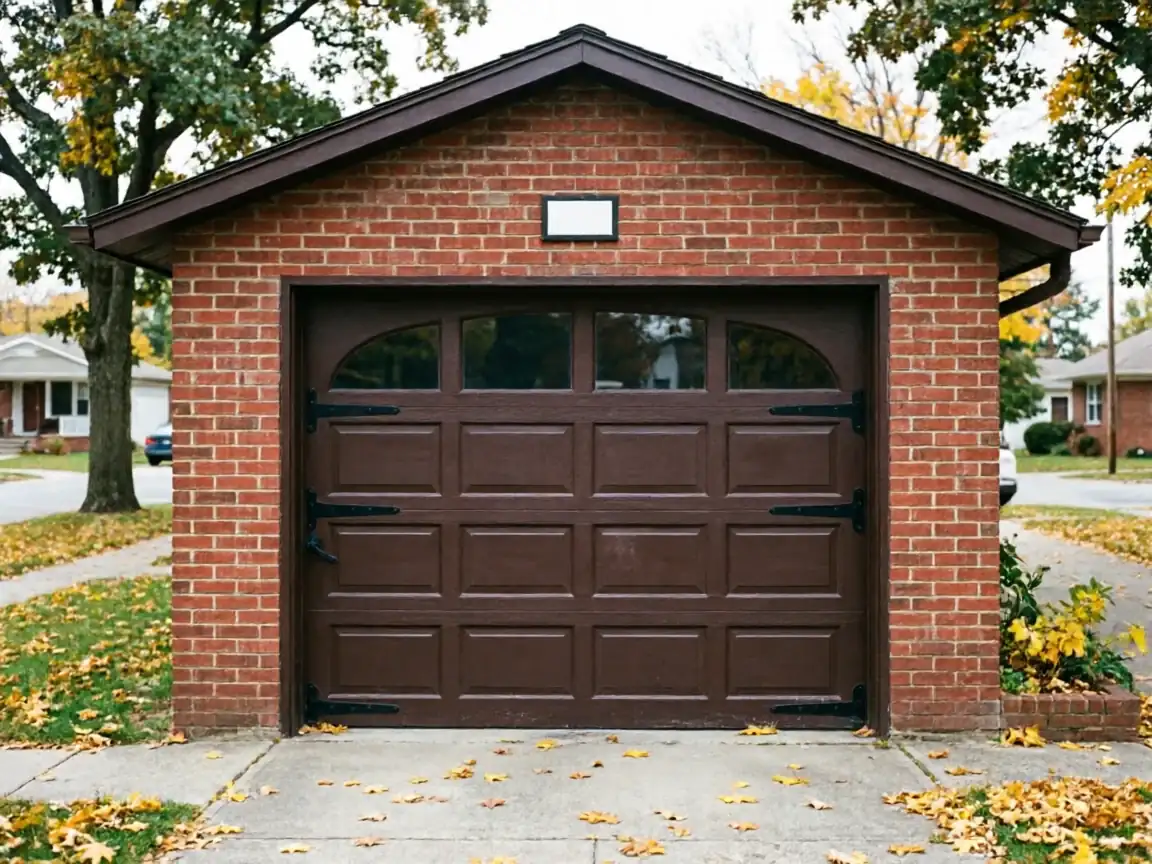
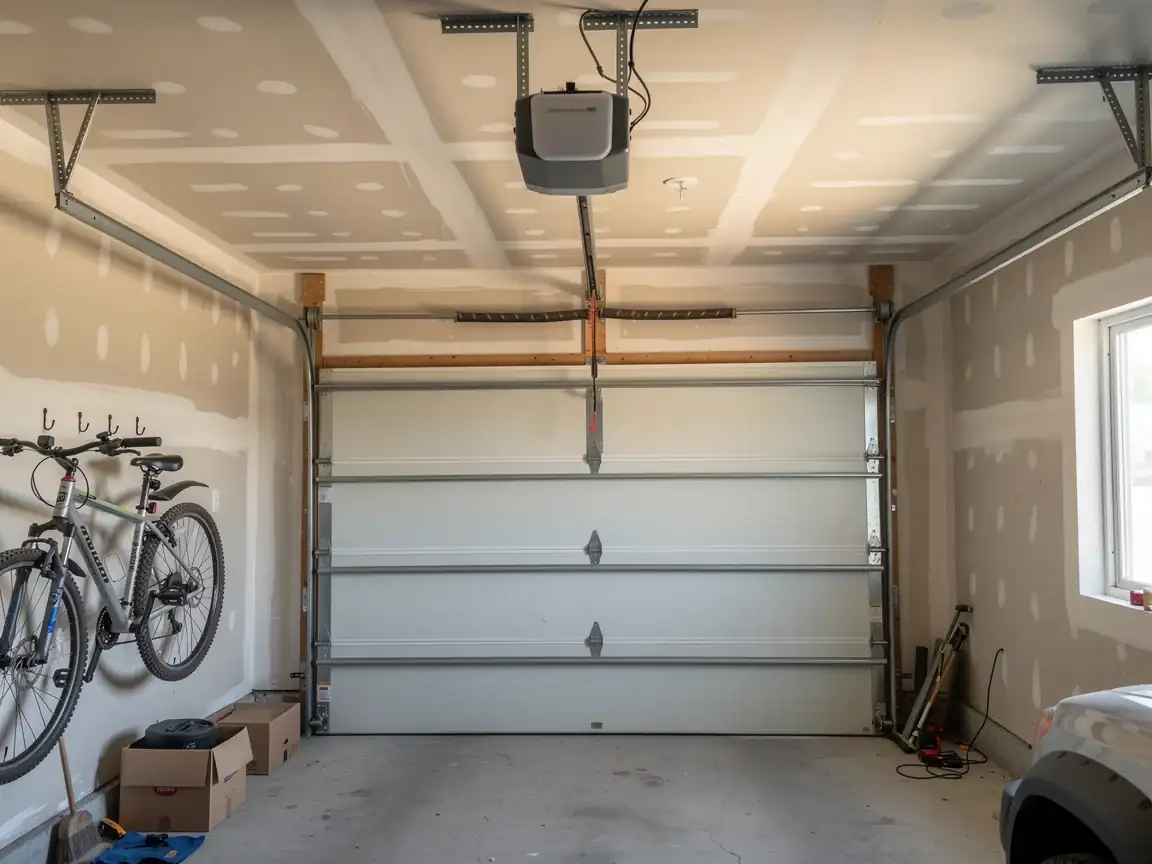
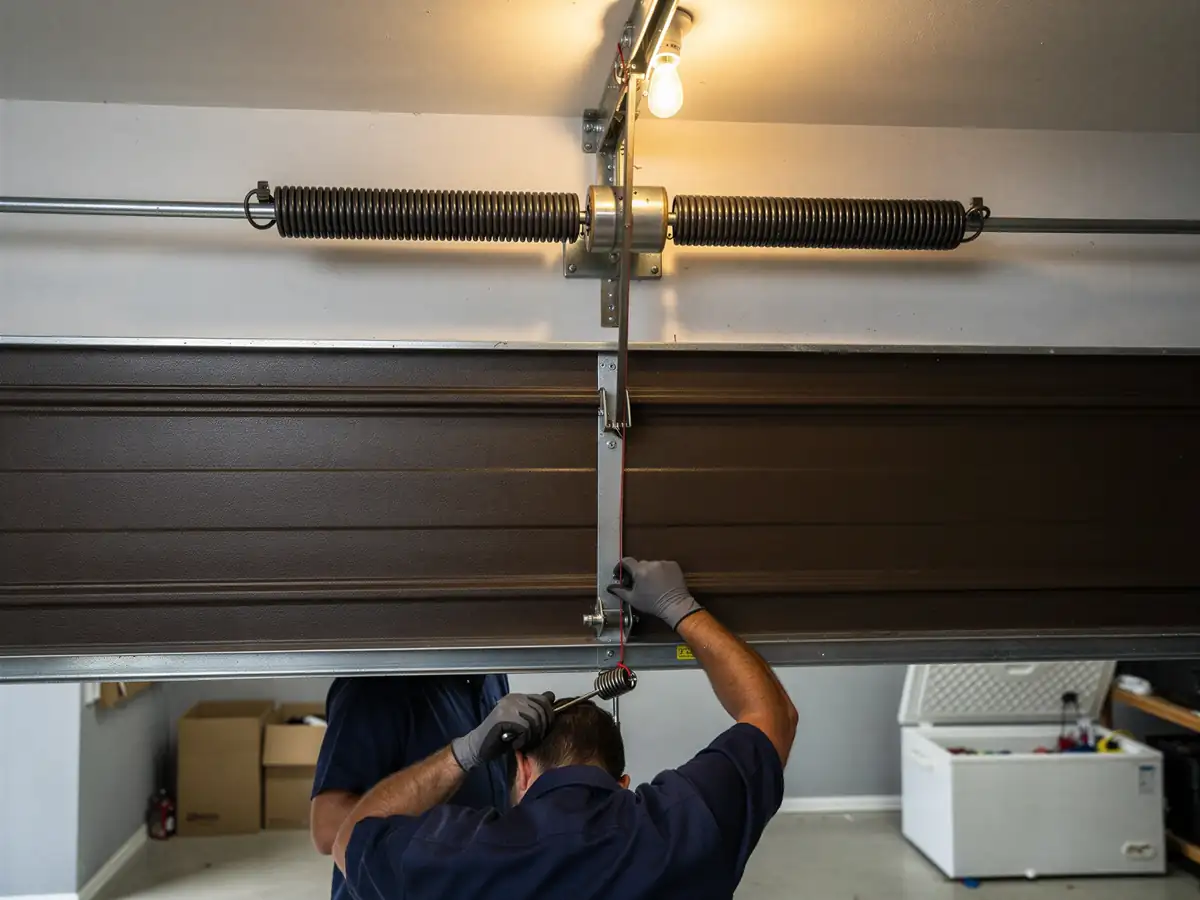
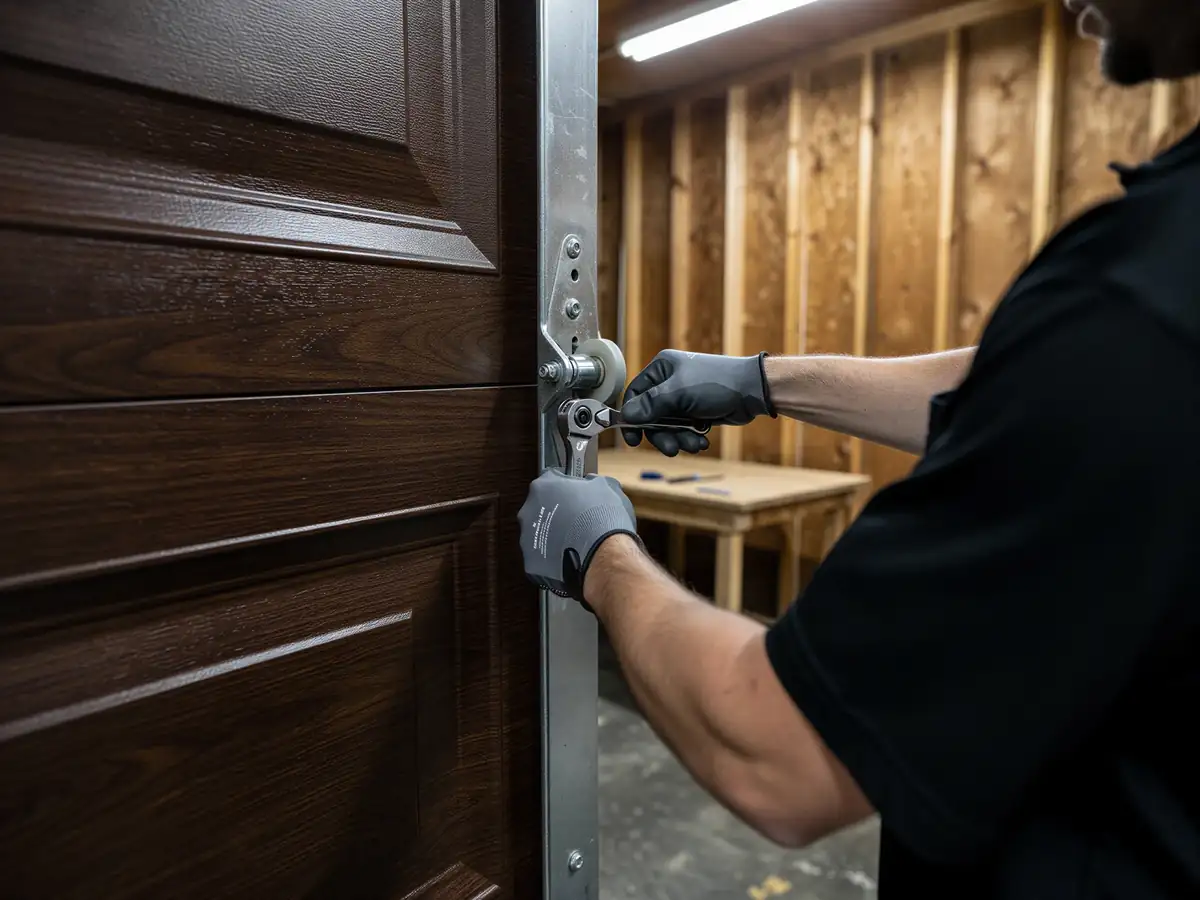
Once we're on site, the fix itself is ordinary trade work: diagnose what failed, replace the worn part, test the door through a full cycle under balance. Most Bushnell houses were built around 1951, and that median year matters for repair work - the hardware on a door that old is often not what's sold at the box stores anymore, so we carry parts sized for older torsion and extension setups rather than assuming everything's a modern retrofit.
What Can Go Wrong
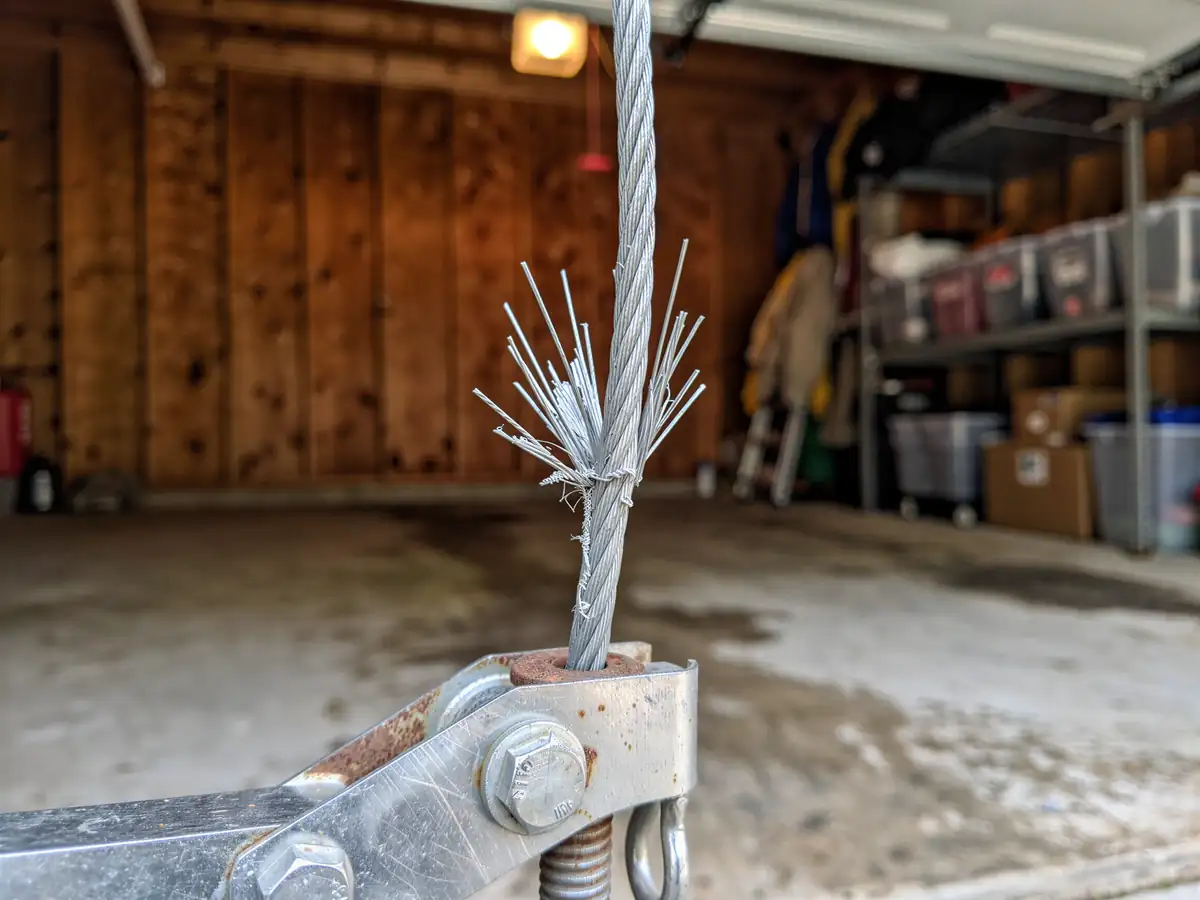
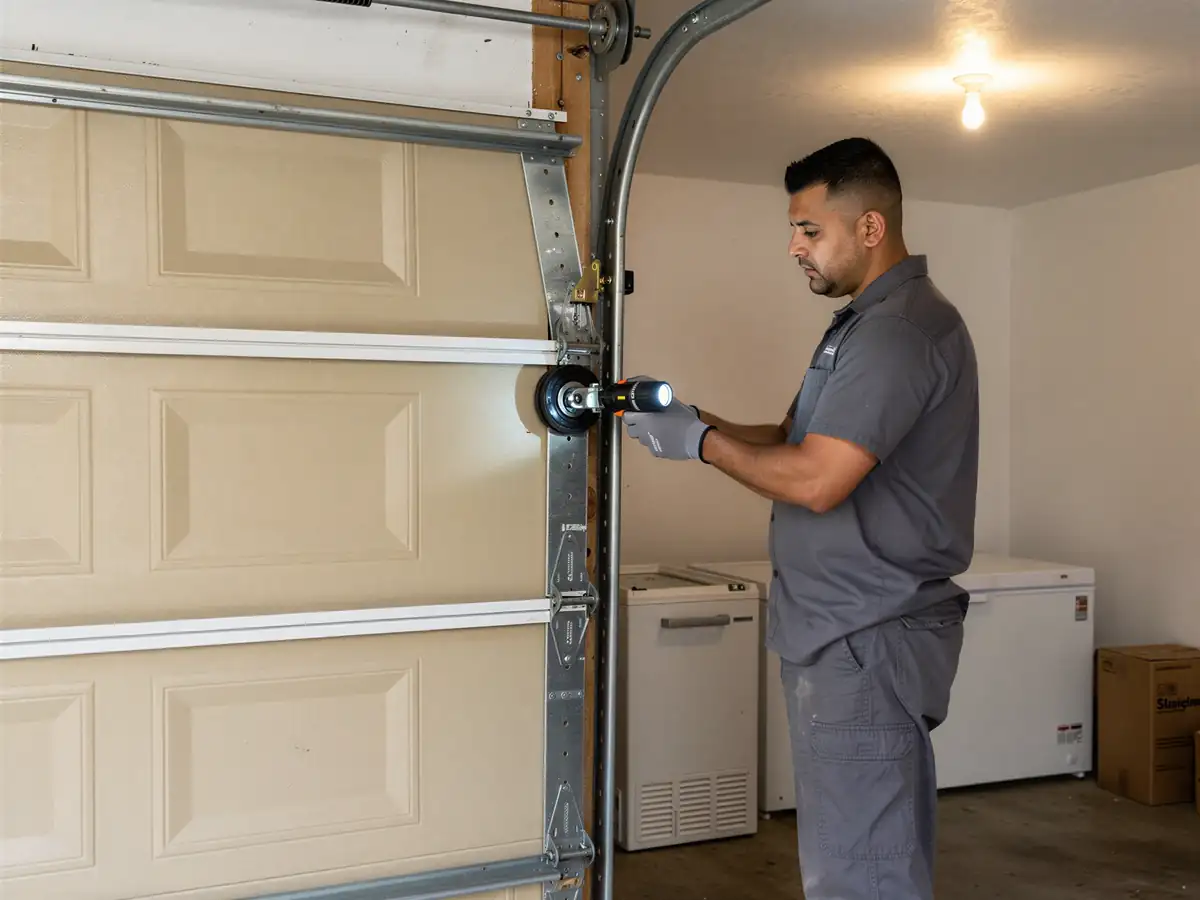
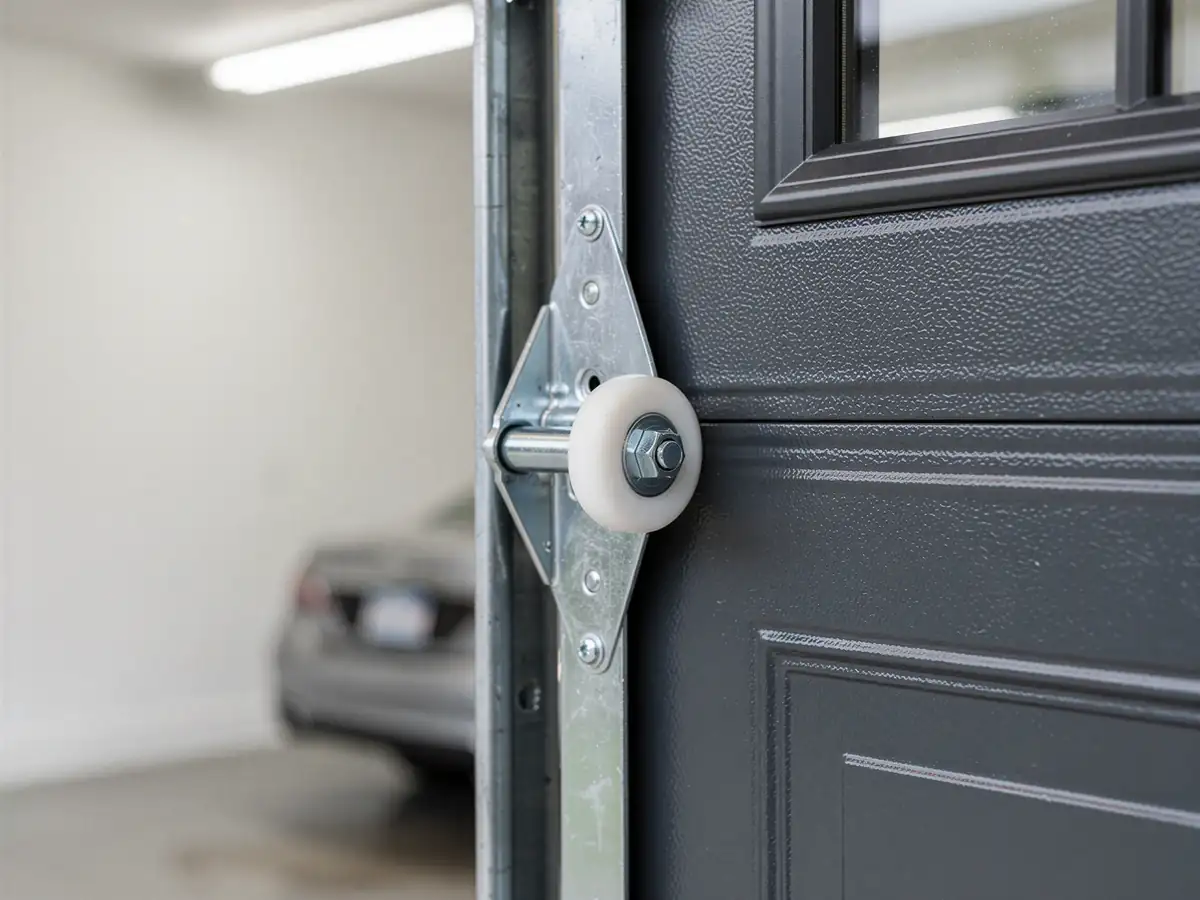
On houses from this era, the most common failure is a torsion spring that's simply worn out from decades of cycles, or cable fraying on original drums that were never updated. Rollers go next - steel ones from an earlier build often ride in tracks that have shifted slightly out of plumb over 70 years of settling, so a roller replacement sometimes turns into a track adjustment too.
Openers are the other half of it. A lot of these doors picked up a retrofit opener at some point in the last few decades, bolted onto original hardware that wasn't built with an opener's pull in mind. That mismatch shows up as a door that reverses for no clear reason, or a motor that strains on every open. We look at the whole system - door, track, spring, opener - because fixing one piece without checking how it works with the others just means a second call.
What Causes It Around Here
The housing stock around Bushnell runs mostly pre-1960
With a median build year near 1951, and that's the root of most of what we see. Original one-piece and early sectional doors on side-mounted torsion hardware are solid steel, but the springs and cables on them wear on a schedule that doesn't match anything currently stocked on a shelf at a hardware store - which is part of why these calls don't always get fixed on the first try by someone without the right parts.
The cold-moderate climate here plays a role too, though a smaller one than people guess
It's not extreme cold snaps that crack a spring - it's the freeze-thaw cycle working on metal that's already fatigued from thousands of open-and-close cycles since 1951. A household here making a median income around $55,368 is usually weighing a repair against a replacement, and for a door hitting 60-plus years old, that's a fair question to ask before any work starts.
- $55,368 median household income
Booking a Visit
Bushnell is one of the towns we cover out of Macomb, about 11 miles down the road, and we treat the drive as part of planning the job, not an excuse for a vague arrival window. Tell us what the door's doing - won't open, dropped unevenly, grinding noise - and we'll bring the parts that fit houses built in this era rather than guessing from a generic parts list.
One honest limit: if a spring or part isn't something we carry on the truck for older hardware, we may need to order it, and that can push a repair out a day or two rather than same-visit. We'd rather tell you that upfront than promise a fix we can't deliver on the first trip. For the full range of what we handle across the service area, see our main repair page.