The DIY Question
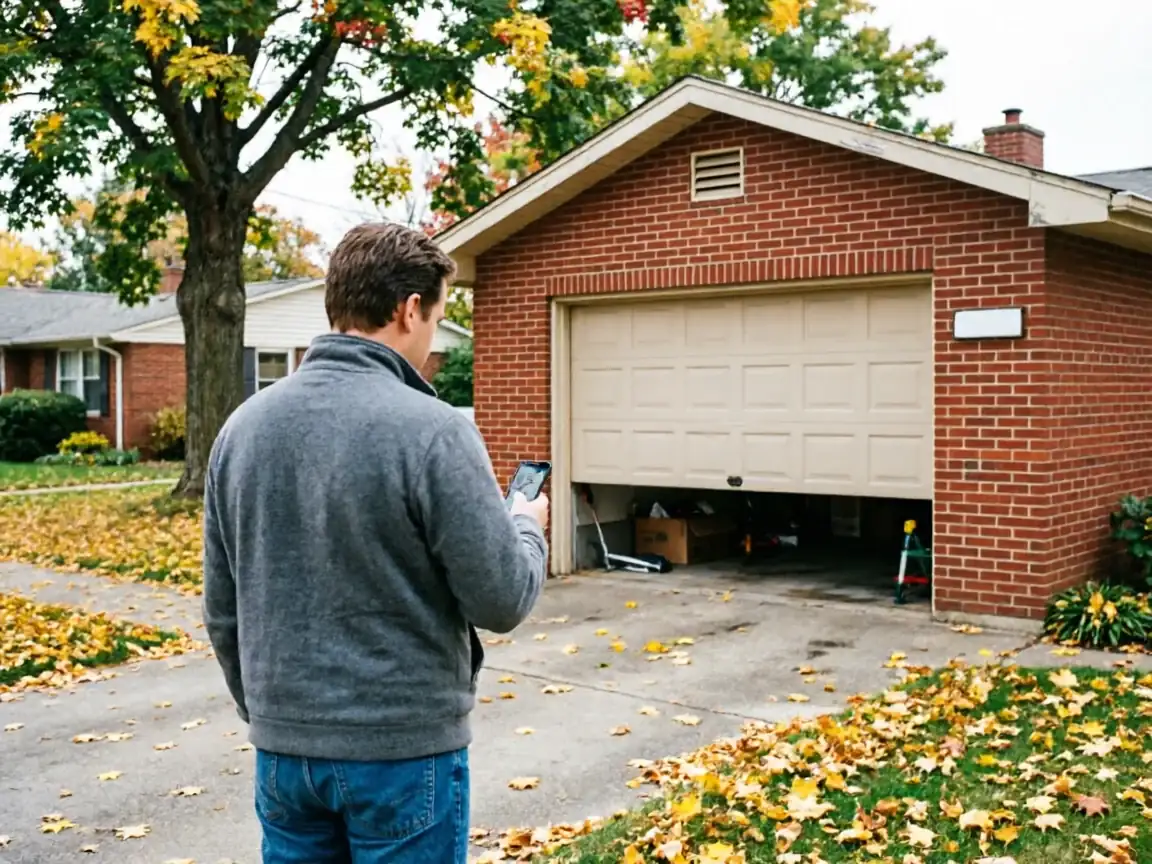
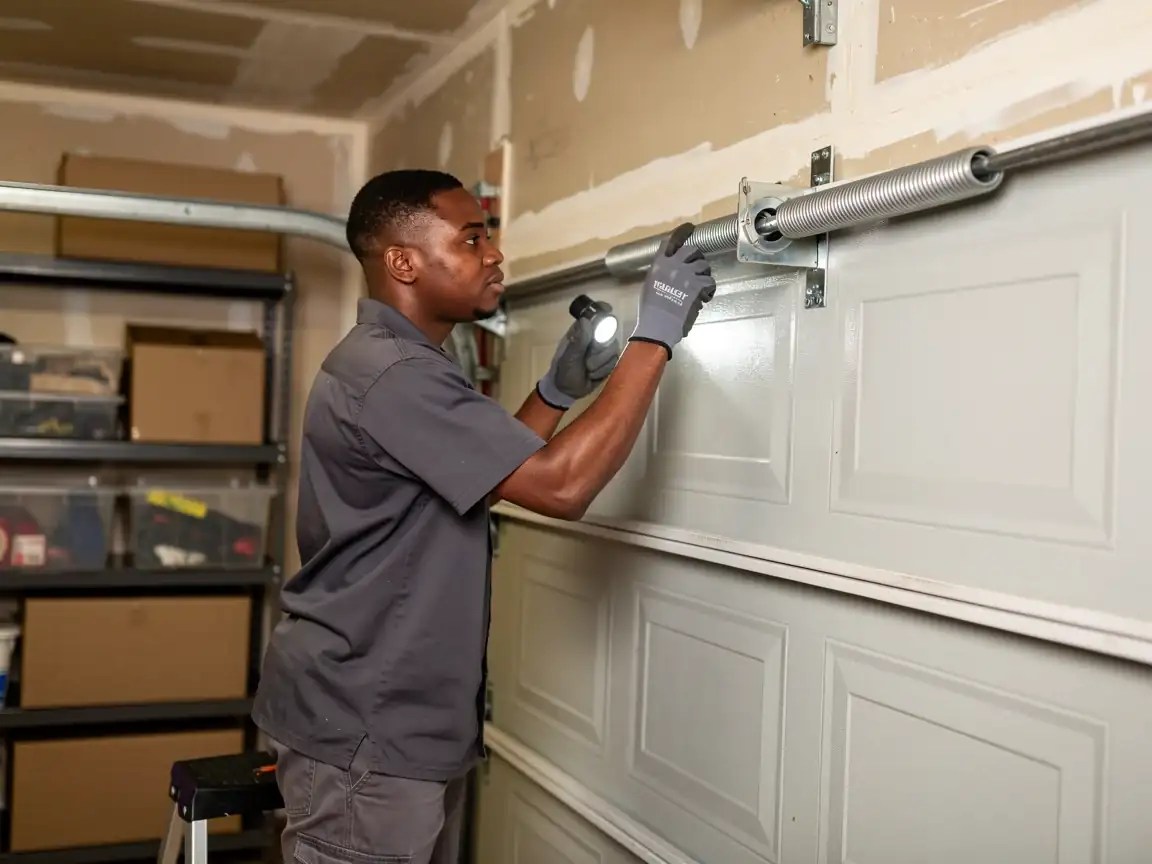
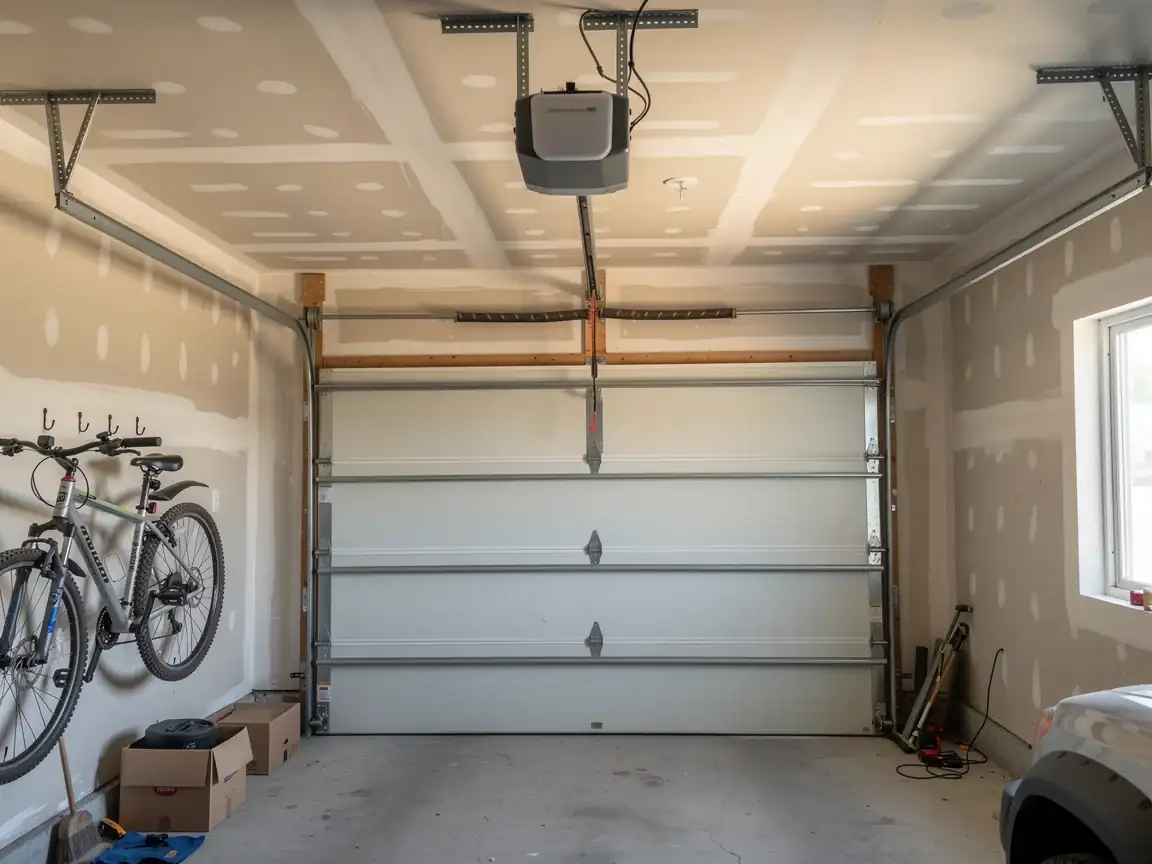
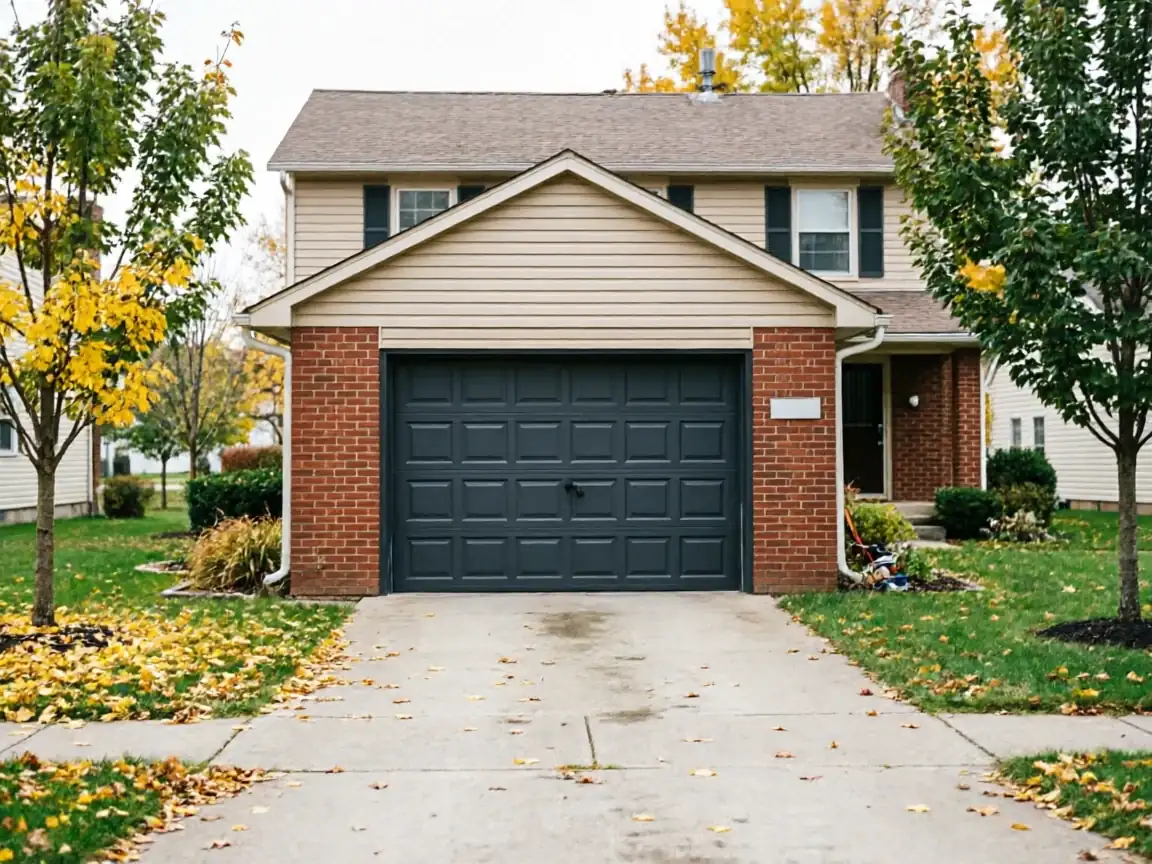
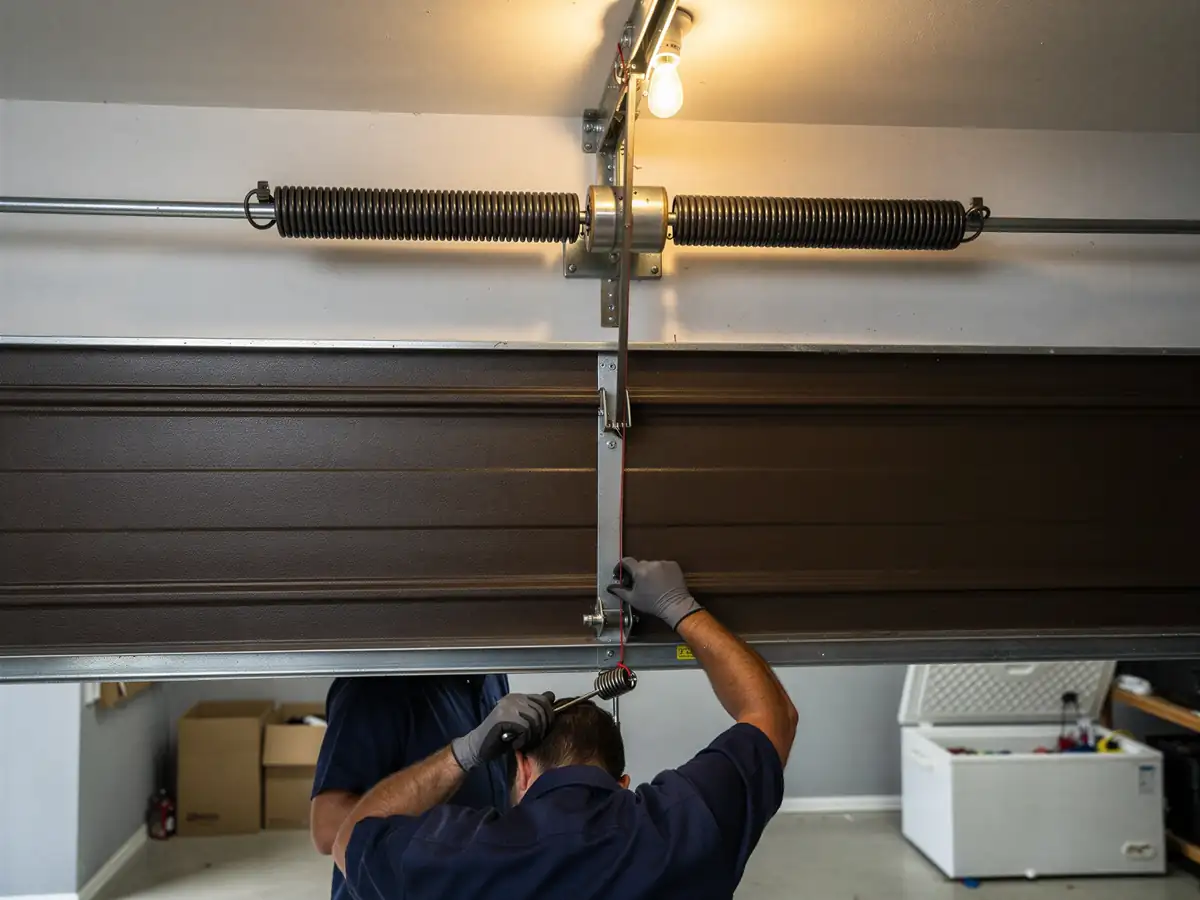
Most houses in Industry went up around 1963, which puts the garage door hardware square in the torsion-spring era - not the older extension-spring setups you'll find in some of the pre-1950 stock elsewhere in the area. That matters for the DIY question, because torsion springs sit on a steel bar over the door, wound tight, and they can take a hand off if the winding bars slip. An extension spring over a sectional door is a different animal, and a few homeowners manage those themselves. A torsion spring on a 60-year-old header is not a safe first repair job, full stop.
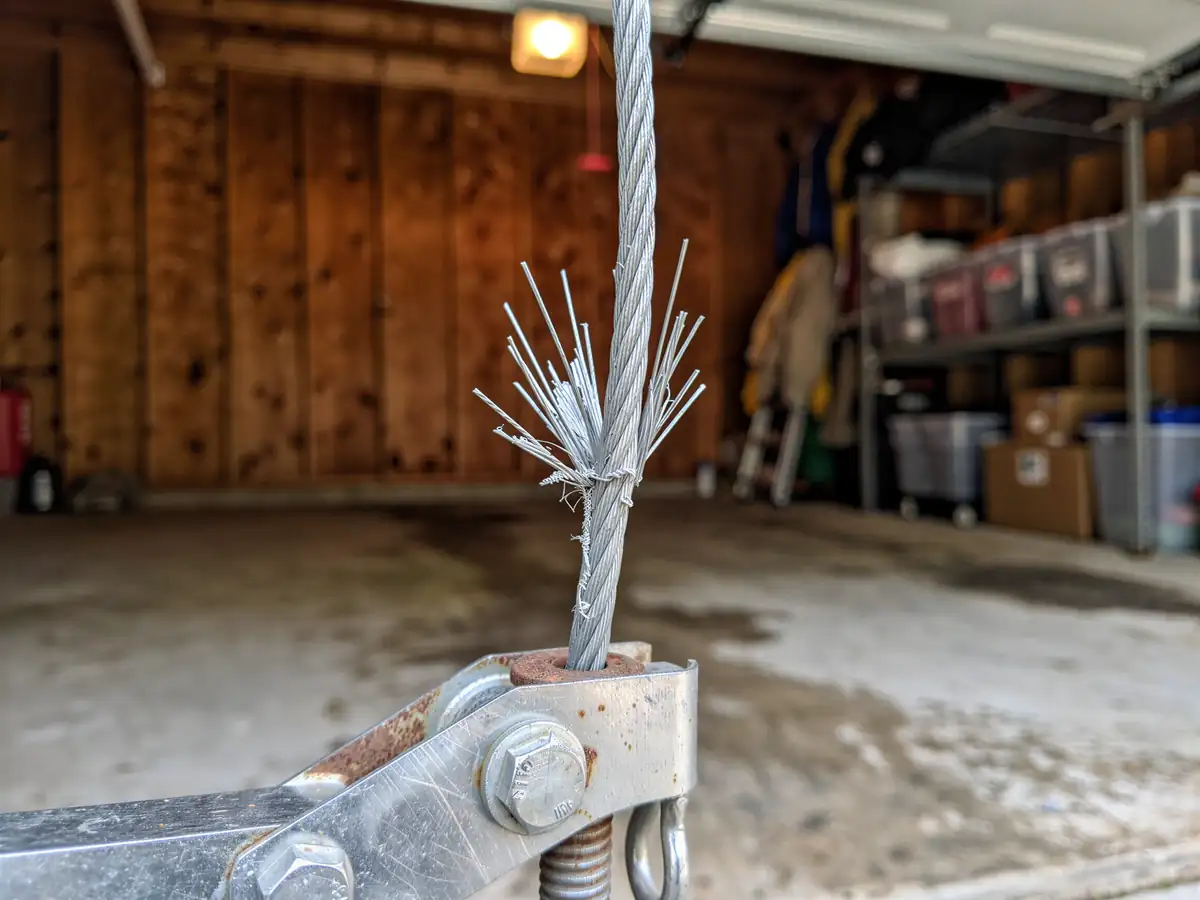
The other reason to think twice: with a house this age, you're not just swapping a spring. The drum it winds onto, the cable, the bearing plate - all of that is original or close to it, and all of it has had sixty-plus years of Illinois winters to work on the steel. Pull one worn part off a shaft that hasn't turned smooth in a decade and you often find the next part is also due. We're honest about that before we quote anything - it's cheaper to replace what's failing now than to come back in six months for the bearing plate you decided to leave.
What the Fix Involves
On a house from the early 1960s, we expect to find the original torsion spring still hanging there - it was never a part owners replaced on schedule, so if nobody's touched it, it's the same spring the door came with. We check the wind, the wire gauge, and whether the shaft is still straight before we pull anything, because a bent shaft changes the whole job.
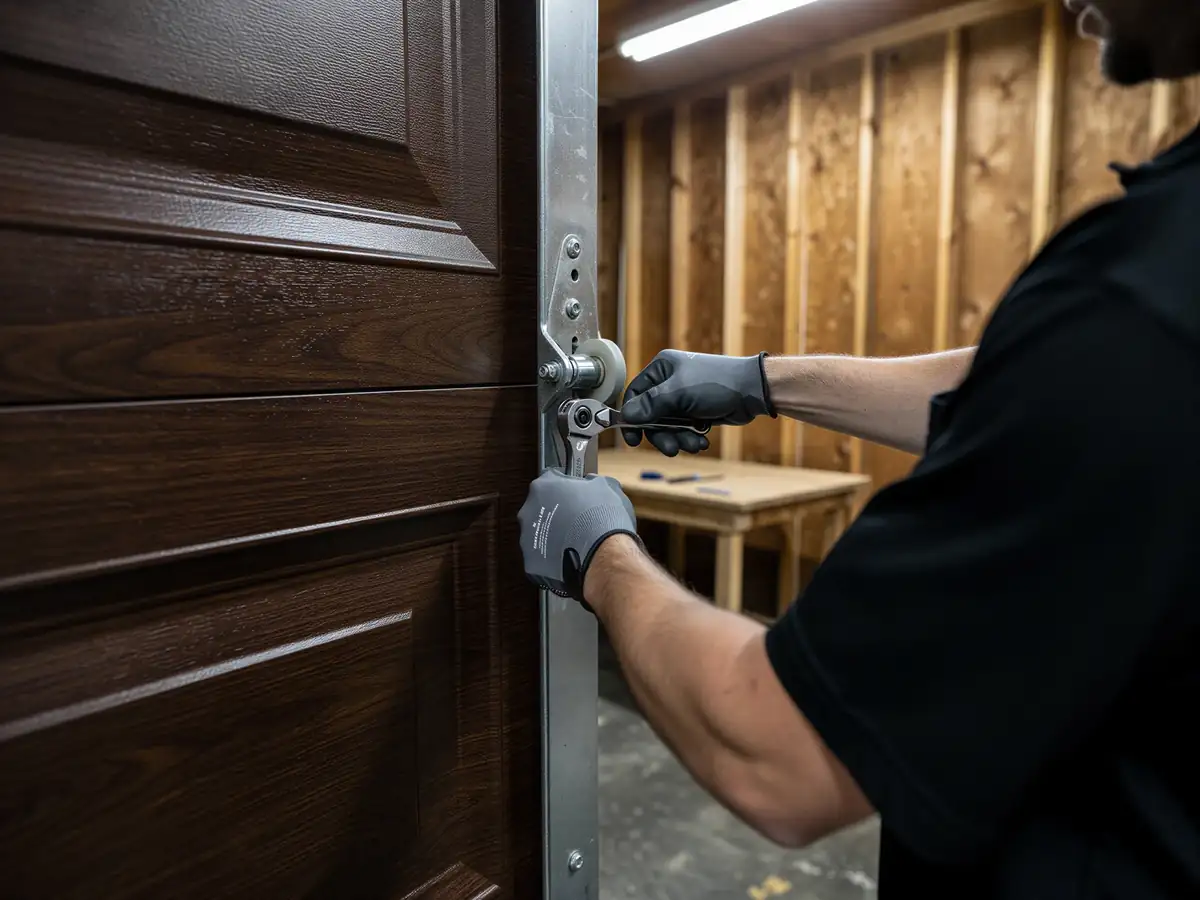
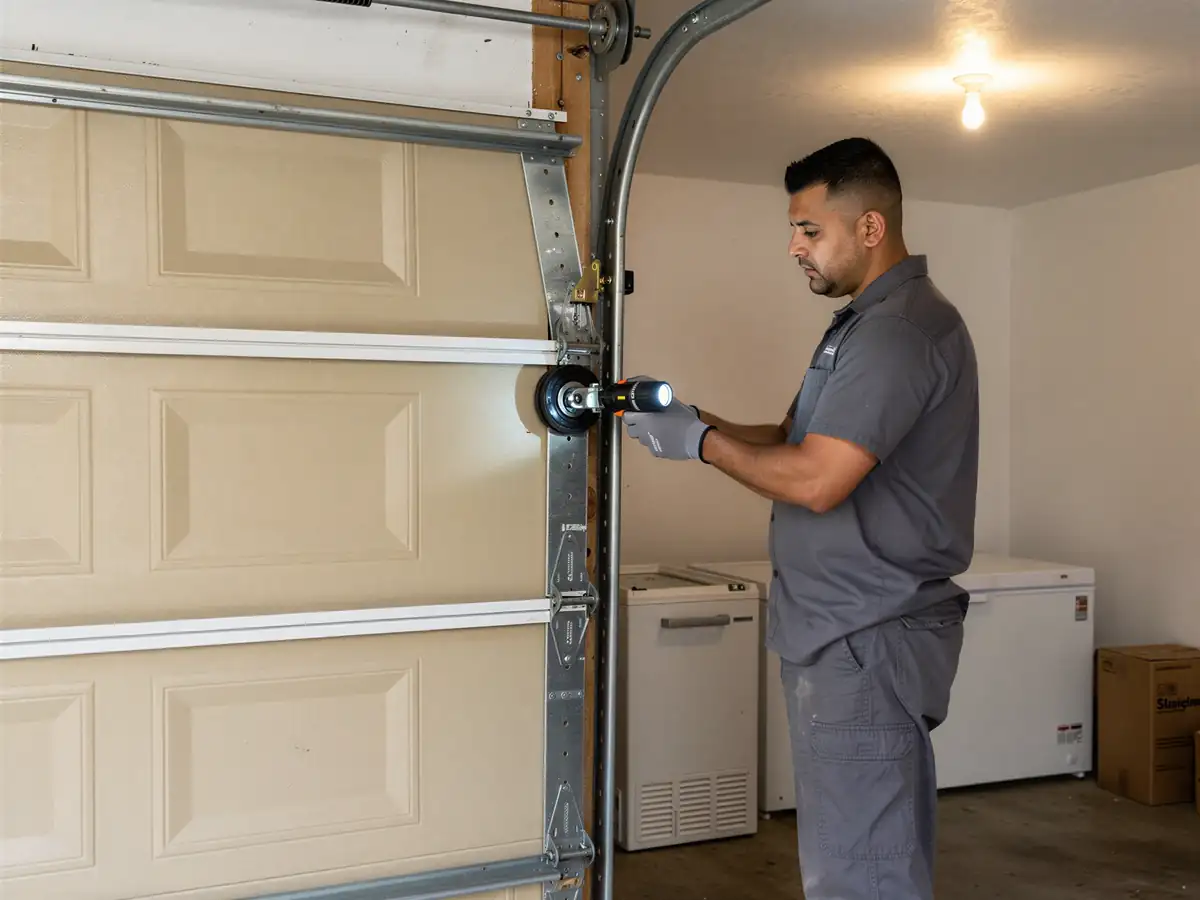
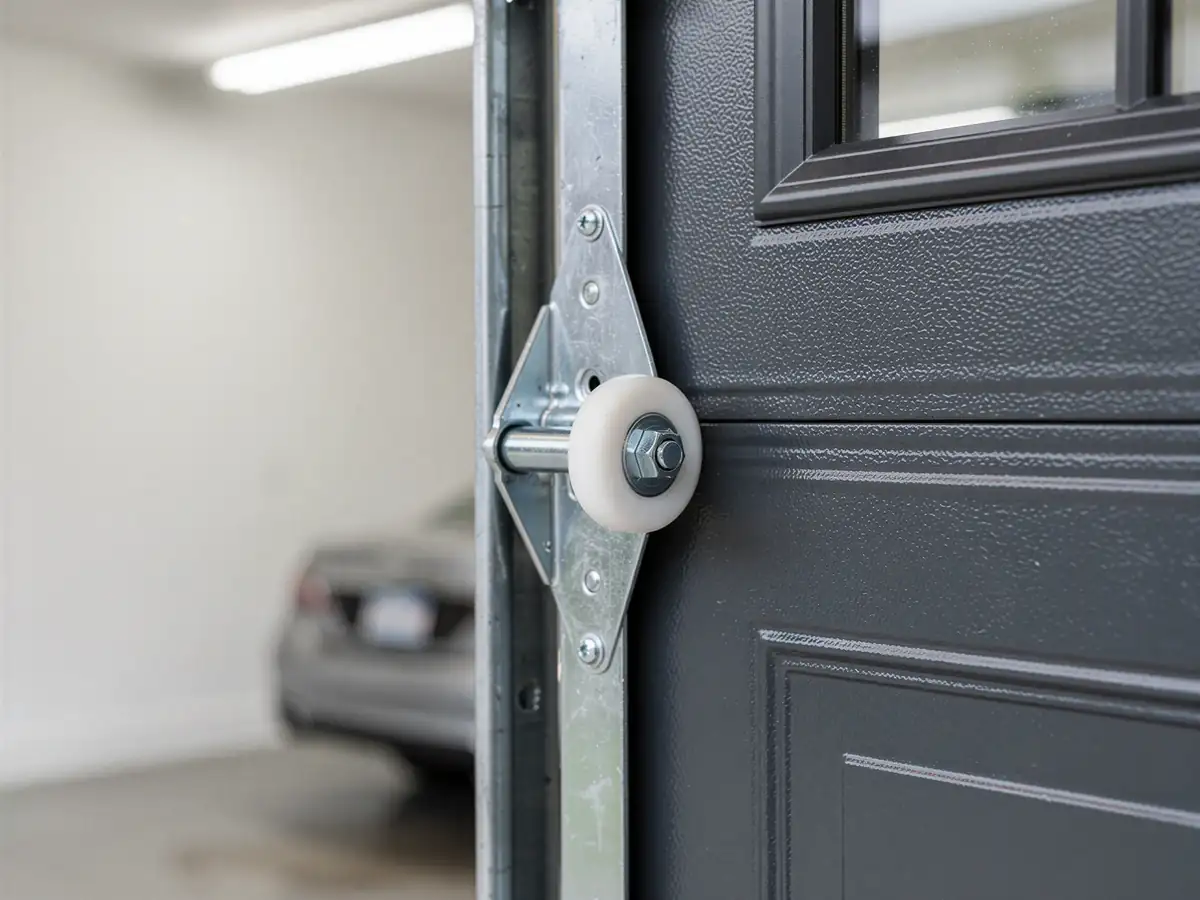
Replacement means unwinding the old spring under tension with winding bars, pulling the stationary cone, and setting a new spring sized to the door's weight and height - that sizing is where a lot of hardware-store attempts go wrong, since a spring that's close but not exact either won't lift the door or will slam it up too hard. We also look at the end bearings and the cable drums while the bar's off. In a cold-climate house like this, steel that's sat exposed in an unheated garage for sixty winters is usually more brittle than it looks, and we'd rather tell you that now than have you call back in January when it finally snaps.
What You Pay
We don't have a flat number to quote here
Spring size depends on the door's weight, and that depends on whether it's a single or double, steel or older wood panel. What we can tell you is that Industry sits in a household income range (median around $54,306 across the area) where most jobs here are straightforward torsion-spring swaps, not full openers or track replacements, because the doors themselves are usually sound even when the spring isn't.
We price the job on-site before any work starts, not over the phone sight-unseen
If the bearing plate or cable is also shot - which, again, is common on original 1960s hardware - we'll say so and price that separately so you're not guessing what the final number covers.
Booking a Visit
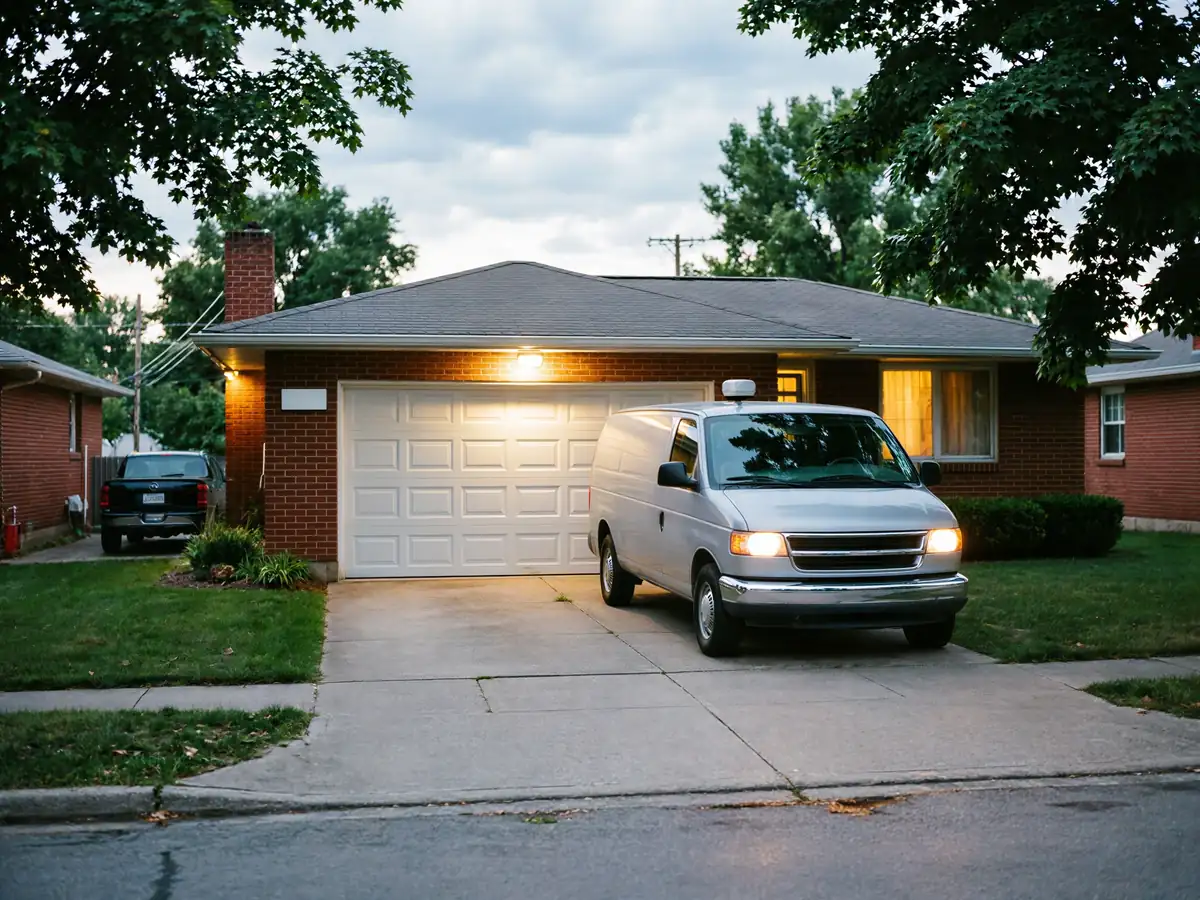
We cover Industry from our shop in Macomb, about 11 miles out, along with Colchester, Sciota, and the other towns on this side of the county. There's no branch or drop-box out here - every job starts with a truck coming from Macomb, so when you call, we'll ask for your address and a rough sense of the door's age before we set a time. If you know roughly when the house was built, that one detail - more than the door's color or brand - tells us which spring size and mount style to bring on the truck, which saves a second trip.