How Long It Takes
We run this call from Macomb, six miles up the road, so Colchester isn't a special trip for us - it's a short one. We don't promise a clock time here because traffic on the route and what's already on the truck both matter, but a six-mile run is one of the shorter ones we cover, and we load spring and roller stock before we leave knowing it's headed toward Colchester's older housing stock rather than something newer. If a part isn't on the truck, that's the one thing that stretches a visit - more on that below.
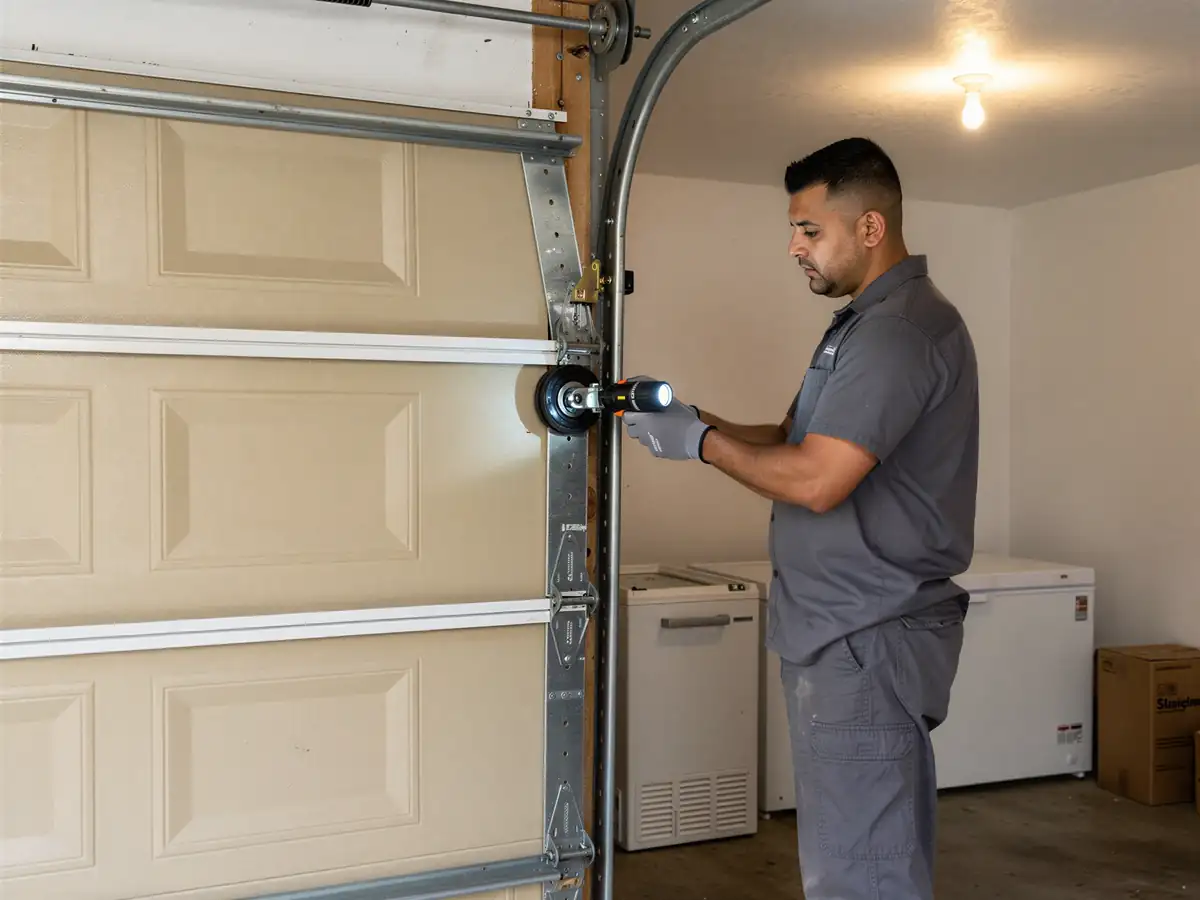
Most calls we get from this area are springs that let go overnight or a door that comes off track when someone's already late for work. Either way, the fix itself is usually under two hours once we're on site. What takes longer is diagnosing a door that's been patched more than once - common on houses this age, where a torsion conversion or a replaced bottom bracket from years back doesn't match what's original to the opening.
What Causes It Around Here
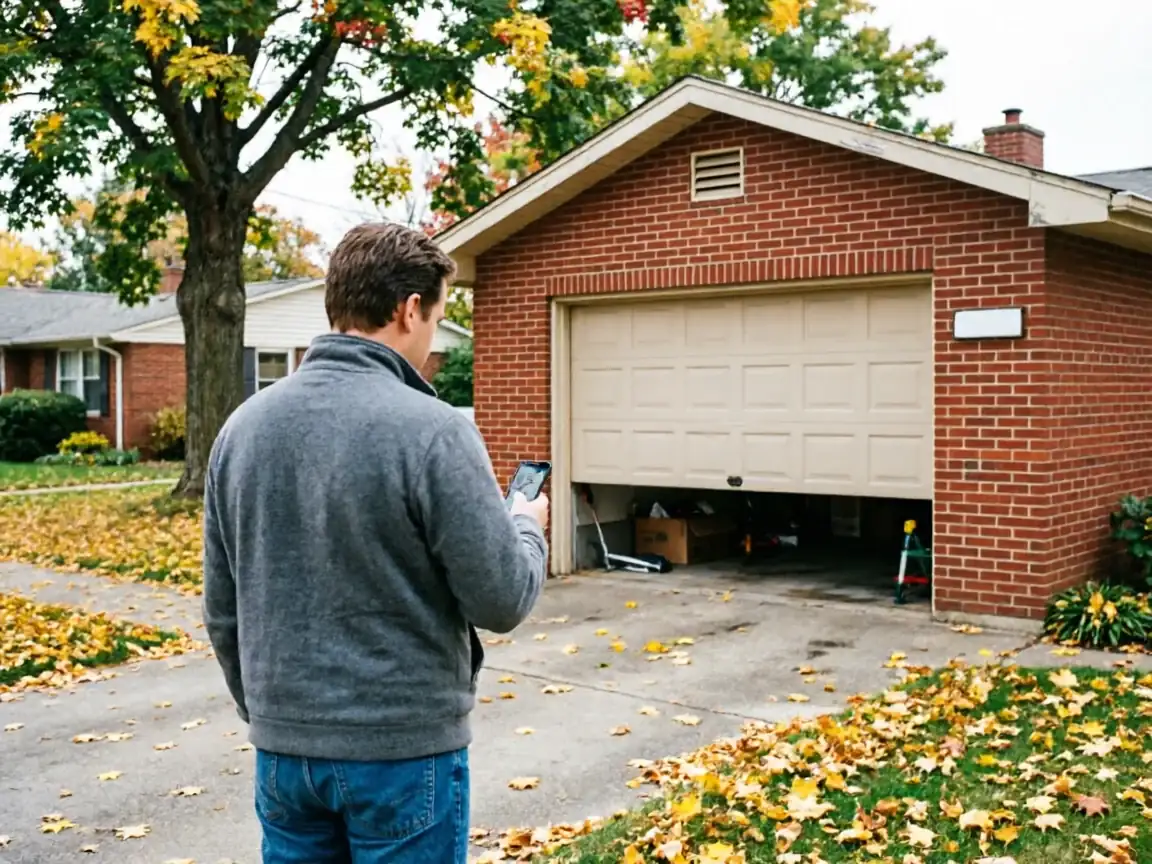
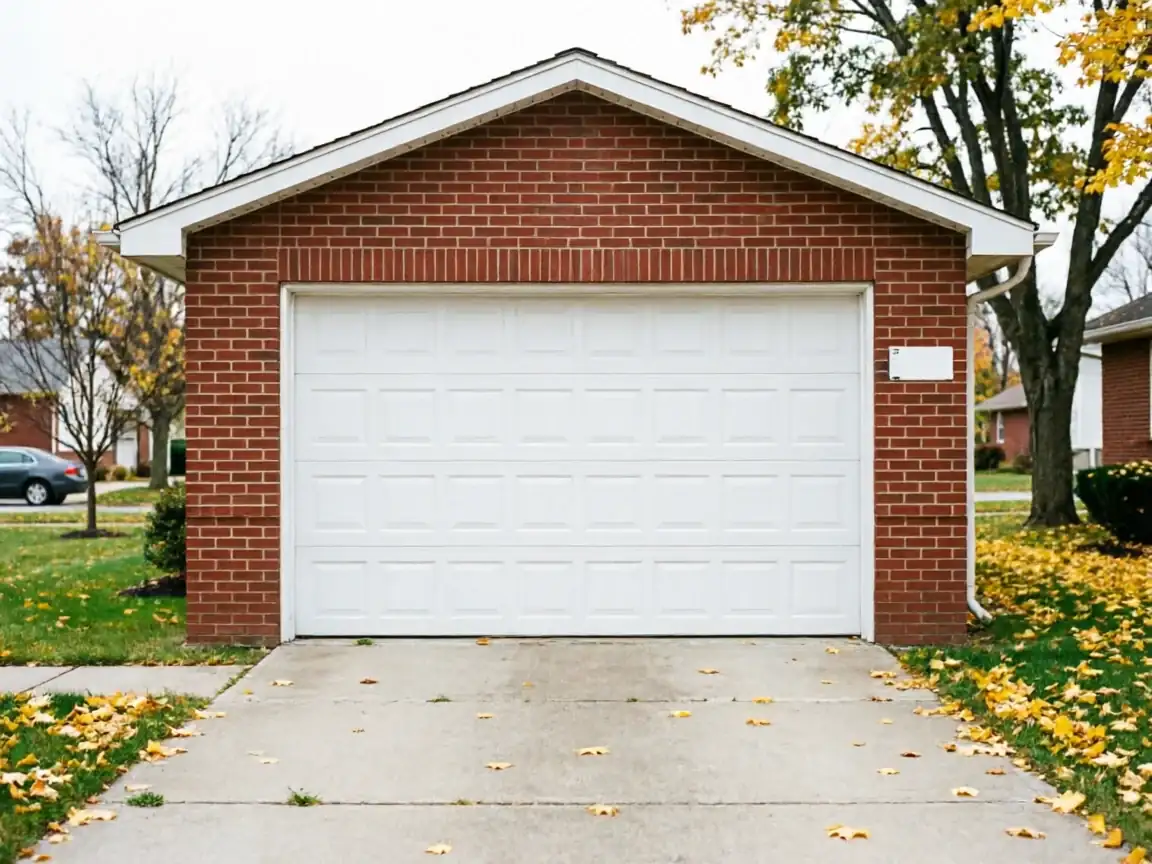
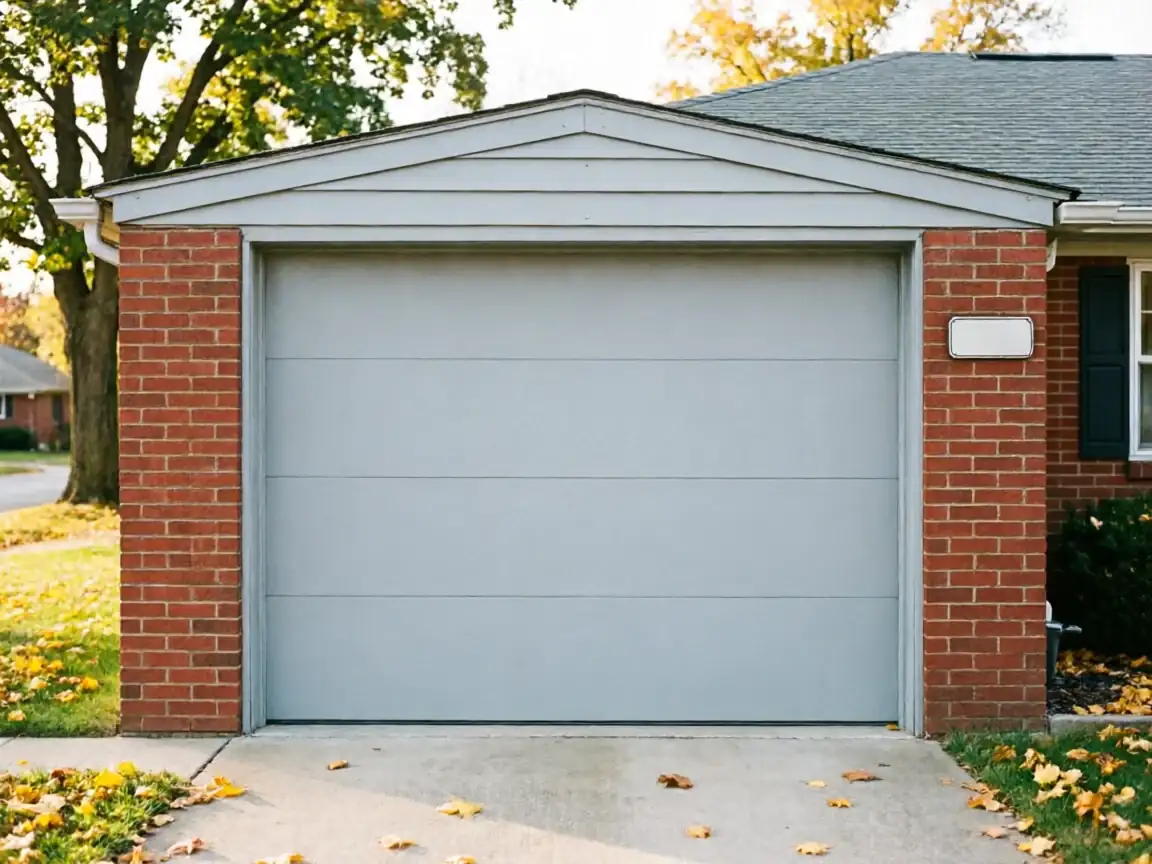
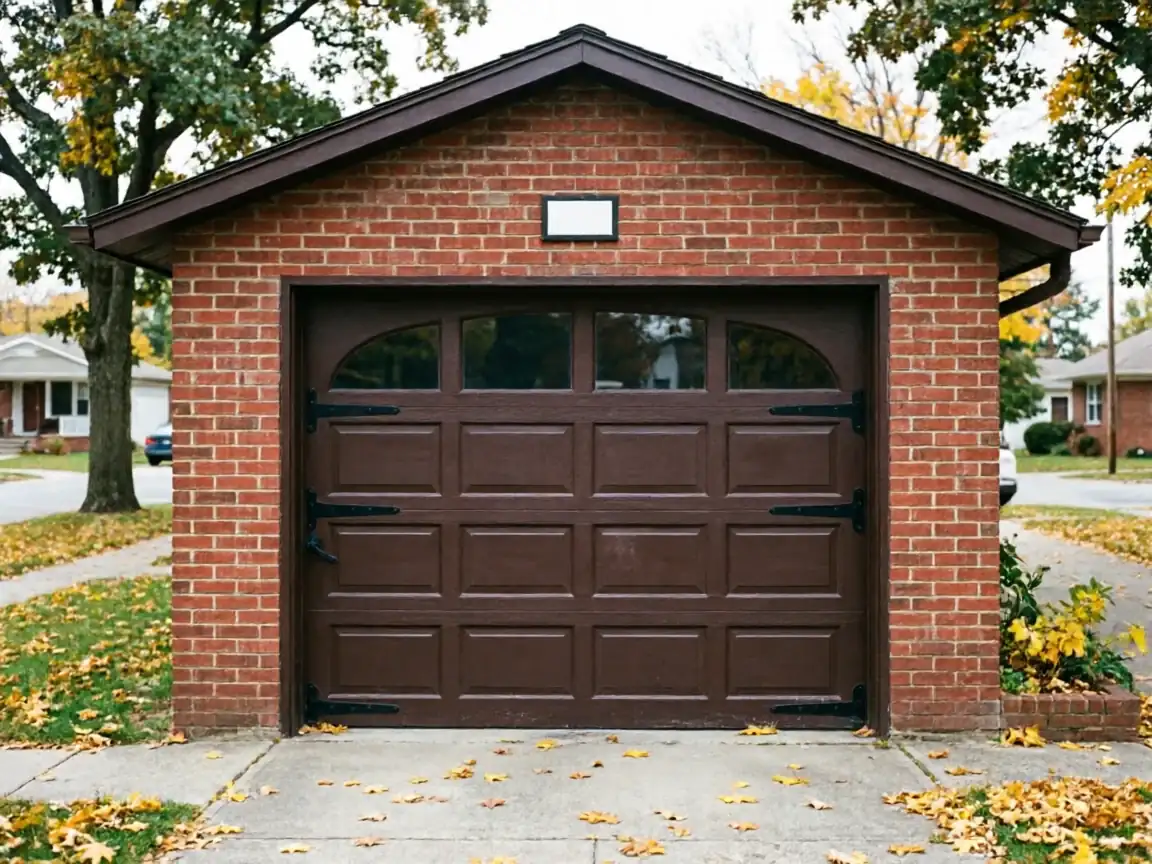
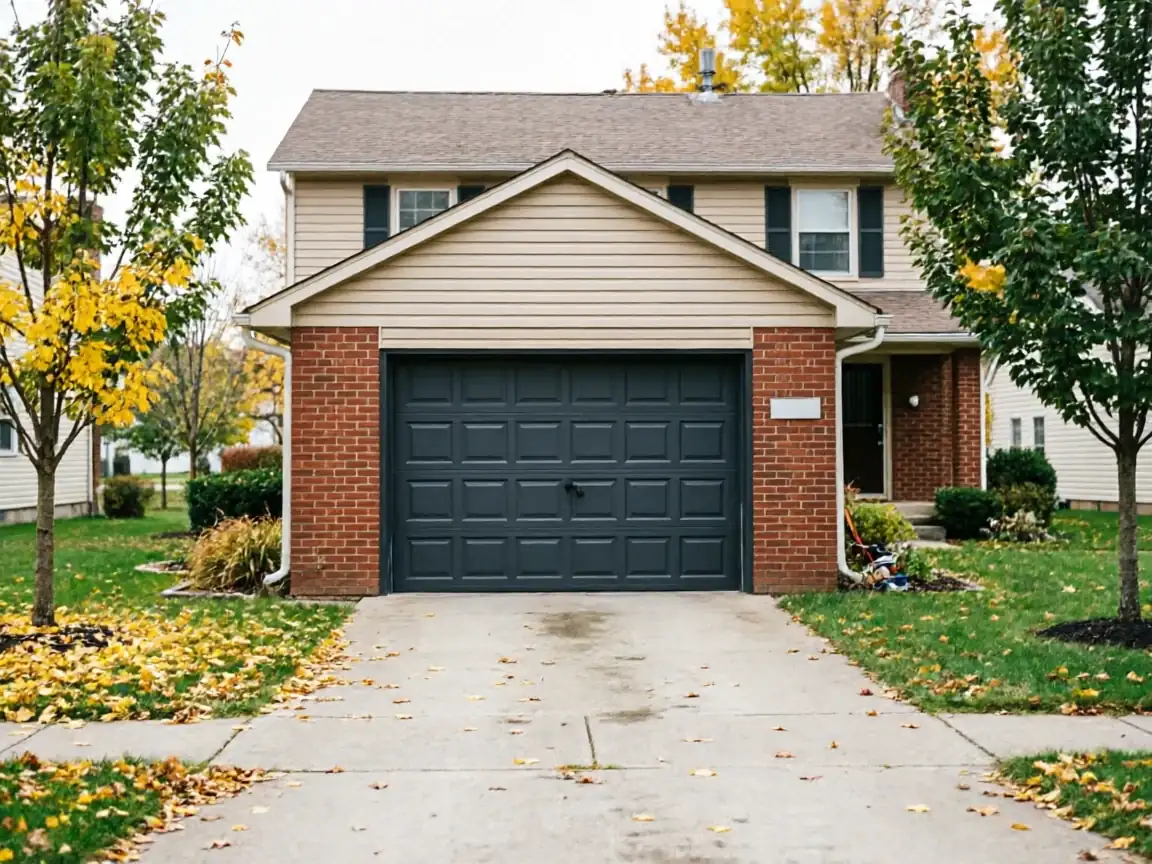
Colchester's housing mostly dates to 1959, which puts it squarely in the same build window as the rest of this stock-pre-1960 service area - doors sized and hung for openings cut nearly seventy years ago. A lot of these are still single, wide doors rather than the two-car pairs you see in newer construction, and many ride on the original hardware or a direct swap of it, meaning the track gauge and spring mount don't always match what's sold off the shelf today.
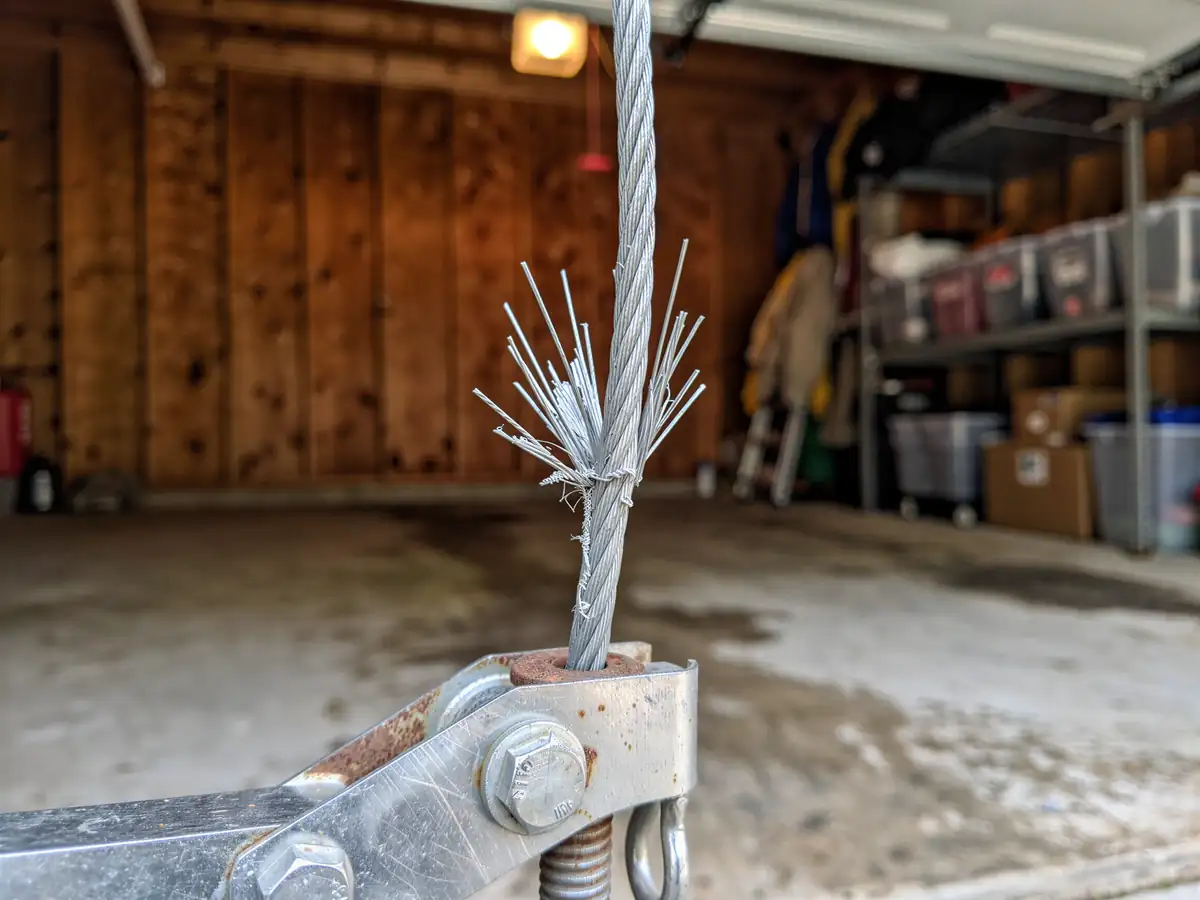
The cold is the other half of it. This is a cold-moderate climate band, and steel panels and extension springs both get less forgiving when overnight temperatures drop and stay down. A spring that's been stretching fine all fall will often pick a cold snap to finally go. Lift cables fray at the drum in the same weather, usually on doors that haven't been lubricated in years because nobody thinks about garage door maintenance until it fails.
Parts We Carry
Because so much of this area's housing sits in the same 1940s-to-60s window
We stock for it rather than hoping the supplier has it next-day. That means torsion and extension springs sized for older single-wide openings, steel rollers and hinges that fit narrower track, and lift cables cut for the shorter drums common on these doors.
What we don't carry on the truck is anything custom
A panel insert matched to an odd factory finish, or hardware for a door that's been non-standard-rebuilt more than once. On a 500-household town like Colchester, we've seen enough of these doors to know the common failures, but an unusual one still means a return trip once the part's ordered. We'd rather tell you that up front than promise a fix we can't finish same-day.
What Can Go Wrong
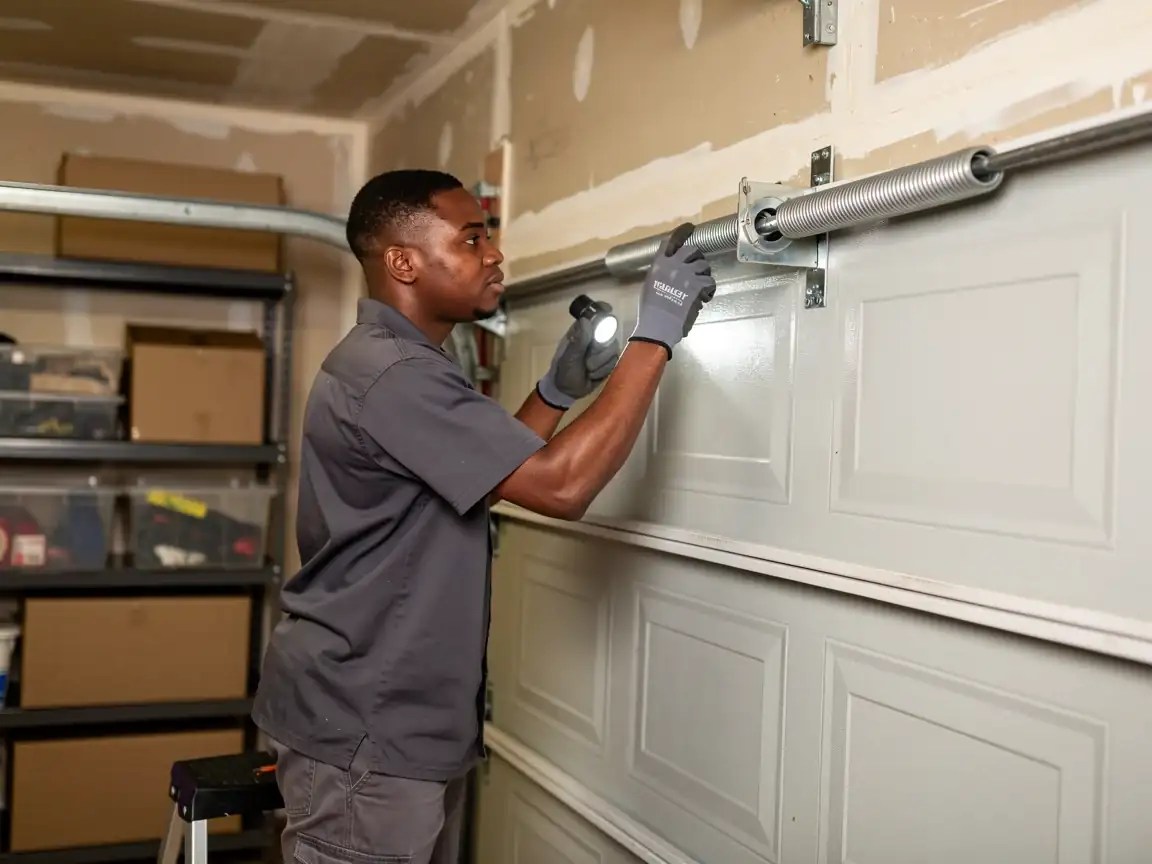
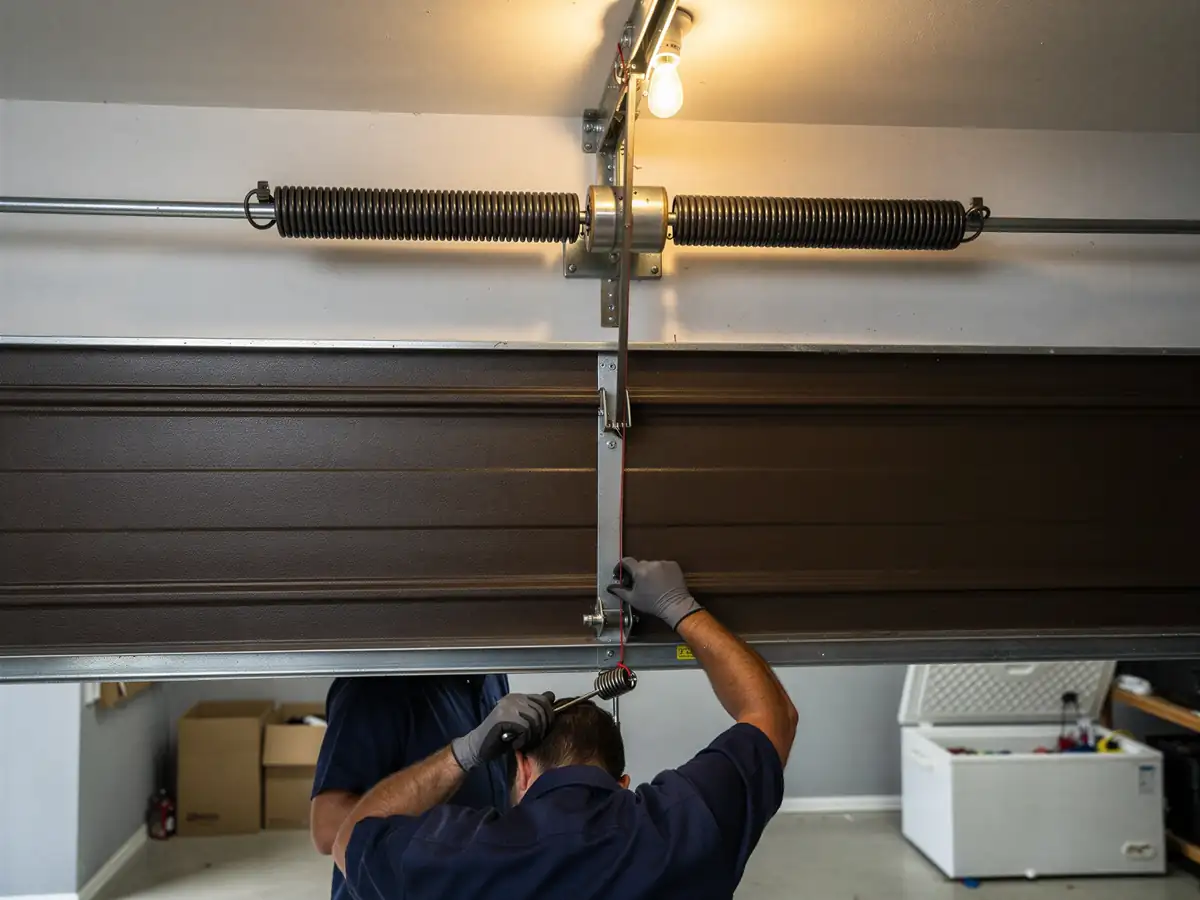
The most common emergency call is a broken spring - torsion or extension, depending on what's on the door - because a 1959-era door still carries real weight in solid wood or early steel panel, and when the spring that's been offsetting that weight finally snaps, the door won't lift by hand or opener. Second most common is a cable off the drum, usually from fraying rather than a clean snap, which can let one side of the door drop crooked in the track.
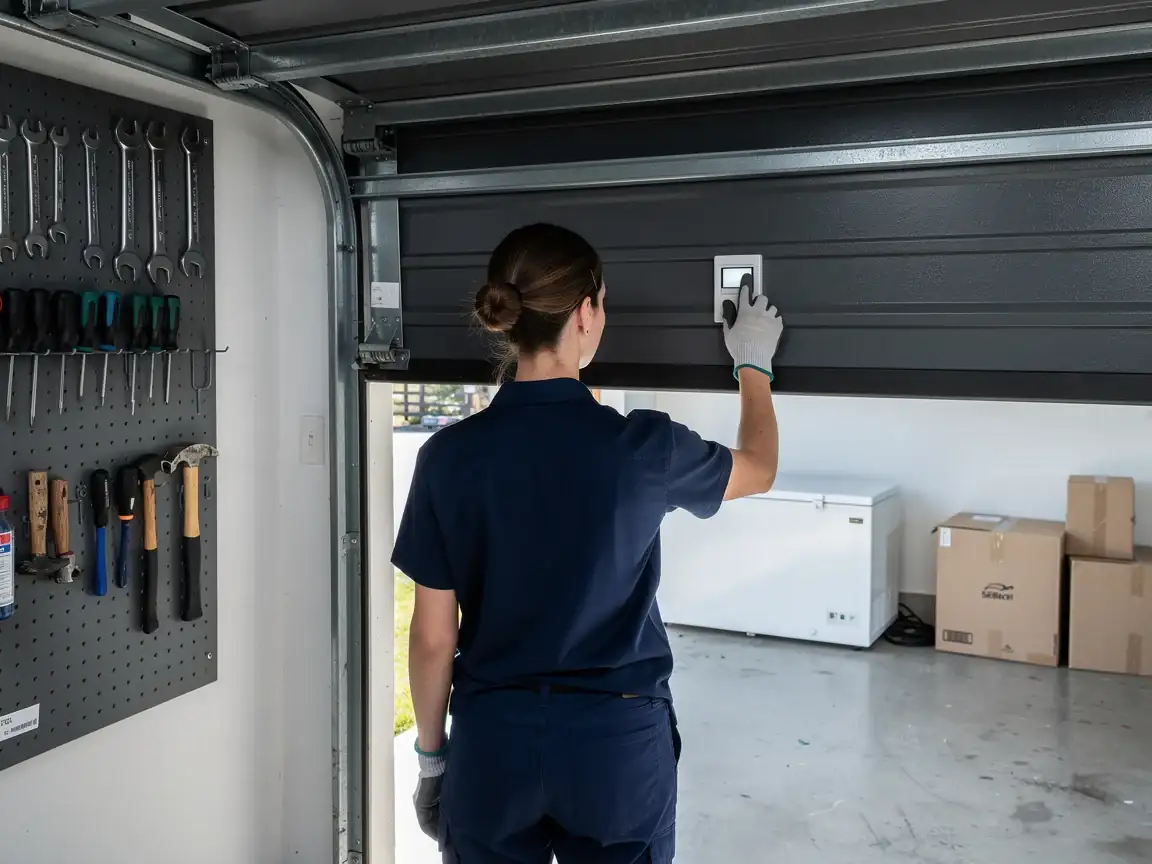
Less urgent, but still a call we get: an opener motor straining against a door that's gone heavier with age, worn weatherstripping letting cold air in during a hard winter, or rollers that have worn enough to bind in track that's been there since the house was built. None of these need a same-day call the way a broken spring does, but ignoring them usually turns them into one.
Booking a Visit
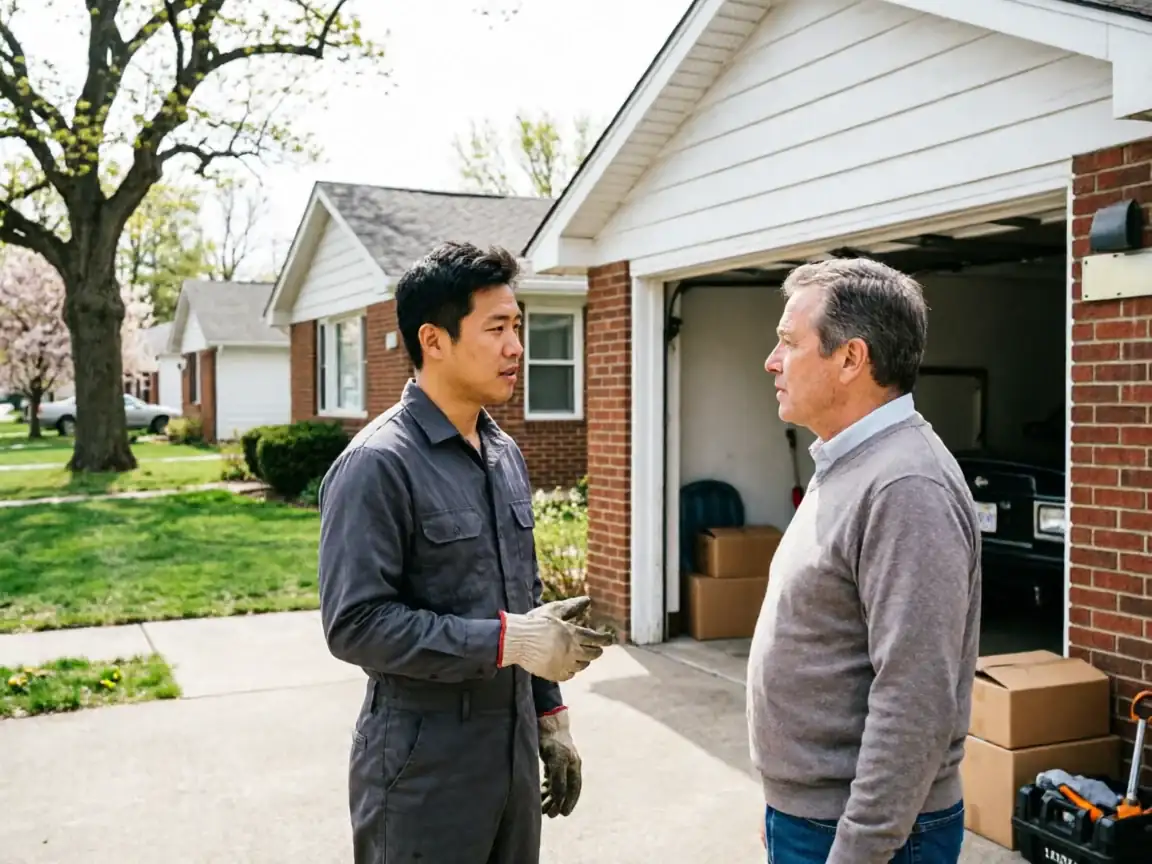
We cover Colchester as part of the Macomb service area, and a call here goes the same way any emergency call does - tell us what the door's doing (or not doing), and we'll tell you honestly whether it's a today problem or a this-week one. For a true emergency, a spring that's gone or a door stuck open overnight, we treat the six-mile drive from Macomb the same as any close-in call.
We don't have a branch or drop point in Colchester itself - every job here is a truck coming out from Macomb, stocked for the kind of door this town mostly has. That's worth knowing if you're comparing us to someone who claims a local office; we're upfront that we travel in, and we stock accordingly.
What the Fix Involves
On a broken spring, the job is straightforward
Disconnect the opener, unwind and remove the failed spring, measure the door's actual weight rather than trust the old spring's rating, and set a matched replacement with correct winding turns for the door's size. On a door this age, we also check the cable drums and end bearings while we're in there, since a cable failure tends to follow a spring failure within a season if the drum's worn.
If the door's wood panel has rotted at the bottom or the track's bent beyond adjustment
Replacement starts to make more sense than another repair, and we'll say so rather than patch something that'll fail again in six months. That's the one honest limit here: we fix what's fixable, but a 1959 door that's had three bad seasons in a row isn't always worth a fourth repair bill.